
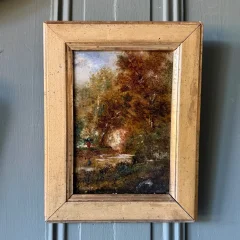
Small Animated Landscape
Ponvianne Antiquités — Marcy-l'Étoile
160,00 €
Good condition
4804 objects found
The 19th century stands as one of the most prolific eras in the history of French decorative arts. From the imperial grandeur of the Empire style to the opulent interiors of the Second Empire, by way of the restrained elegance of Louis-Philippe and the neo-Gothic revival, each reign produced furniture and decorative objects with an instantly recognisable character. Cuban mahogany, chiselled gilt bronze, rosewood marquetry, Sèvres and Limoges porcelain — noble materials abound, shaped by cabinetmakers and bronziers at the height of their craft.
This pivotal century bridges the refinement of the 18th century and the formal boldness of the age that followed, offering collectors an exceptional stylistic range at prices that remain genuinely accessible.
4804 objects found
Ponvianne Antiquités — Marcy-l'Étoile
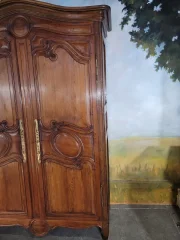
Antiquites d'Augers en Brie — Augers-en-Brie
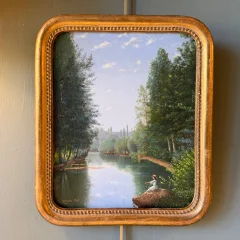
Ponvianne Antiquités — Marcy-l'Étoile
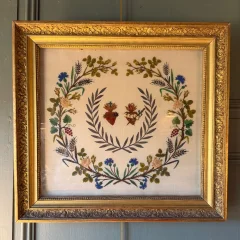
Ponvianne Antiquités — Marcy-l'Étoile
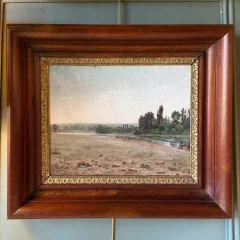
Ponvianne Antiquités — Marcy-l'Étoile
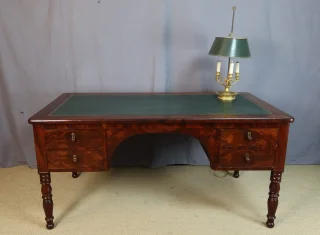
Philippe Cote Antiquites — Chauffailles
Ponvianne Antiquités — Marcy-l'Étoile
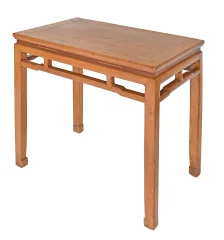
Espaces et Formes — Paris XVIII Arrdt
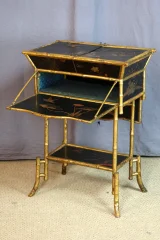
Philippe Cote Antiquites — Chauffailles
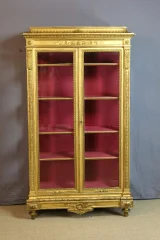
Philippe Cote Antiquites — Chauffailles
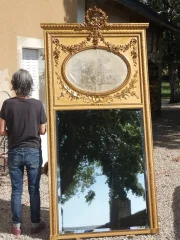
L'atelier De La Dorure — Calmont
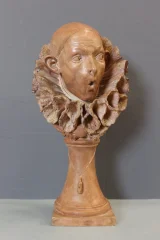
Antiquités Christophe Rochet — Villeurbanne
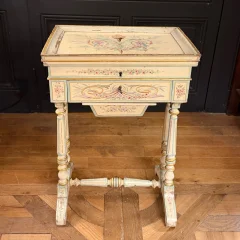
Ponvianne Antiquités — Marcy-l'Étoile
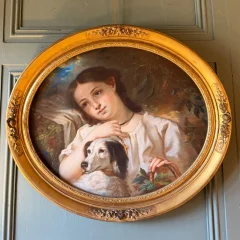
Ponvianne Antiquités — Marcy-l'Étoile
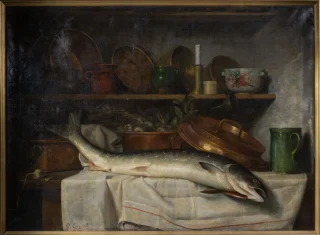
Antiques Provence — Cheval-Blanc
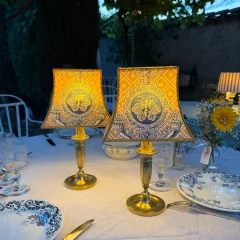
Ponvianne Antiquités — Marcy-l'Étoile
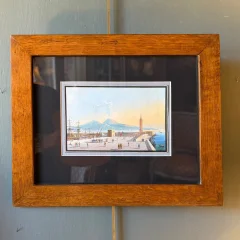
Ponvianne Antiquités — Marcy-l'Étoile

2R Antiquites — Caluire-et-Cuire
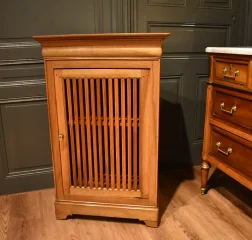
Antiquités Anne Marie Perrier — La Boisse
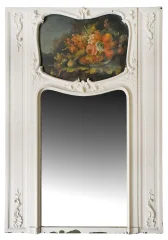
Espaces et Formes — Paris XVIII Arrdt
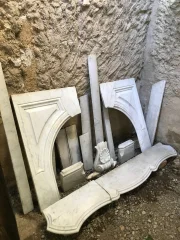
Antiques Provence — Cheval-Blanc
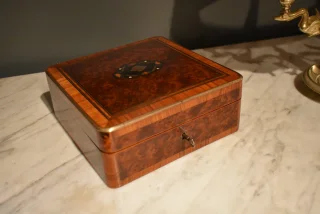
Antiquités Anne Marie Perrier — La Boisse
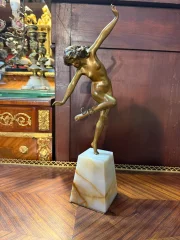
Romain Lichtensztein — Maignelay-Montigny
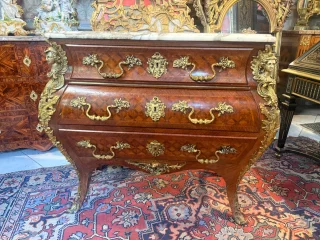
Romain Lichtensztein — Maignelay-Montigny
To authenticate a piece of 19th century furniture or decorative art, start with the timber: Cuban mahogany, Rio rosewood and solid walnut are hallmarks of the great periods. Stamped pieces sometimes bear the cabinetmaker's or manufacturer's mark on the back of a drawer or underside of the top — a reliable indicator of quality and traceability. Fire-gilt bronze mounts, warmer and deeper in tone than the electroplated gilding that appeared after 1850, are a strong sign of an early and superior example.
Learning to read the styles is equally rewarding. Look for the straight lines and antique motifs of the Empire period — sphinxes, eagles, laurel wreaths — then the rounded forms and burr-walnut veneers of Louis-Philippe, and finally the exuberant carved ornament, velvet upholstery and mother-of-pearl inlay of Napoleon III. Each style has its own vocabulary of mounts, leg profiles and proportions that a trained eye quickly learns to distinguish.
In terms of budget, Empire gilt bronze mantel clocks and small decorative objects can often be acquired for a few hundred to a few thousand pounds, while a signed piece of case furniture or a pair of Sèvres vases can command considerably more. Always check the condition of veneers, the consistency of any restorations, and the presence of original hardware — locks, handles, marble tops. A documented provenance, such as an old receipt or auction label, adds meaningfully to value and peace of mind.
On Antiquités en France, every 19th century antique is offered by a verified professional dealer who can provide detailed photographs, condition reports and personalised advice before you commit. Broaden your search towards the 20th century for transitional styles such as Art Nouveau and Art Déco, or step back to the 18th century for pieces from the Ancien Régime. Contact the dealer of your choice directly for any enquiry or to arrange a reservation.