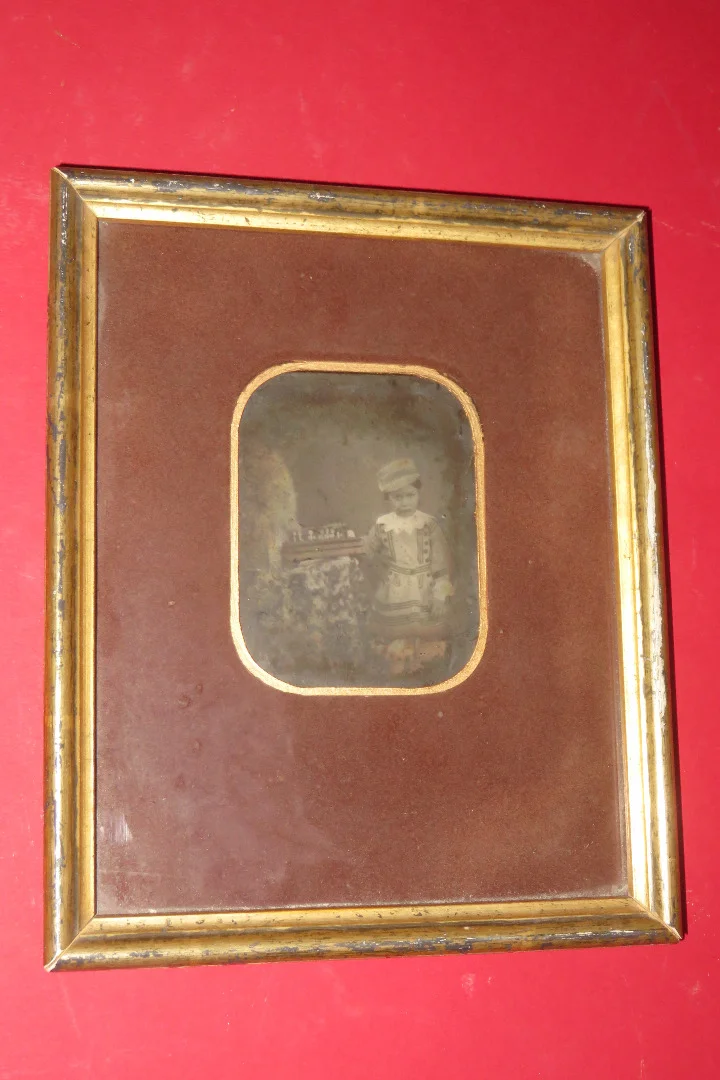
NINETEENTH CENTURY DAGUERREOTYPE
Sarl Cave — Limoges
450,00 €
3 objects found
Antique photographs represent an irreplaceable visual heritage, spanning the earliest daguerreotypes of the 1840s through to mid-20th-century silver gelatin prints. Studio portraits, street scenes, press reportage, architectural surveys — every print is a precise record of both an era and a photographic technique. The most sought-after processes among collectors — 19th-century daguerreotypes, albumen, platinotype and carbon prints — are prized for their extraordinary tonal richness and remarkable longevity.
On Antiquités en France, specialist dealers offer pieces selected for their historical significance, state of preservation and authenticity, with all the information you need to buy with confidence.
3 objects found
Authenticating an antique photograph begins with identifying the process. A daguerreotype is immediately recognisable by its silvered copper plate, its direct positive image that shifts between positive and negative depending on the viewing angle, and its hinged protective case. Albumen prints on carte-de-visite or cabinet card mounts typically show a warm sepia tone and a thin paper surface adhered to thick card stock. The platinotype, rarer and more expensive, delivers an incomparably soft grey scale and exceptional archival stability. Always examine the verso: a studio stamp, a handwritten inscription or a press agency blind stamp adds considerable documentary and market value.
In terms of budget, vintage photography collectibles are accessible at every level. Expect to pay from a few tens of pounds for a common albumen carte de visite, several hundred for a signed press print or a fine-condition daguerreotype, and several thousand for a recognised author print — Nadar, Eugène Atget, Brassaï, Robert Doisneau — or an exceptional historical document. Condition is paramount: avoid prints with significant tide marks, tears, or irreversibly veiled silver.
Storage and care are straightforward but must be consistent: keep prints away from direct light and humidity fluctuations, house them in acid-free polyester sleeves, and always handle with clean cotton gloves. For framed pieces, use UV-filtering glass and an acid-free mount board. These precautions protect the long-term value of your collection. Collectors drawn to historical visual documents may also enjoy the antique posters and watercolours and gouaches available through our portal.
On Antiquités en France, every antique photograph is offered by a verified professional dealer who can provide provenance details, exact dimensions and a thorough condition report. Browse the selection, contact the dealer of your choice directly, and build a photographic collection that is as historically rich as it is visually compelling.