
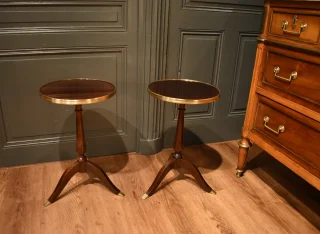
Pair of small guéridons
Antiquités Anne Marie Perrier — La Boisse
320,00 €
Good condition
284 objects found
A centrepiece of French salon furniture since the 18th century, the antique gueridon table is defined by its circular top carried on a central column or tripod base. From the restrained mahogany of the Empire period to the opulent marble and gilt bronze tops of the Second Empire, each era brought its own inventiveness to this elegant occasional table. Quality shows in the refinement of the column, the consistency of the veneer, and the integrity of the original bronze mounts.
Our selection brings together period pieces from verified professional dealers, ranging from Restauration tripod gueridons to antique tables in the Louis-Philippe manner.
284 objects found
Antiquités Anne Marie Perrier — La Boisse
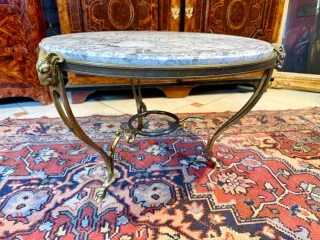
Romain Lichtensztein — Maignelay-Montigny
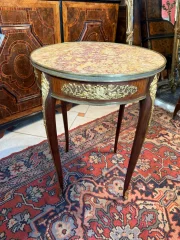
Romain Lichtensztein — Maignelay-Montigny
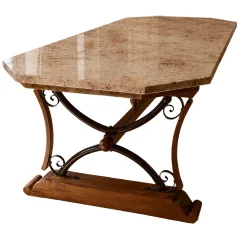
le village des brocanteurs 58 — Dun-les-Places
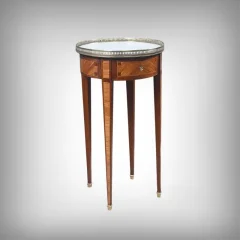
Antiquités Lecomte — Héric
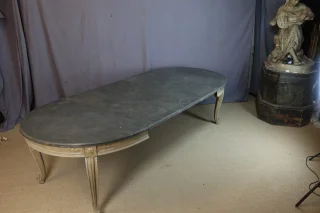
Philippe Cote Antiquites — Chauffailles
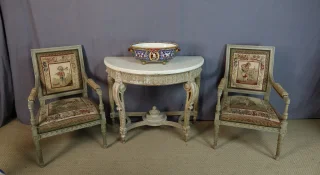
Philippe Cote Antiquites — Chauffailles
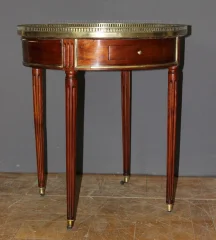
Antiquités Christophe Rochet — Villeurbanne
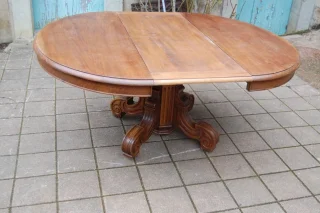
Antiquités Rousseau — Évry
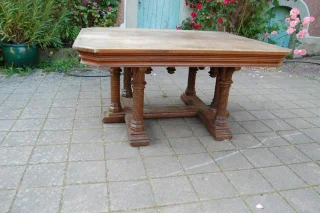
Antiquités Rousseau — Évry
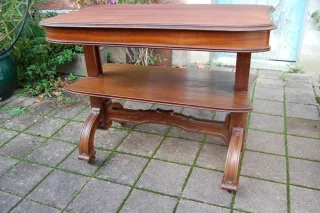
Antiquités Rousseau — Évry
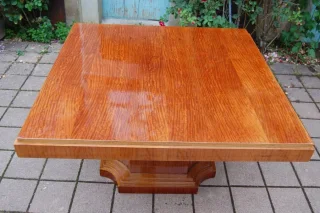
Antiquités Rousseau — Évry
Antiquités Rousseau — Évry
Antiquités Rousseau — Évry
Antiquités Rousseau — Évry
Antiquités Rousseau — Évry
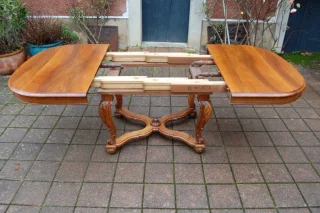
Antiquités Rousseau — Évry
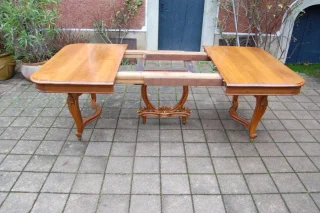
Antiquités Rousseau — Évry
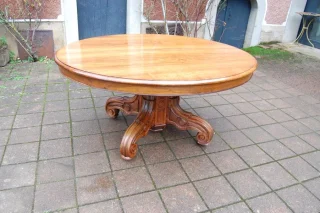
Antiquités Rousseau — Évry
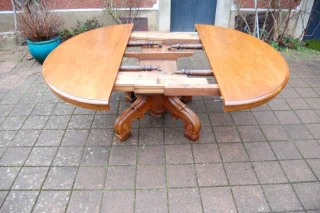
Antiquités Rousseau — Évry
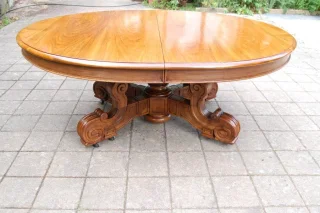
Antiquités Rousseau — Évry
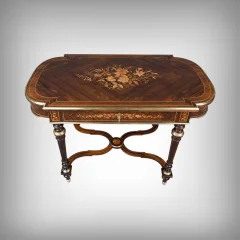
Antiquités Lecomte — Héric
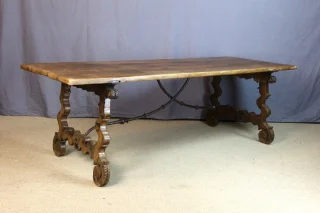
Philippe Cote Antiquites — Chauffailles
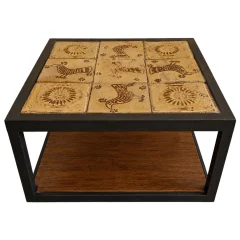
le village des brocanteurs 58 — Dun-les-Places
To authenticate an antique gueridon table, start with the wood: noble timbers — mahogany, rosewood, walnut — display even grain and a generous veneer thickness on genuine period pieces. Empire and Restauration mahogany tripod tables are recognisable by their sabre or claw feet, typically finished with finely chiselled bronze sabots. Check that the bronze mounts are screwed from the inside rather than glued — a hallmark of careful, original manufacture.
Napoleon III gueridons frequently feature a coloured marble top — violet breccia, sea-green marble or Belgian black — set into a carved wood or gilt bronze apron. Inspect the top carefully: hairline cracks invisible to the eye can be felt by running a hand across the underside. An original top, even lightly restored, is always preferable to a later replacement, and adds meaningfully to value.
Budget-wise, a good-quality standard gueridon in sound condition typically sells for between £200 and £700, while a piece bearing a cabinetmaker's stamp or a Boulle marquetry top can reach several thousand pounds. Documented provenance — an old receipt, an interior photograph, a sale label — strengthens value considerably. You may also wish to explore our range of 19th-century marquetry round tables to broaden your search.
On Antiquités en France, every gueridon is offered by a verified professional dealer who can supply detailed photographs, exact dimensions and the history of the piece. Contact the dealer directly to request an authenticity certificate or a restoration report before completing your purchase.