
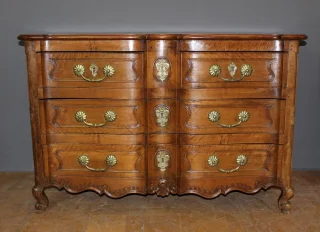
Crossbow-front Louis XV commode in walnut and wild cherry, 18th century
Antiquités Christophe Rochet — Villeurbanne
2 800,00 €
Very good condition
107 objects found
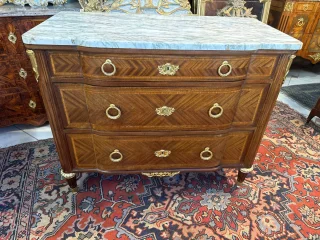
The arbalète commode takes its name from the double-inflection curve of its apron and sides — convex at the centre, concave at the flanks — which, viewed from above, traces the silhouette of a crossbow. A hallmark of Louis XV cabinetmaking at its most refined, it is distinguished by a continuous serpentine swell on all four faces, cabriole legs and finely chiselled gilt bronze mounts. The most prized timbers — walnut, mahogany, kingwood and tulipwood — are frequently enriched with tulipwood marquetry or parquetry veneers.
A centrepiece of the salon or bedchamber, the arbalète commode represents French Rococo elegance at its peak. Browse the selection below from our specialist commode dealers.
107 objects found
Antiquités Christophe Rochet — Villeurbanne
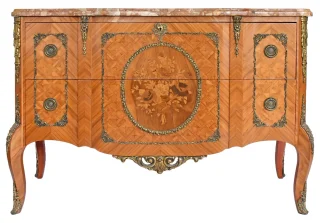
Espaces et Formes — Paris XVIII Arrdt
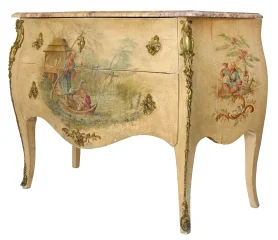
Espaces et Formes — Paris XVIII Arrdt
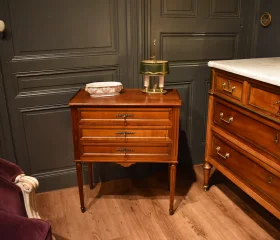
Antiquités Anne Marie Perrier — La Boisse
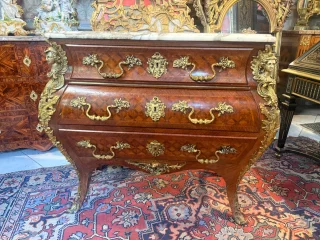
Romain Lichtensztein — Maignelay-Montigny
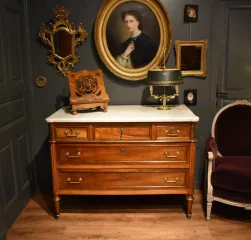
Antiquités Anne Marie Perrier — La Boisse
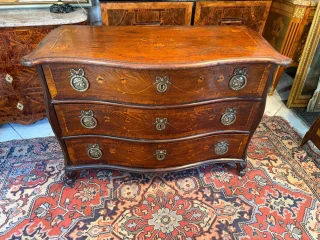
Romain Lichtensztein — Maignelay-Montigny
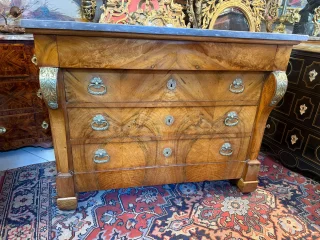
Romain Lichtensztein — Maignelay-Montigny
Romain Lichtensztein — Maignelay-Montigny
le village des brocanteurs 58 — Dun-les-Places
le village des brocanteurs 58 — Dun-les-Places
le village des brocanteurs 58 — Dun-les-Places
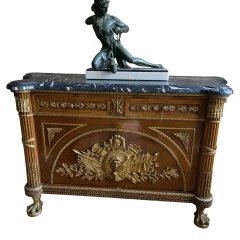
le village des brocanteurs 58 — Dun-les-Places
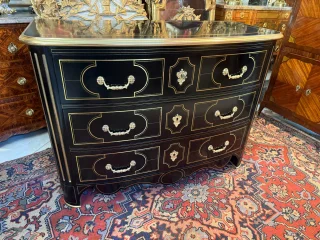
Romain Lichtensztein — Maignelay-Montigny
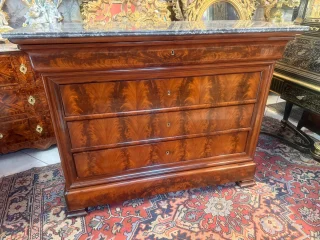
Romain Lichtensztein — Maignelay-Montigny
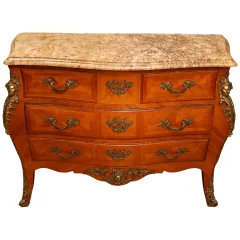
le village des brocanteurs 58 — Dun-les-Places
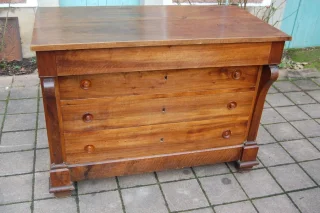
Antiquités Rousseau — Évry
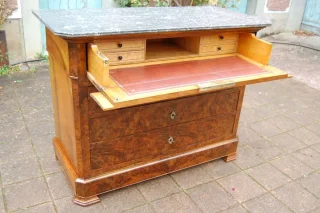
Antiquités Rousseau — Évry
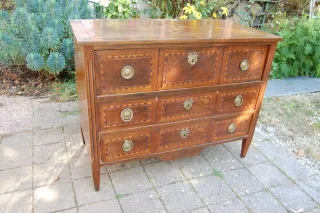
Antiquités Rousseau — Évry
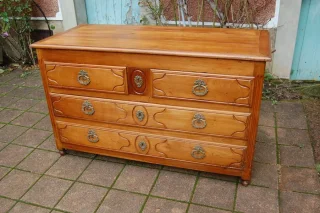
Antiquités Rousseau — Évry
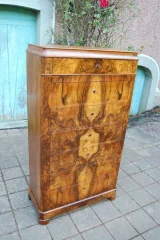
Antiquités Rousseau — Évry
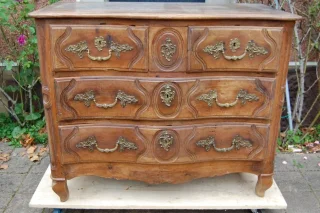
Antiquités Rousseau — Évry
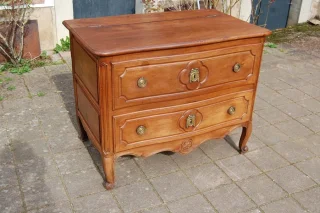
Antiquités Rousseau — Évry
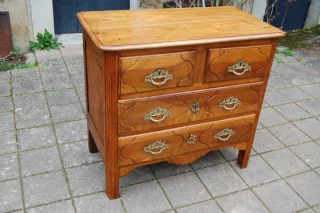
Antiquités Rousseau — Évry
Identifying a genuine period arbalète commode requires a few key reference points. The serpentine profile must flow continuously and harmoniously across all four faces — apron, sides and front — with no awkward breaks or later reworking. Examine the bronzes closely: original handles, escutcheons and sabots display crisp, even chiselling and a warm, consistent gilded patina, free from the thick, brassy overlay typical of later replacements. A cabinetmaker's stamp on the back of a drawer or beneath the top is a strong indicator of quality and adds meaningful value.
In terms of materials, favour pieces in solid walnut or period mahogany with original veneers, and check that the drawer runners are in unrestored wood. The original marble top — brèche violette, griotte or Campan marble — should show a gentle, age-consistent patina. Be wary of replacement marble slabs that appear too pristine, or of uniformly bright surfaces that betray recent polishing.
Budget expectations vary considerably. A good regional arbalète commode without a maker's stamp typically sells for between £700 and £2,500; a Parisian piece with an ébéniste's stamp, original gilt bronzes and its first marble top can reach £7,000 to £13,000 or more. Serpentine Louis XV commodes in sound, unrestored condition are consistently the most sought-after by serious collectors. For broader context on French 18th-century case furniture, exploring the full range of antique commodes on the platform is a useful starting point.
Every arbalète commode listed on Antiquités en France is offered by a verified professional dealer who can supply detailed photographs, precise dimensions and full provenance information. Contact the seller directly before purchasing — a knowledgeable antiquaire will always welcome your questions and help you buy with complete confidence.