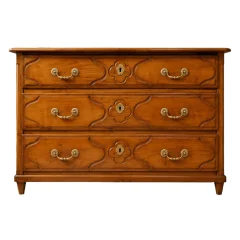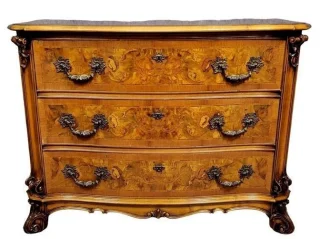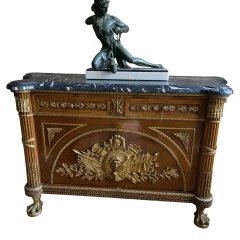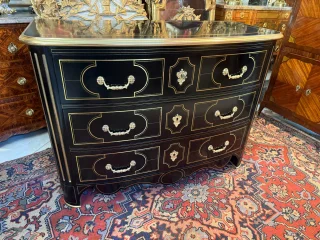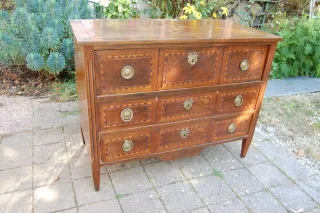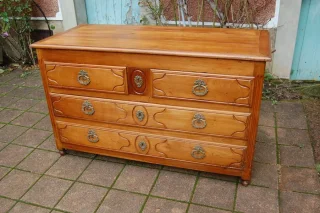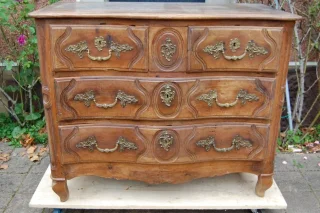
Antique Ship's Chests of Drawers

24 objects found

Loading
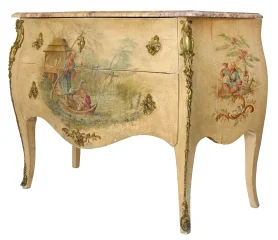
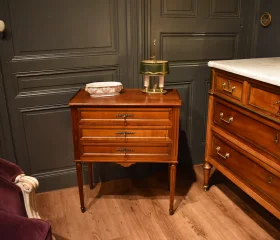
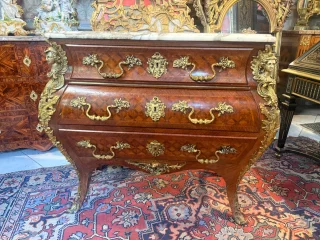
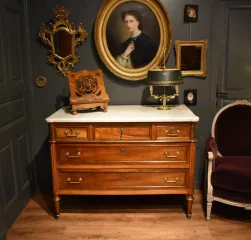
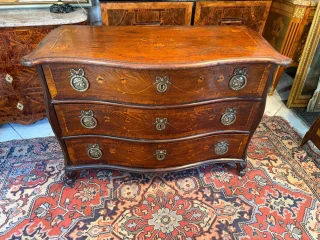
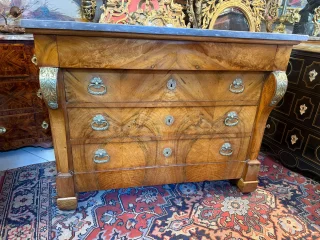
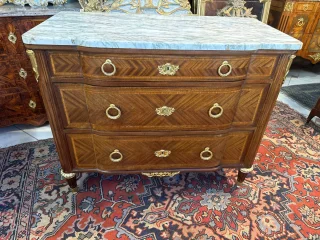
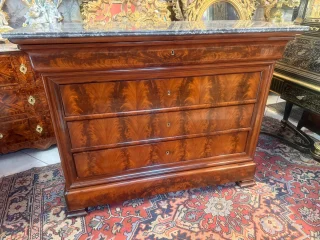
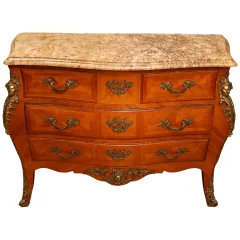
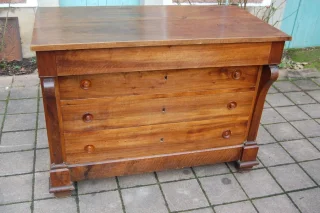
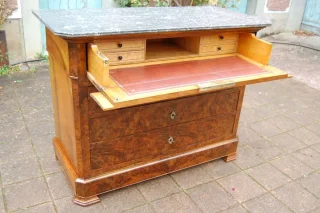
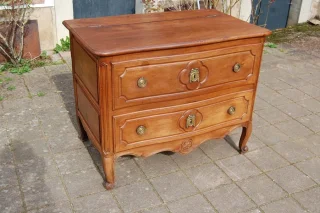
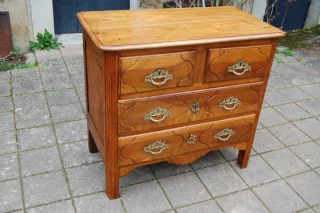
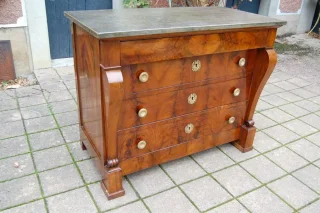
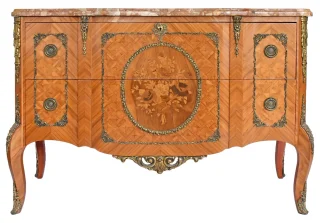
Ship's chests of drawers — or marine commodes — were purpose-built for life at sea: rounded or chamfered corners to prevent injury during heavy rolling, flush-fitting brass handles that sit level with the drawer fronts, and internal locking mechanisms to keep drawers shut in rough weather. Made predominantly in solid mahogany or teak between the 18th and early 20th centuries, they combine genuine robustness with a sober, understated elegance. Their compact, slightly bowed silhouette sets them apart instantly from ordinary antique chests of drawers. Browse our curated selection of authentic pieces from dealers specialising in nautical antiques.

Marine commodes and ship's cabin furniture offered by specialist dealers

24 objects found

How to choose and authenticate an antique ship's chest of drawers

Authenticating a genuine antique ship's chest of drawers requires a few key checks. Start with the construction: corners must be consistently rounded or chamfered — a safety requirement at sea that no land furniture needed — and every drawer should carry some form of restraint mechanism, whether an interior latch, a stop-groove or a sliding bolt. Flush brass drawer handles, recessed so they never protrude beyond the façade, are one of the strongest markers of genuine marine origin. The most common timber is Cuban or Honduran mahogany, prized for its dimensional stability and natural resistance to humidity; teak and, less frequently, walnut also appear on French naval examples. For dating, 18th-century pieces typically show a gently bowed drawer front and hand-forged ironmongery with slight irregularities, while 19th-century examples display more uniform, industrially produced hardware. A maker's stamp from a naval workshop — certain ateliers in Brest, Toulon or Rochefort supplied the French Marine nationale directly — or a ship's inventory accompanying the piece adds considerably to provenance and value. Be cautious of ordinary land furniture retrofitted with recessed handles: check that the joinery, the wear patterns on the drawer runners and the overall patina are consistent throughout. For care, a good-quality natural wax — beeswax or carnauba — applied once or twice a year is all that is needed. Avoid film-forming varnishes or modern polishes that would obscure the original patina. Minor veneer repairs are common and perfectly acceptable, provided they have been carried out with period-appropriate timbers and reversible adhesives. On Antiquités en France, every ship's chest of drawers is listed by a verified professional dealer who can supply detailed photographs, precise dimensions and full provenance information before purchase. Broaden your search to other antique ship's cabin furniture or explore the full range of nautical antiques to build a coherent collection.

Frequently asked questions about Antique Ship's Chests of Drawers

What does an antique ship's chest of drawers typically cost?
Prices depend on age, timber and condition. Expect to pay £350–£1,000 for a sound 19th-century example, and £1,500–£4,000 or more for an 18th-century piece with documented provenance and original brass fittings.
How do I tell a genuine marine commode from a converted land piece?
Look for consistently rounded or chamfered corners, flush-fitting brass handles, and drawer-locking mechanisms. Uniform wear on the runners, coherent patina across the whole piece, and joinery consistent with marine construction are the most reliable indicators of authenticity.
What wood was most commonly used for ship's chests of drawers?
Solid mahogany — Cuban or Honduran — dominates, valued for its resistance to humidity and stability at sea. Teak appears on later examples, and walnut or oak occasionally on pieces made for the French navy.
How should I care for an antique ship's chest of drawers?
Apply a natural wax such as beeswax or carnauba once or twice a year. Avoid excessive humidity, sudden temperature changes, and any film-forming varnish that would mask the original patina. Keep brass fittings clean with a mild, non-abrasive metal polish.
Can antique ship's furniture be shipped internationally?
Yes. Most professional dealers work with specialist fine-art carriers who provide custom crating and internal padding. For international shipments, an export certificate may be required depending on the age and value of the piece — your dealer can advise.