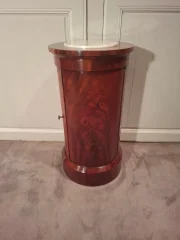
SOMNO BEDSIDE TABLE
ANTIQUITES VANGEON — Chartres
1 180,00 €
3 objects found
Antique English wardrobes are prized for their robust construction, generous proportions and the quality of their timbers — West Indian mahogany, English oak, walnut and elm. From the restrained elegance of Georgian and Regency pieces to the richly carved Victorian mahogany wardrobes of the 19th century, each piece reflects the mastery of British cabinet-makers. Recognisable by their moulded panels, original brass hardware and carefully fitted interiors, these pieces combine lasting practicality with timeless style.
Browse our curated selection from verified professional dealers, covering all major British periods and a wide range of antique English furniture.
3 objects found
Authenticating an antique English wardrobe begins with the construction. Hand-cut dovetail joints, floating panels and secondary-wood backs in oak or pine are hallmarks of genuine period craftsmanship. Hardware should be consistent with the era: patinated brass hinges, locks and swan-neck handles for Georgian examples, nickel-plated fittings for Edwardian pieces. A maker's label — particularly from a London or Lancaster cabinet-maker — or a trade stamp on the back board adds significantly to provenance and value.
In terms of style, Georgian walnut wardrobes (1714–1830) favour clean lines, balanced proportions and lighter veneers, while Victorian pieces (1837–1901) tend toward darker mahogany, bold carved decoration and bevelled mirror panels. Edwardian wardrobes, produced from 1901 to around 1910, are lighter in feel, often incorporating satinwood inlay and glazed panels. Each period has its own character, and mixing them thoughtfully can create a coherent interior.
On the question of budget, expect to pay from a few hundred pounds for a sound Victorian wardrobe in condition consistent with age and use, up to several thousand for a documented Georgian piece in solid mahogany or one bearing the label of a celebrated maker such as Gillows of Lancaster. Always inspect the panels for splits or warping, check that the carcass joints are tight, and satisfy yourself that any restorations are sympathetic and well-executed. Ask the dealer for detailed photographs of the interior, the back boards and any maker's marks before committing.
On Antiquités en France, every antique English wardrobe is offered by a verified professional dealer who can supply precise dimensions, condition reports and provenance documentation. Explore our listings for antique English linen presses as a related storage form, and contact the dealer directly with any questions — expert advice before purchase is part of the service.