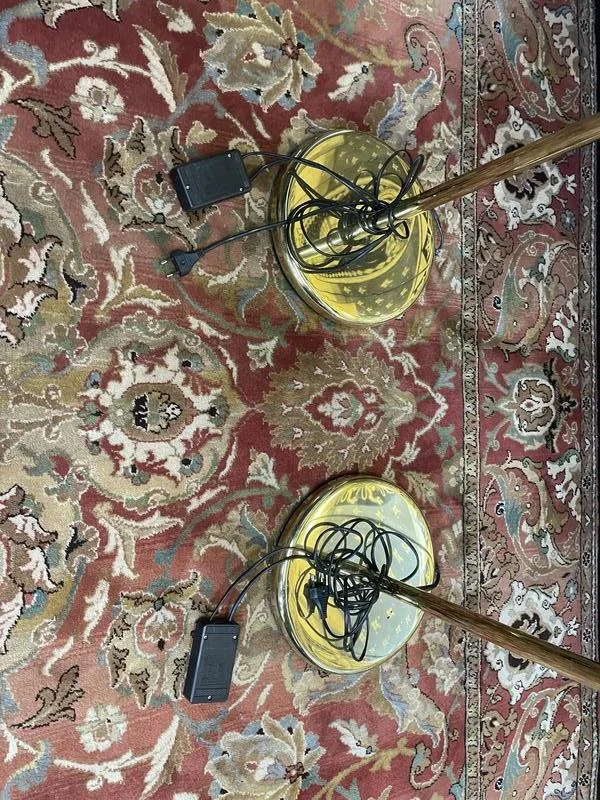
Marabout lamp
L’ESTAMPILLE — Navilly
100,00 €
5 objects found
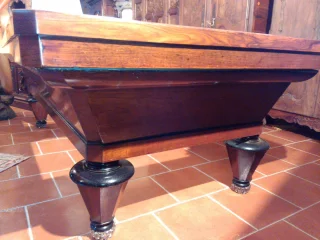
An antique billiard table is far more than a games piece — it is a statement of craftsmanship, a centrepiece that reflects the cabinetmaking mastery of the 19th century. Leading French and English manufacturers produced period billiard tables in solid mahogany, carved walnut and oak, typically featuring turned or sculpted legs, refined marquetry and original vulcanised rubber cushions. Ivory or early resin balls, ash-wood cues and braided leather pockets complete these highly sought-after sets.
Three main types exist: the French carom table (no pockets, three balls), the English snooker or billiards table (six pockets), and the American pool table. Each has its own dimensions, playing mechanics and aesthetic codes — all worth understanding before you buy.
5 objects found
To authenticate an antique billiard table, start with the bed: a natural slate top — usually several slabs jointed together — is the hallmark of serious period manufacture. Sculpted legs in Napoléon III, Louis-Philippe or Renaissance Revival style, aged natural-rubber cushions and original braided leather pockets are all strong indicators of quality. Look for a maker's plate screwed beneath the frame: houses such as Béziat and Billard Toulet in France, or English manufacturers Thurston and Riley, left identifiable marks that can be cross-referenced with trade catalogues.
Dimensions matter too. A standard French carom billiard table typically measures 2.10 m × 1.05 m (the "2/4" format) or 2.80 m × 1.40 m (the "3/6" format). Check that the slate bed is perfectly level, inspect the solidity of the joints and mortise-and-tenon frame, and assess the condition of the cushions. The cloth covering is entirely replaceable without affecting value — what matters is that the woodwork, slate and cushions are original.
Prices vary widely. Expect to pay £1,200–£3,500 for a good-condition bourgeois parlour table, and £5,000–£18,000 or more for a signed manufacturer's piece with carved legs and a full set of period accessories. Antique billiard accessories — wall-mounted cue racks, scoreboard markers, ivory balls and leather-wrapped cues — are also collected independently and complement a table beautifully. For a coherent period setting, explore the character furniture and industrial antiques that pair naturally with these prestige pieces.
Every billiard table listed on Antiquités en France is offered by a verified professional dealer who can supply detailed photographs, precise measurements and full provenance information. Contact the seller directly to request additional details or arrange a viewing before committing to a purchase.