
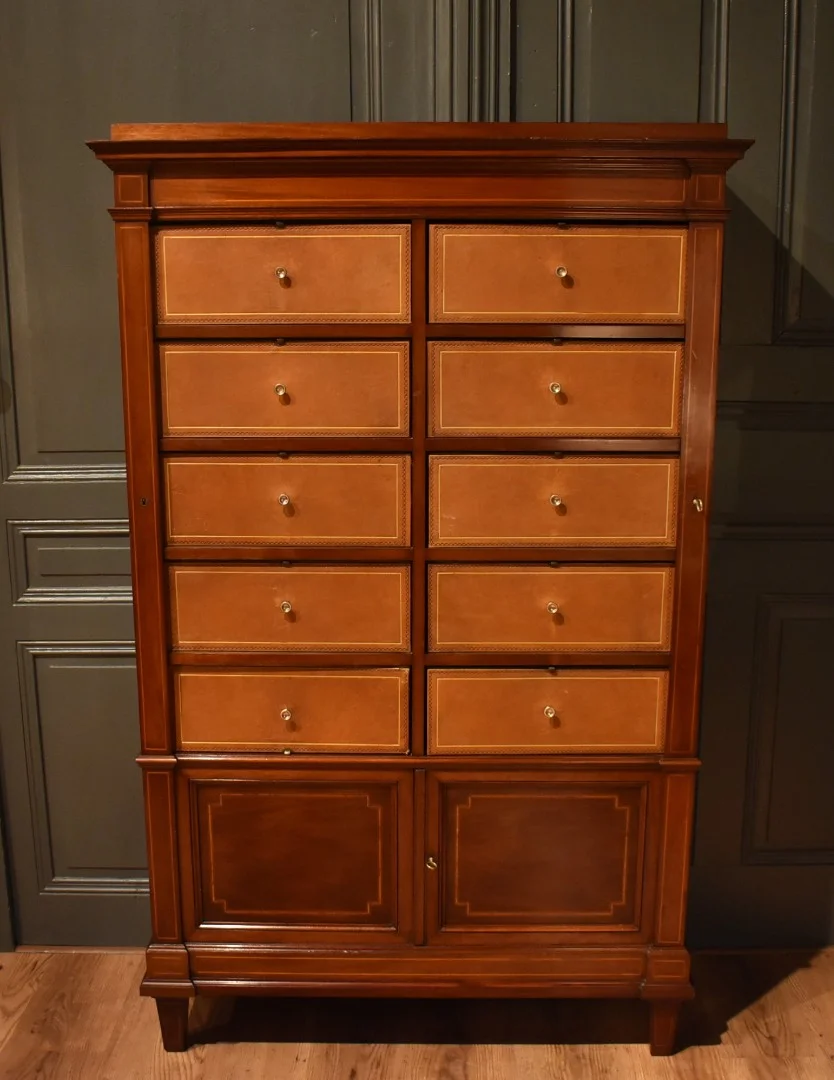
LOUIS XVI STYLE CARTONNIER
Antiquités Anne Marie Perrier — La Boisse
1 580,00 €
24 objects found
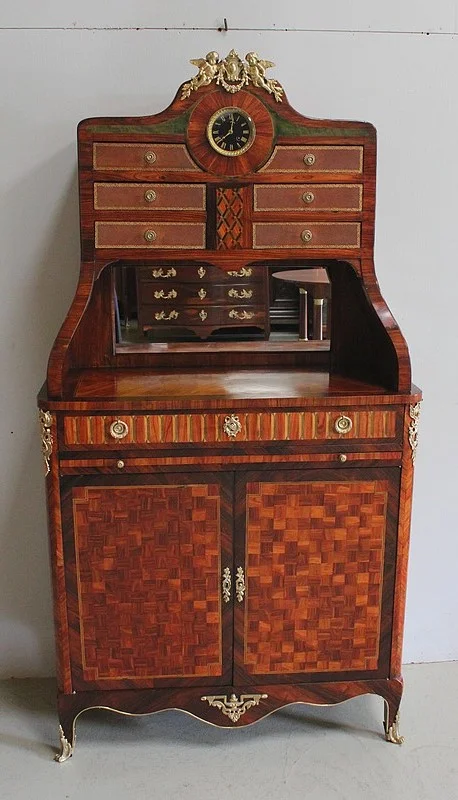
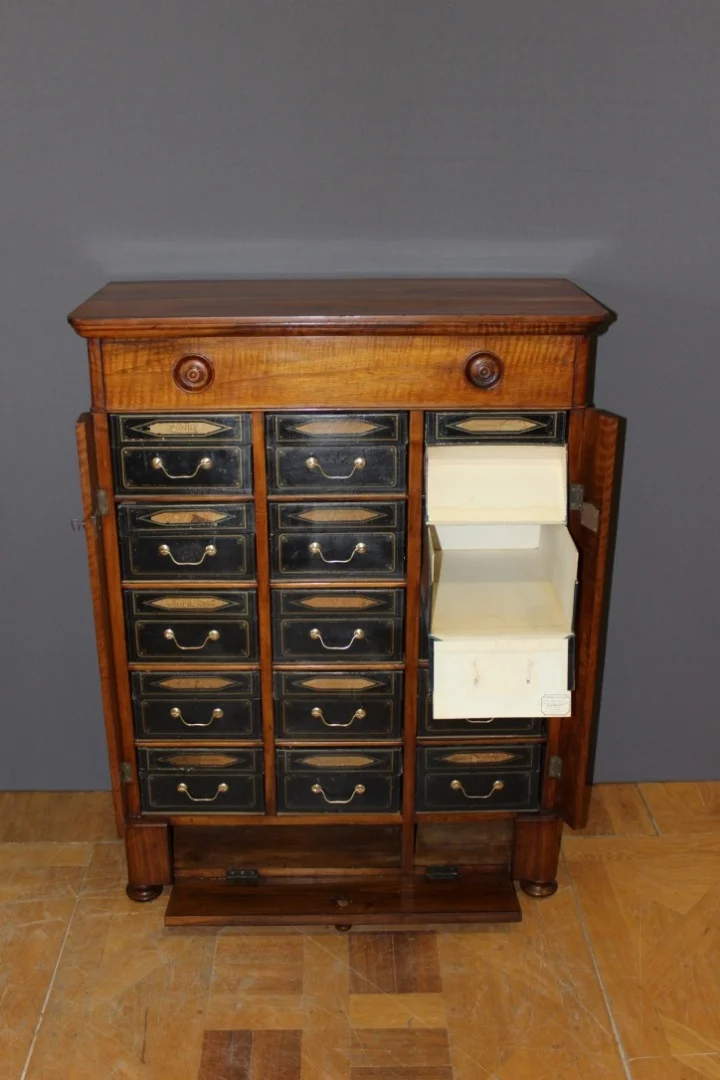
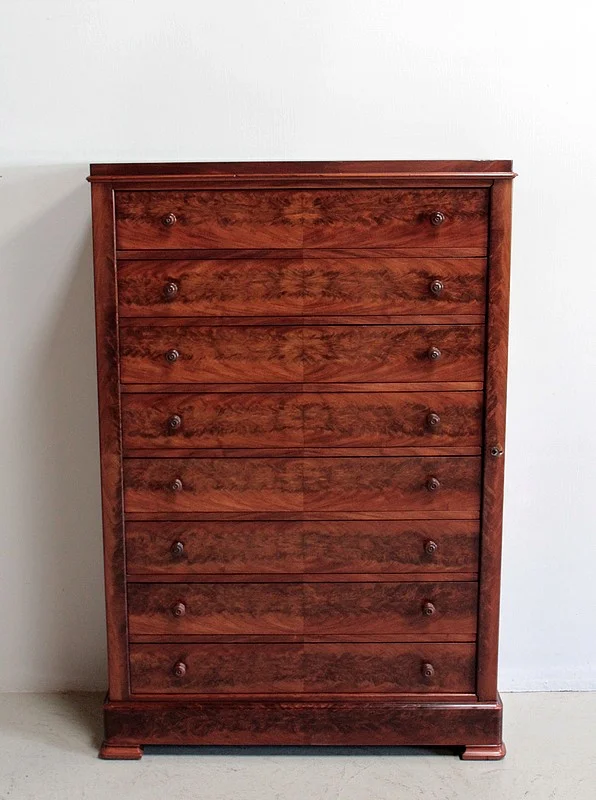
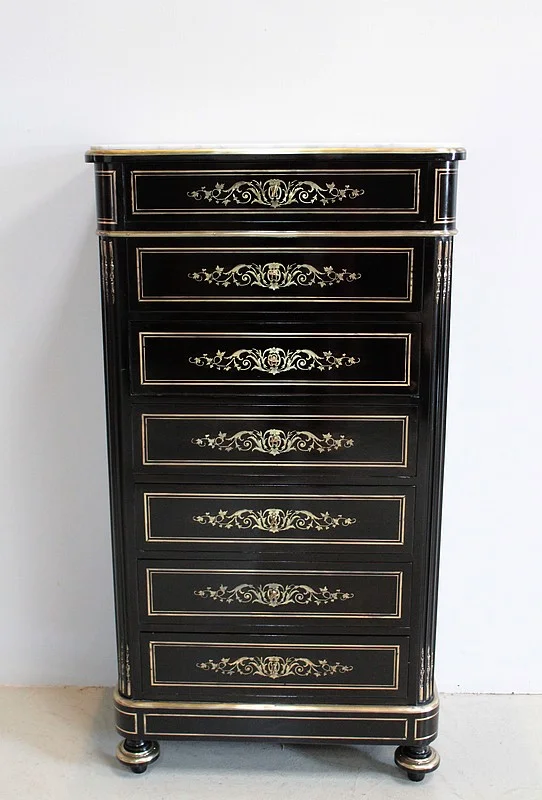
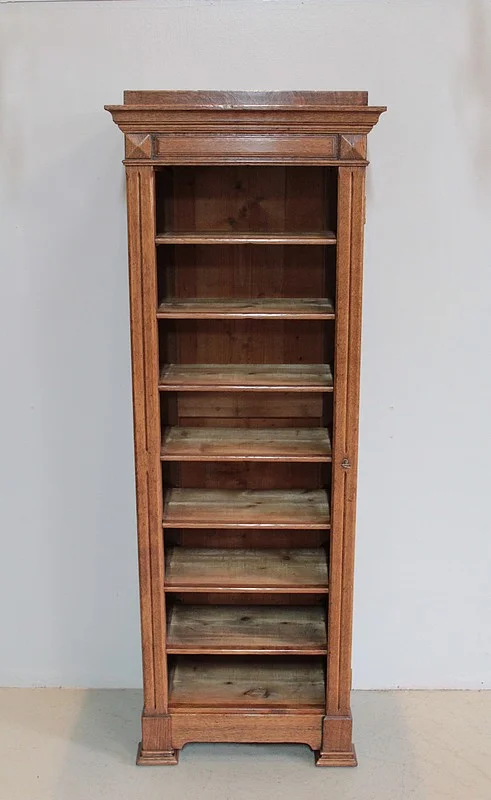
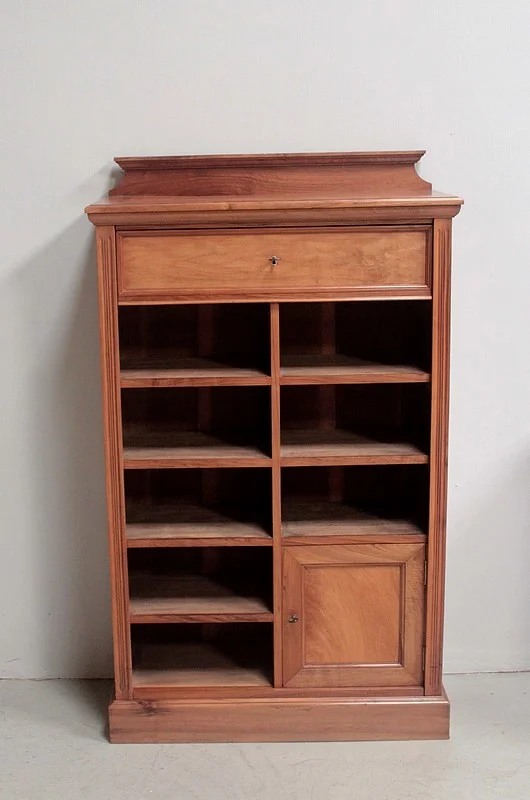
Emerging in 18th-century France for the studies of grand private mansions, the antique cartonnier is a desk cabinet designed to organise documents, plans and correspondence in open compartments or drawers. Typically paired with a bureau plat or set atop a commode, it is distinguished by the quality of its timbers — mahogany, rosewood, walnut — and the refinement of its gilt bronze mounts. Leading ébénistes from Riesener to Jacob-Desmalter produced outstanding examples that remain highly sought after by collectors today.
24 objects found
Antiquités Anne Marie Perrier — La Boisse
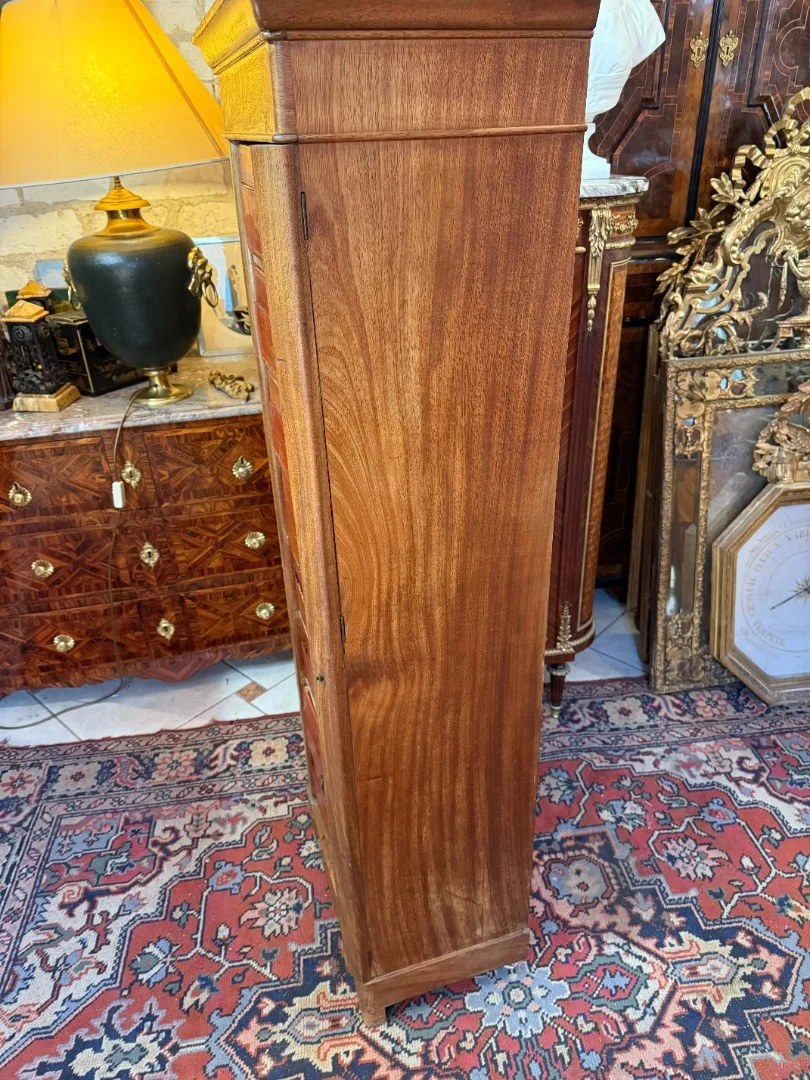
Romain Lichtensztein — Maignelay-Montigny
Galerie Lauretta — Mandelieu-la-Napoule
la caleche caennaise — Mondeville
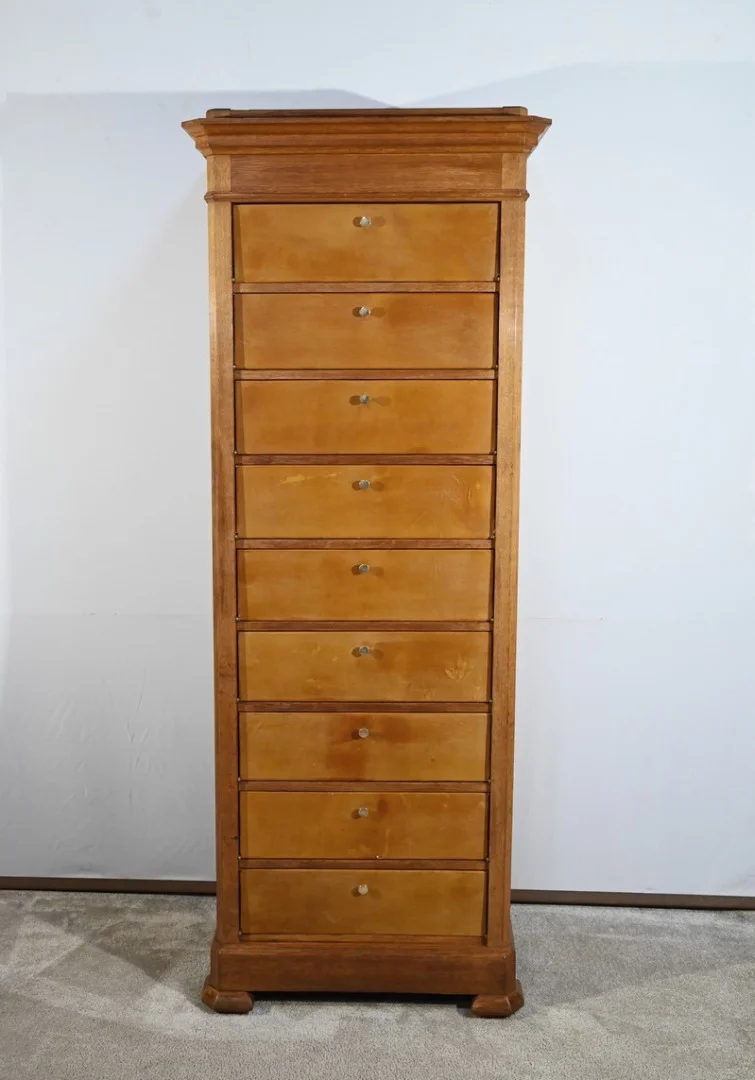
Antiquités Lecomte — Héric
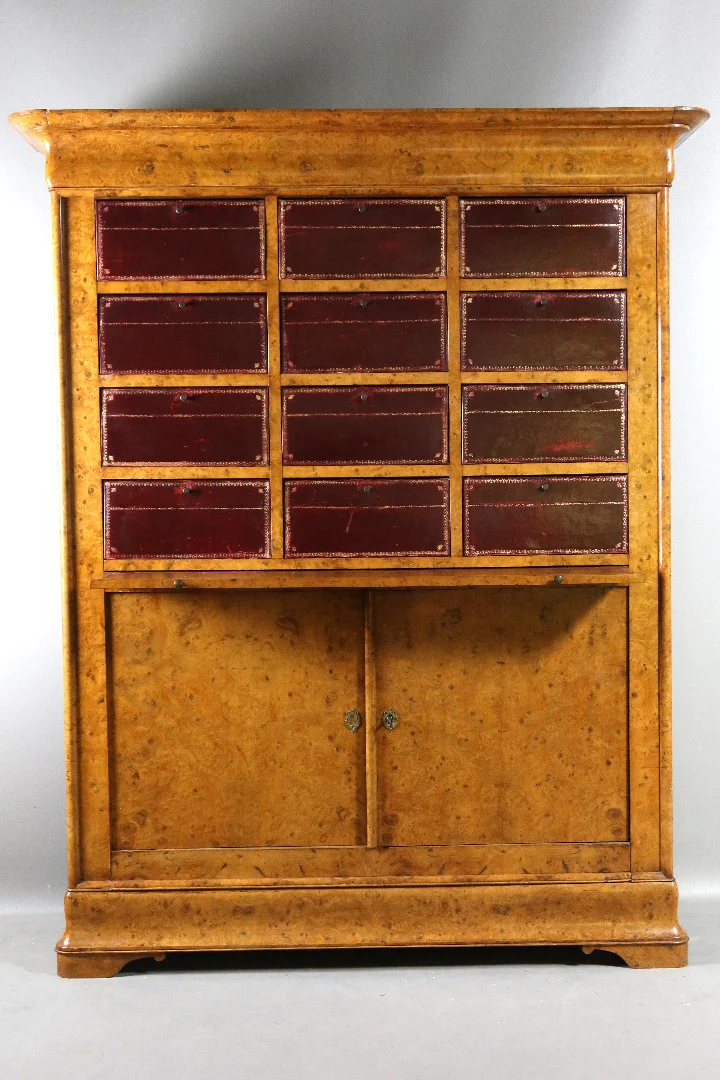
Philippe Cote Antiquites — Chauffailles
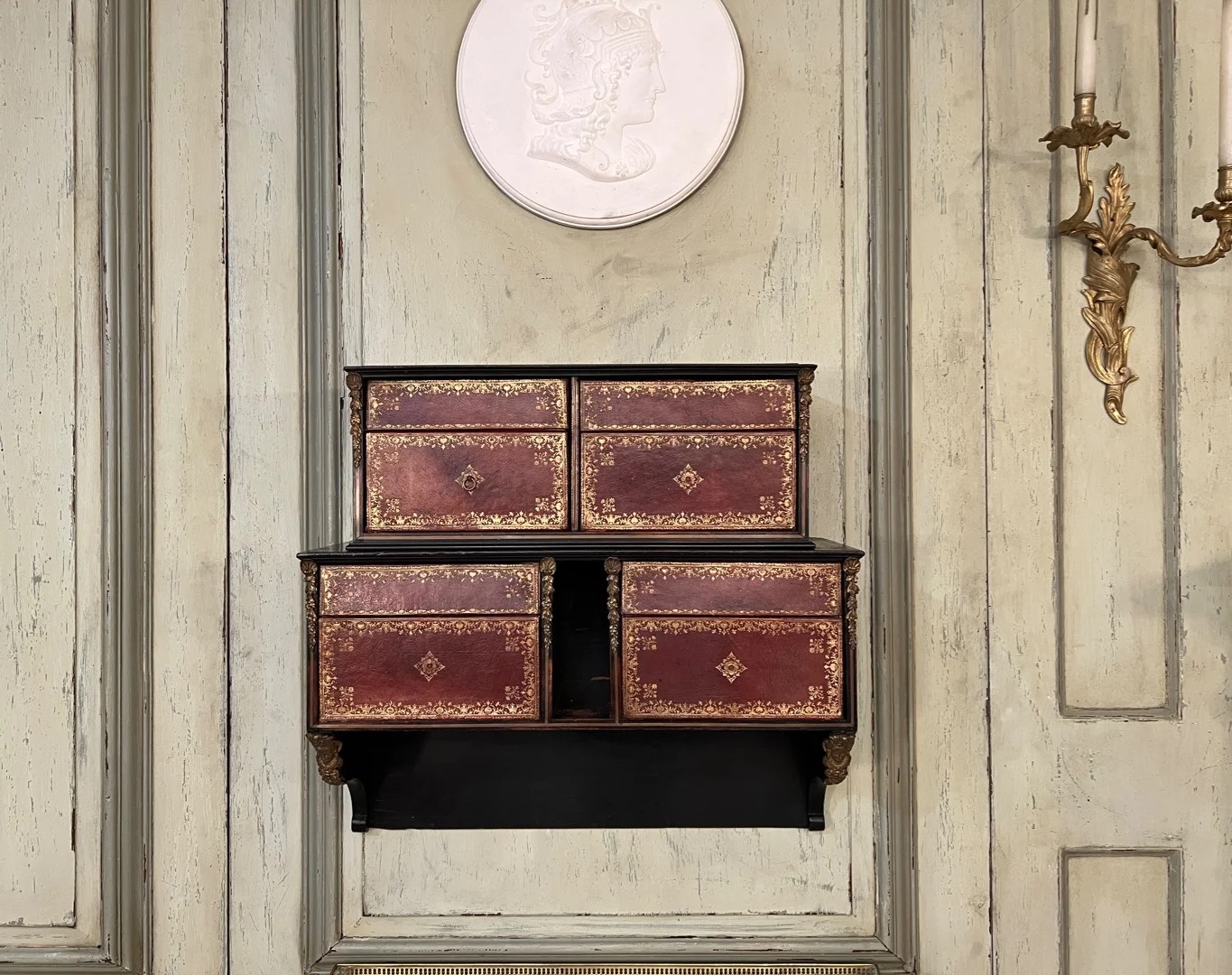
Dantan — Achicourt
Antiquités Christophe Rochet — Villeurbanne
Antiquités Lecomte — Héric
Antiquités Lecomte — Héric
Antiquités Christophe Rochet — Villeurbanne
Antiquités Lecomte — Héric
Antiquités Lecomte — Héric
Antiquités Lecomte — Héric
Antiquités Lecomte — Héric
Antiquités Lecomte — Héric
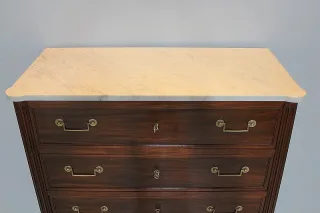
Antiquités Lecomte — Héric
Antiquités Lecomte — Héric
Antiquités Lecomte — Héric
Antiquités Lecomte — Héric
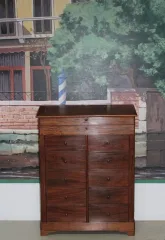
Antiquités Lecomte — Héric
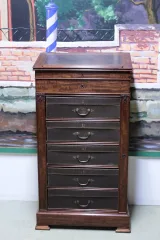
Antiquités Lecomte — Héric
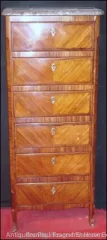
Antiquites Paul Fragne Et Herve Bouyer — Angoulême
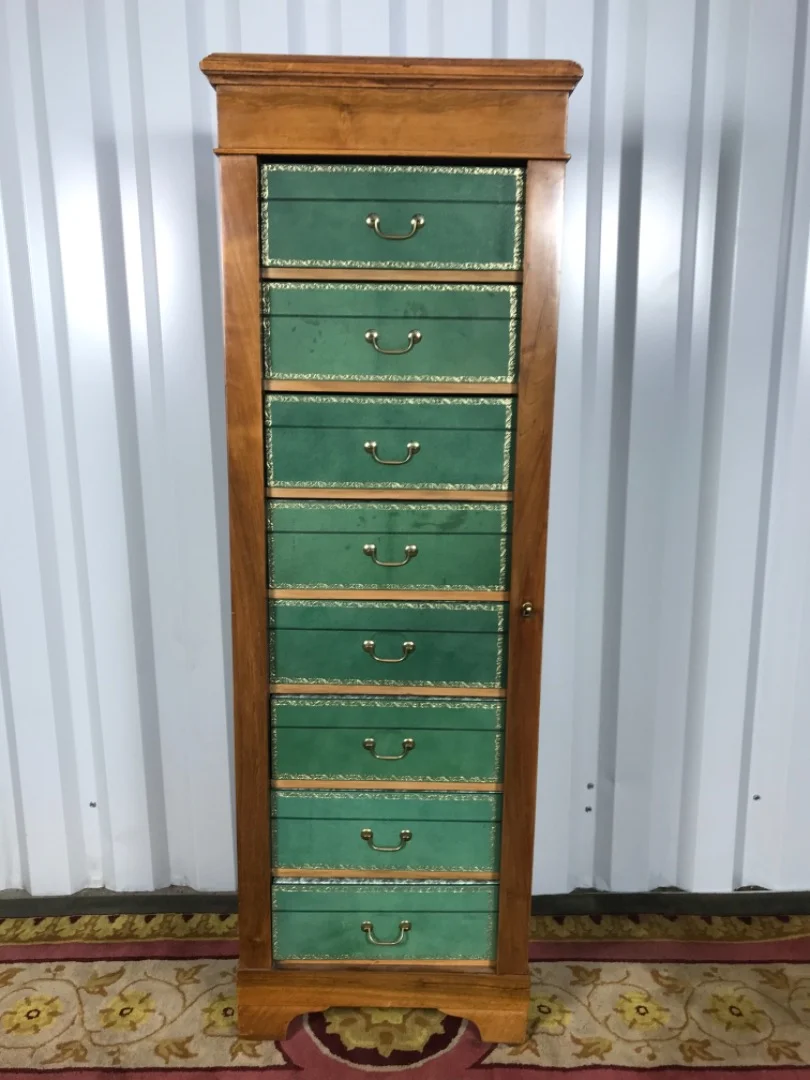
L’ESTAMPILLE — Navilly
To authenticate a period cartonnier, begin by examining the stamp or cachet applied beneath the piece or inside a drawer: master ébénistes under the Ancien Régime were required by guild law to mark their work. A legible stamp from Riesener, Leleu or Carlin represents a considerable guarantee of value. Where no stamp is present, the quality of the veneers — flame mahogany, parquetry and stringing inlay in wood or brass — and the coherence of the original gilt bronze mounts will guide attribution.
For dating, Louis XVI cartonniers are recognisable by their fluted uprights and neoclassical bronzes; Empire models favour solid mahogany, engaged columns and finely chiselled antique-style bronze ornaments. Restauration and Charles X pieces introduce lighter timbers — maple, lemonwood — with black-strung inlays. A cartonnier paired with its original bureau plat forms a rare matched suite that commands particular attention from serious collectors.
In terms of budget, expect to pay from a few hundred pounds for a sound 19th-century example up to tens of thousands for a stamped 18th-century masterpiece with documented provenance. Always check the condition of the compartments, the flatness of the veneers and the authenticity of the bronze mounts — later replacements significantly reduce value. Pieces with a clear ownership history or auction records carry a meaningful premium.
On Antiquités en France, every cartonnier is offered by a verified professional antique dealer who can supply detailed photographs, precise dimensions and the full history of the piece. Browse our antique bureau plat listings to find a matching desk, and contact the dealer of your choice directly for a condition report or pre-purchase appraisal.