
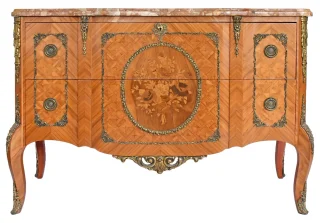
Louis XV style commode
Espaces et Formes — Paris XVIII Arrdt
850,00 €
Good condition
113 objects found
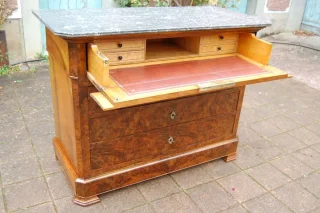
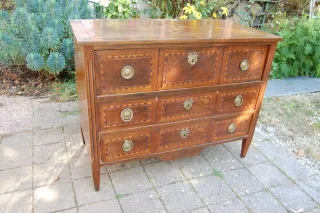
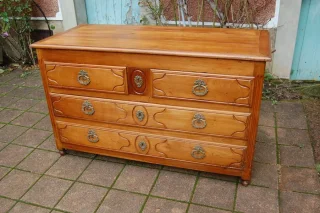
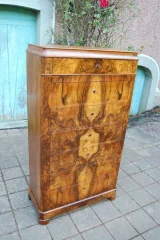
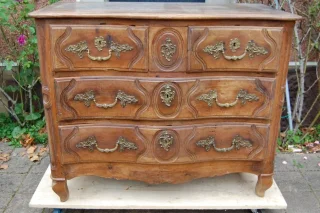
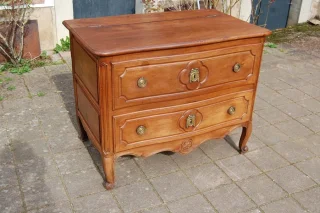
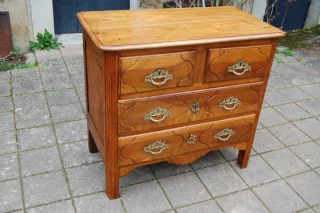
The commode sauteuse is one of the most elegant forms in 18th-century French furniture: lower and narrower than a standard chest of drawers, it features just two superimposed drawers set on tall, sweeping cabriole legs. Emerging under Louis XV, it combines visual lightness with practical charm, and is instantly recognisable by its slender proportions, finely chased gilt-bronze mounts, and decorative surfaces in rosewood marquetry or lacquer. Browse our full range of antique commodes to widen your search.
113 objects found
Espaces et Formes — Paris XVIII Arrdt
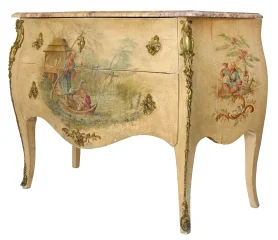
Espaces et Formes — Paris XVIII Arrdt
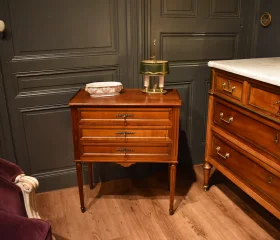
Antiquités Anne Marie Perrier — La Boisse
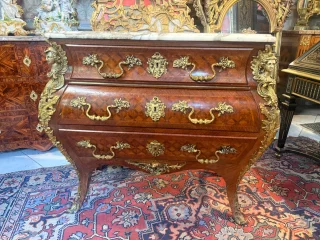
Romain Lichtensztein — Maignelay-Montigny
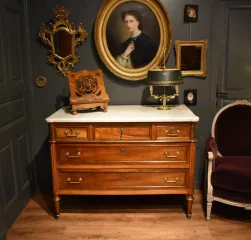
Antiquités Anne Marie Perrier — La Boisse
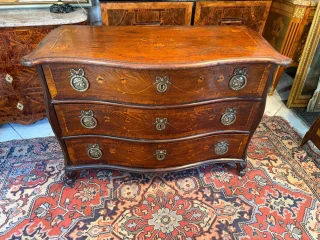
Romain Lichtensztein — Maignelay-Montigny
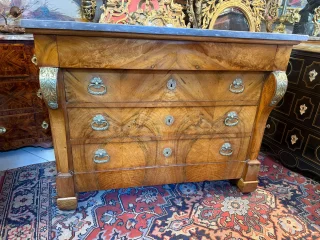
Romain Lichtensztein — Maignelay-Montigny
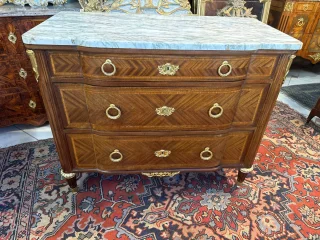
Romain Lichtensztein — Maignelay-Montigny
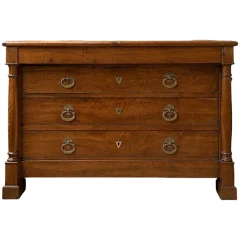
le village des brocanteurs 58 — Dun-les-Places
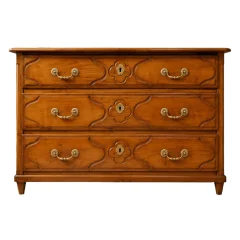
le village des brocanteurs 58 — Dun-les-Places
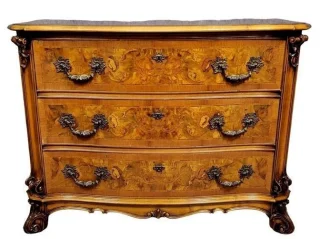
le village des brocanteurs 58 — Dun-les-Places
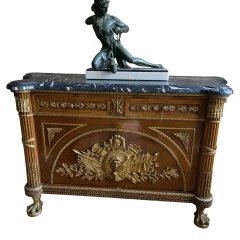
le village des brocanteurs 58 — Dun-les-Places
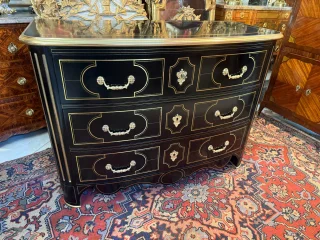
Romain Lichtensztein — Maignelay-Montigny
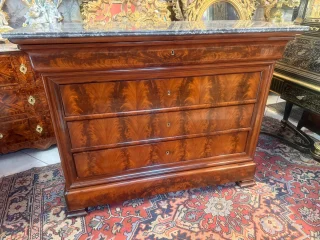
Romain Lichtensztein — Maignelay-Montigny
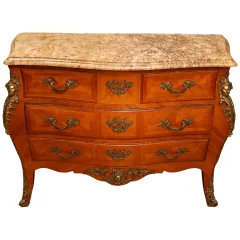
le village des brocanteurs 58 — Dun-les-Places
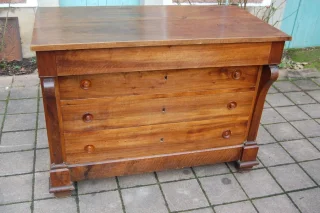
Antiquités Rousseau — Évry
Antiquités Rousseau — Évry
Antiquités Rousseau — Évry
Antiquités Rousseau — Évry
Antiquités Rousseau — Évry
Antiquités Rousseau — Évry
Antiquités Rousseau — Évry
Antiquités Rousseau — Évry
Antiquités Rousseau — Évry
Authenticating a period commode sauteuse begins with the construction. The drawers should slide on bare wood without modern metal runners, the secondary timber — poplar, oak or walnut depending on the workshop's region — should show consistent, natural ageing, and the dovetail joints should be hand-cut with the slight irregularity that no machine can replicate. An ébéniste's stamp struck on the back rail or underside of the top — BVRB, Migeon, Roussel, Topino — is a strong quality indicator and directly affects market value.
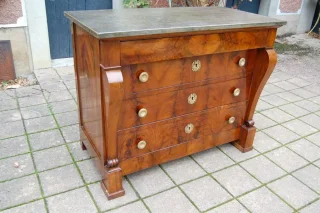
Decorative treatments vary by period and atelier. The most prized examples carry lacquered chinoiserie panels, while standard production pieces feature rosewood or tulipwood marquetry; mahogany veneer signals a Transition or Louis XVI example from the 1770s–1780s. Original bronze hardware — bail handles, escutcheons and sabots — should display an even, warm gilded patina with no sign of recent repolishing, which would betray heavy restoration.
In terms of budget, a good-quality period commode sauteuse without a maker's stamp typically sells for between £700 and £2,500. A piece bearing the stamp of a recognised Parisian ébéniste, or decorated with exceptional marquetry, can exceed £8,000–£10,000 depending on provenance and condition. Always inspect the veneer carefully for lifting or losses, check that the top is flat and stable, and confirm that any restorations are consistent with the original style. You may also wish to explore our selection of small antique French furniture for complementary pieces.
On Antiquités en France, every commode sauteuse is offered by a verified professional dealer who can provide detailed photographs, precise dimensions and full provenance information. Contact the seller directly to request a condition report or restoration certificate before committing to a purchase.