
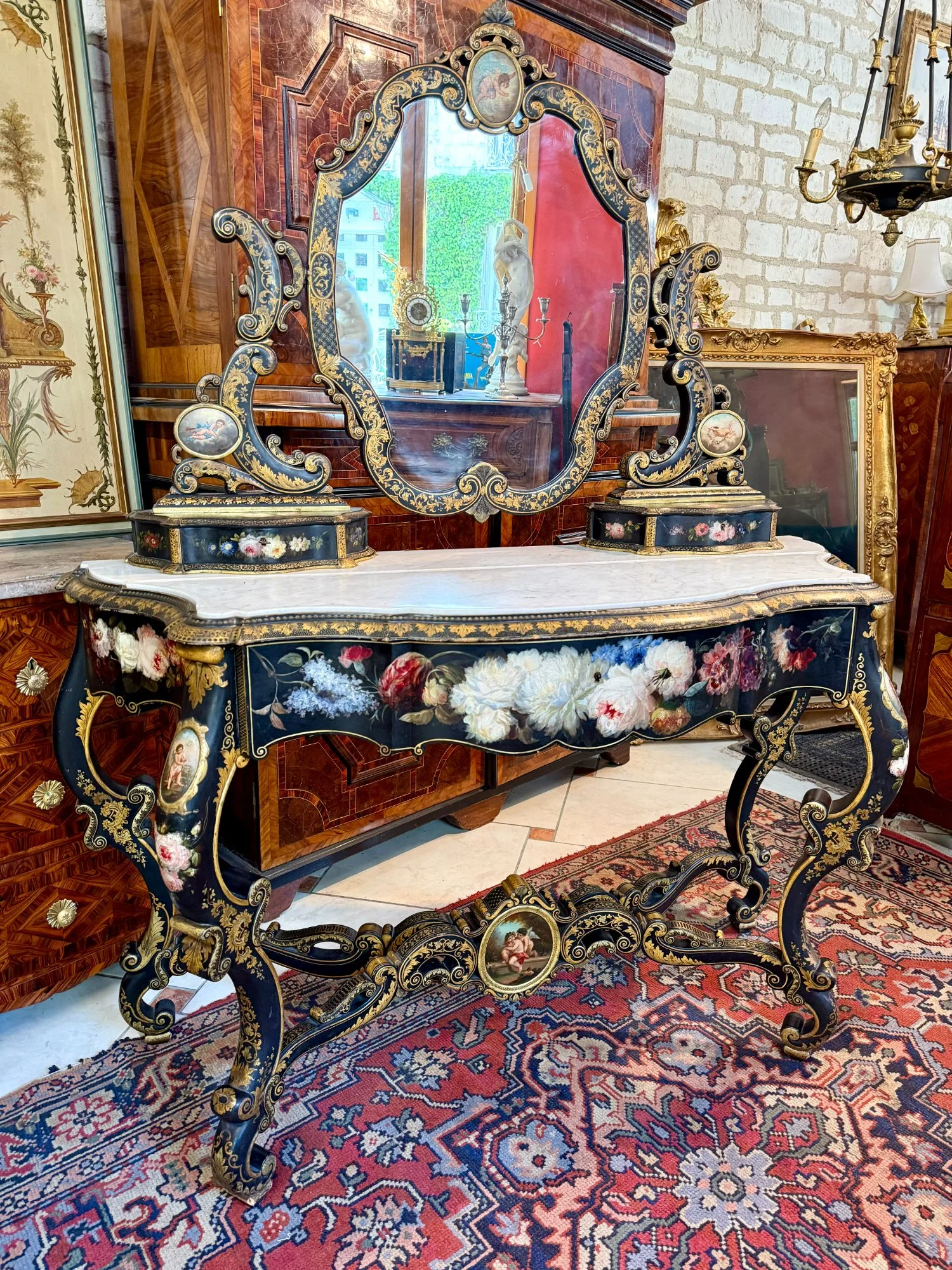
NAPOLEON III CONSOLE FORMING A DRESSING TABLE
Romain Lichtensztein — Maignelay-Montigny
6 000,00 €
Good condition
71 objects found
The antique dressing table ranks among the most refined pieces of French cabinet-making: designed for the dressing ritual, it combines a fitted drawer frieze, an adjustable mirror and often a hinged flap concealing additional storage. From the graceful cabriole legs of a Louis XV dressing table in walnut or tulipwood to the bold geometry of an Art Deco vanity with a triptych mirror, every period brought its own formal vocabulary.
The finest examples stand apart through the quality of their marquetry and veneers — amboyna burr, rosewood, satinwood — and through original gilt-bronze or chased-brass hardware that has never been replaced.
71 objects found
Romain Lichtensztein — Maignelay-Montigny
Philippe Cote Antiquites — Chauffailles
Antiquités Lecomte — Héric
Antiquités Lecomte — Héric
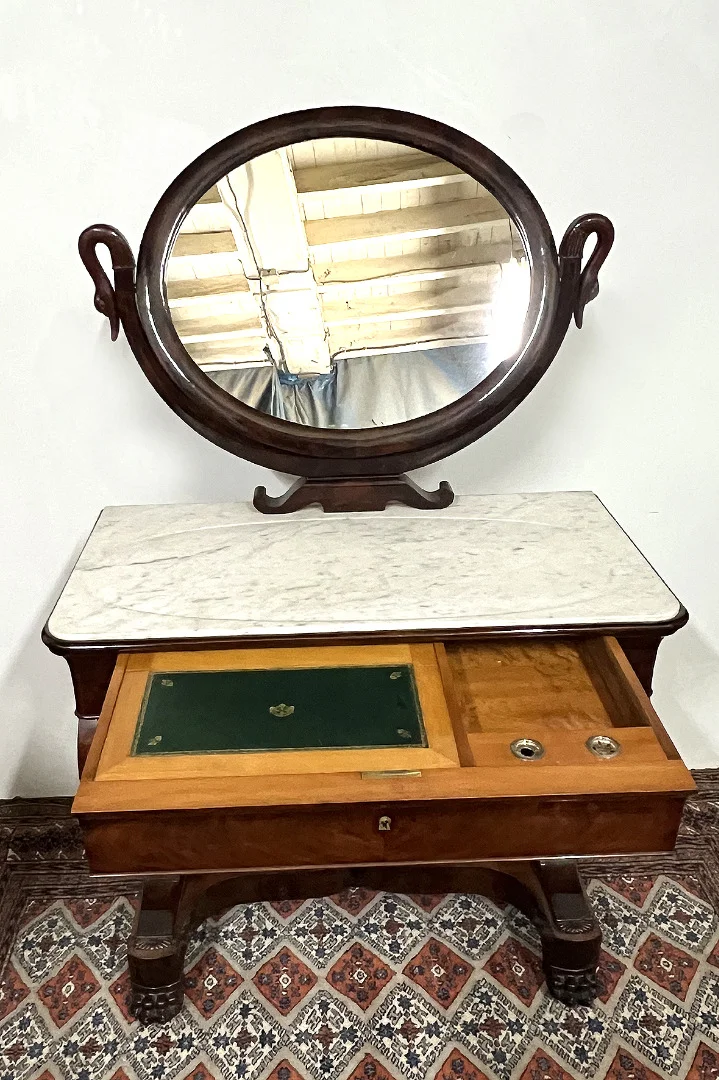
Antiquités GUY Jacques — Buchères
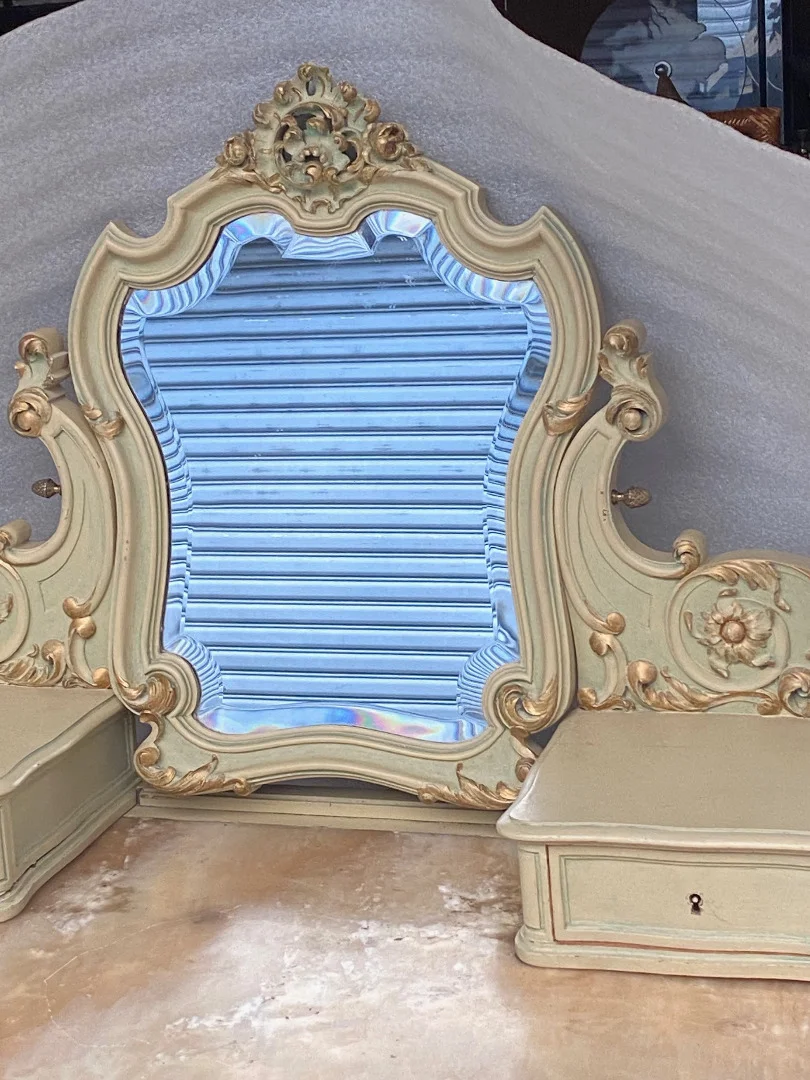
A.ABC PASCAL — Saint-Ouen
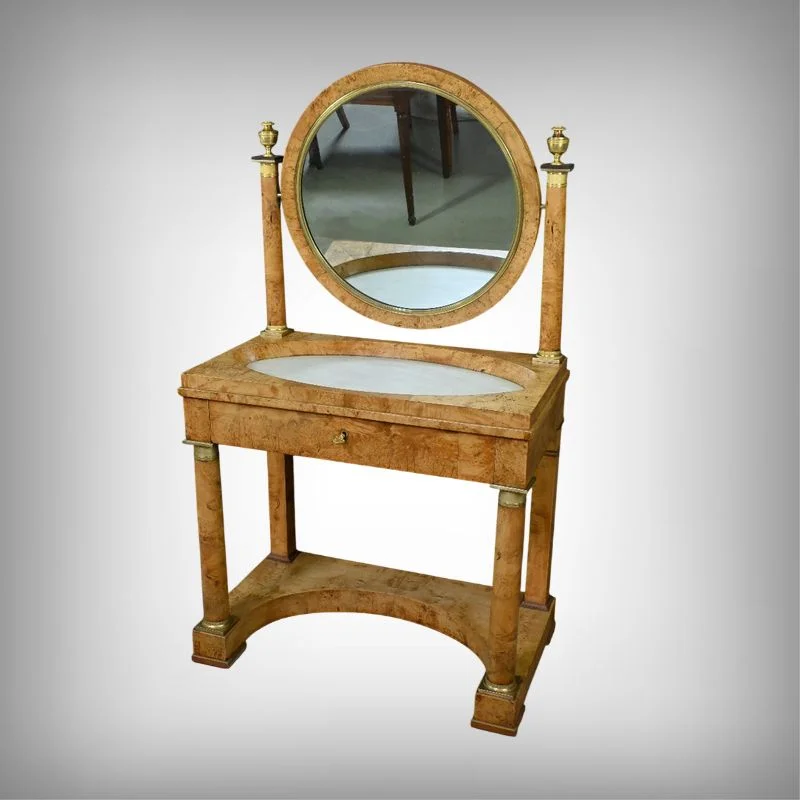
Antiquités Lecomte — Héric
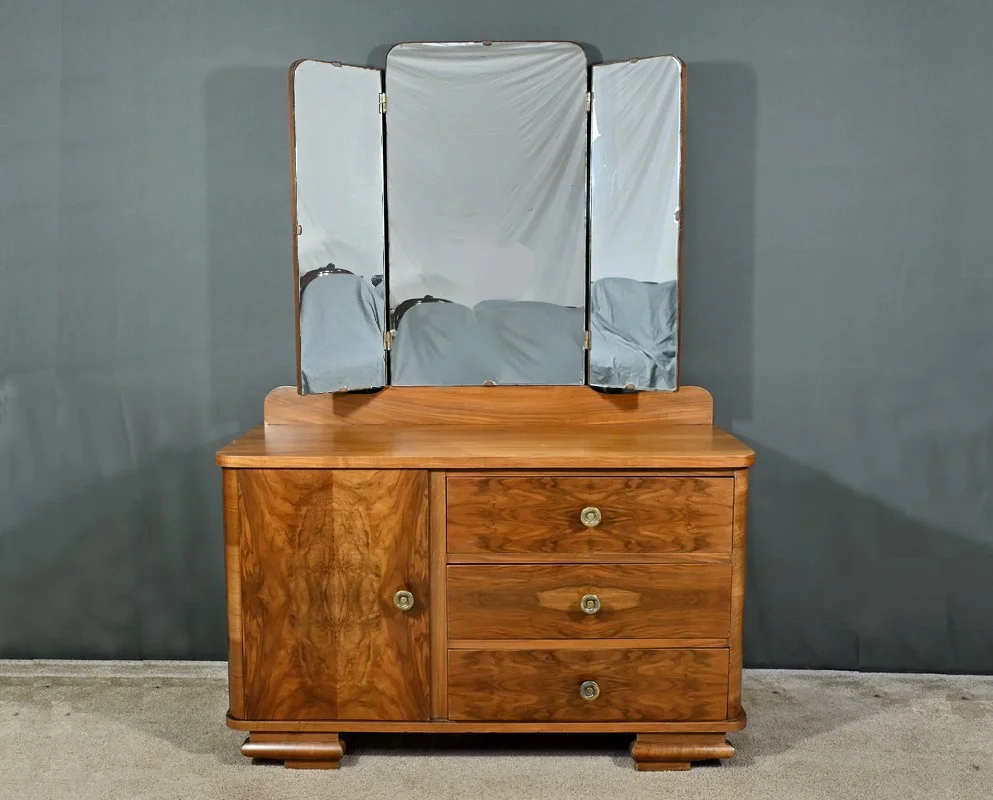
Antiquités Lecomte — Héric
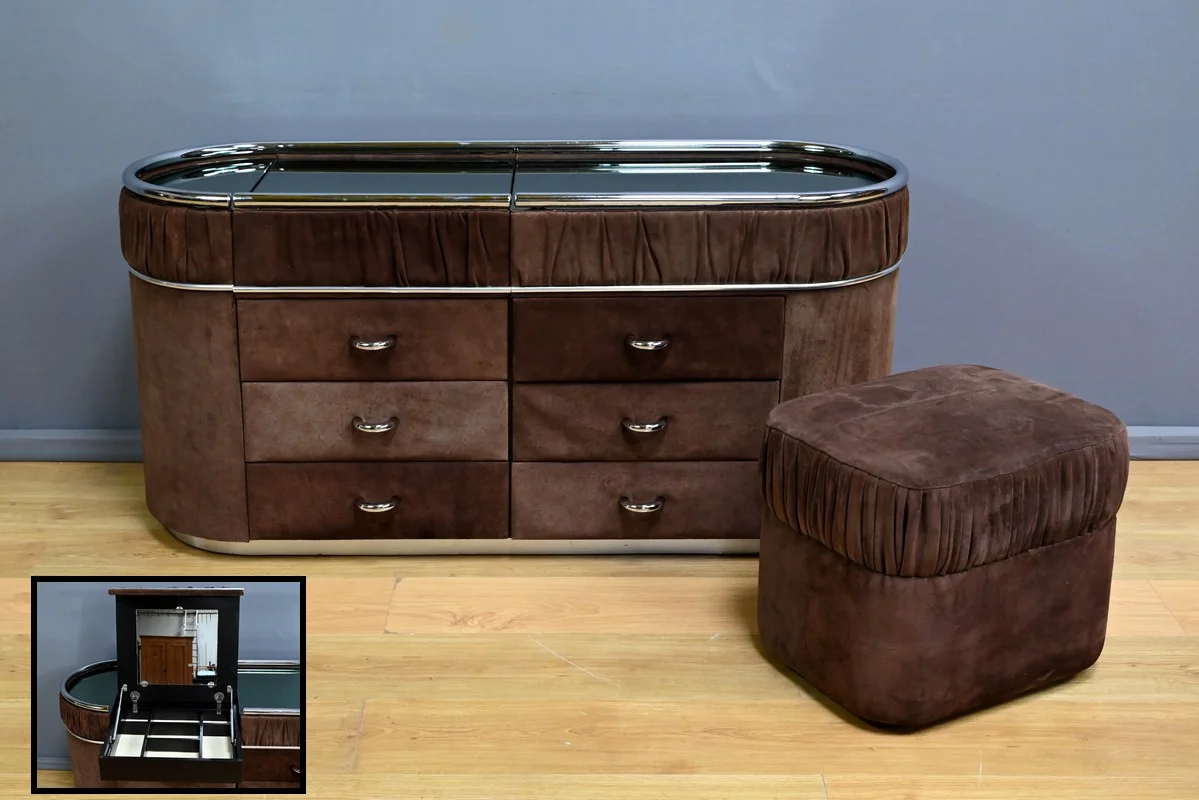
Antiquités Lecomte — Héric
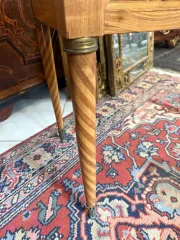
Romain Lichtensztein — Maignelay-Montigny
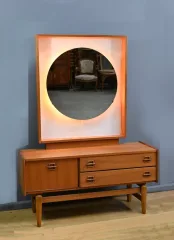
Antiquités Lecomte — Héric
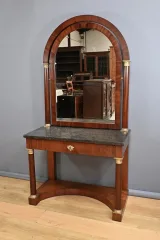
Antiquités Lecomte — Héric
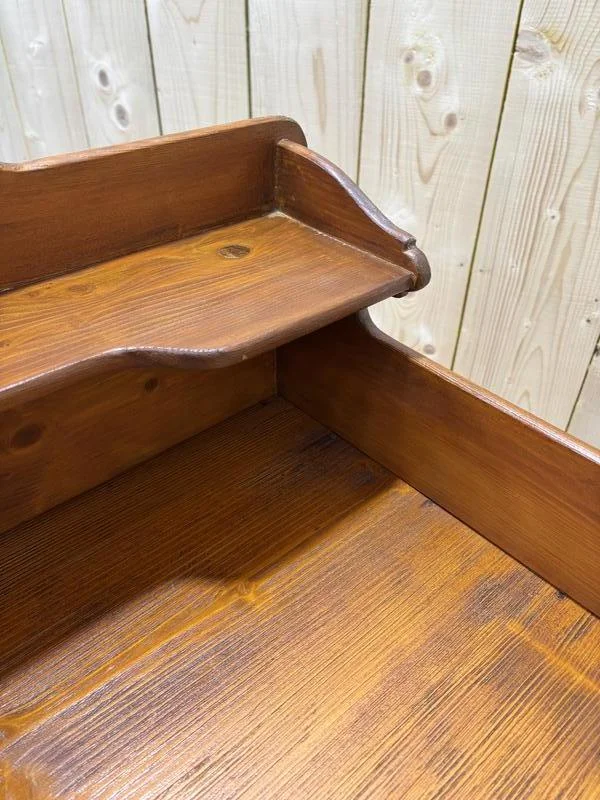
L’ESTAMPILLE — Navilly
L’ESTAMPILLE — Navilly
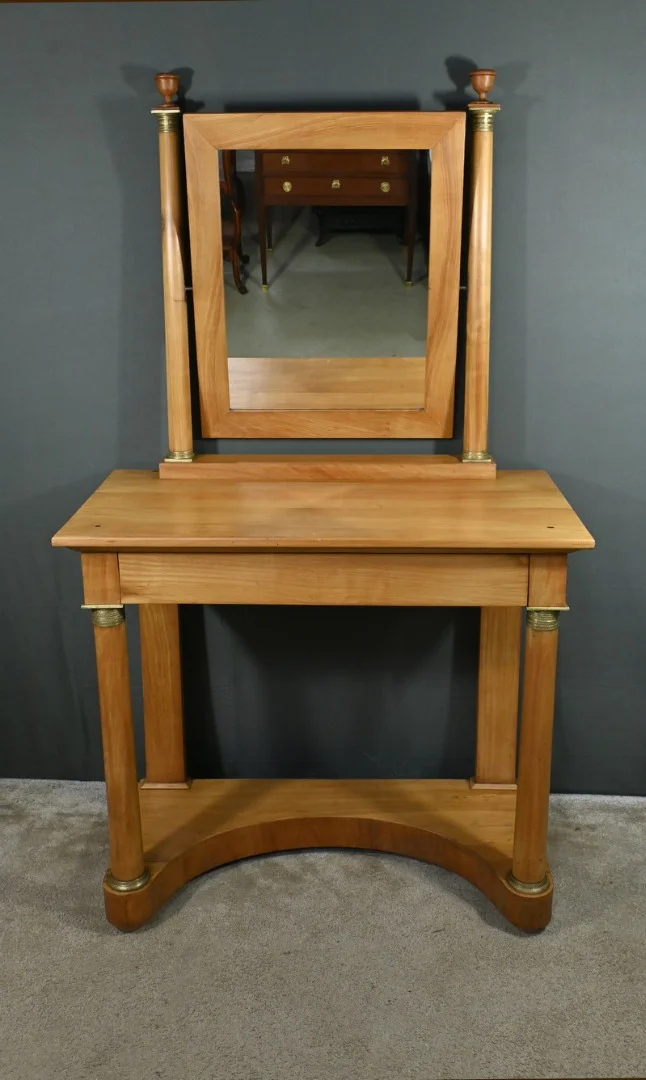
Antiquités Lecomte — Héric
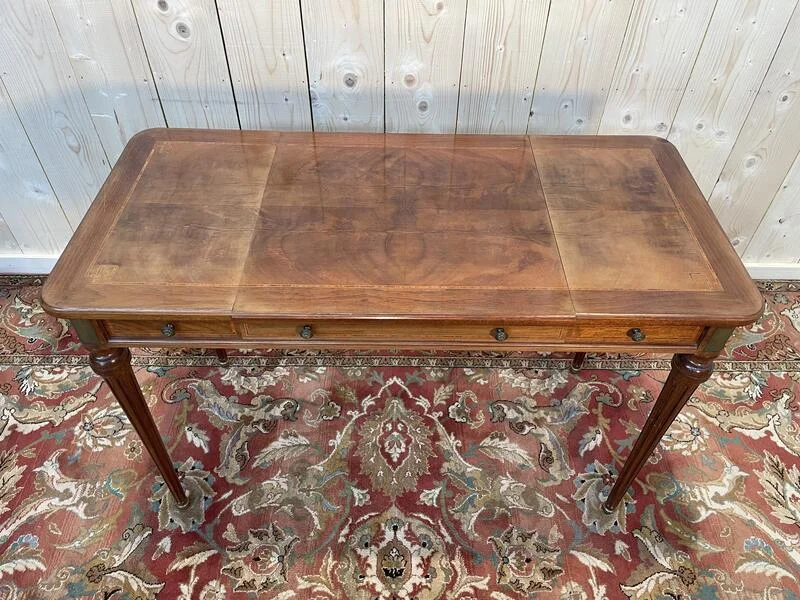
L’ESTAMPILLE — Navilly

Antiquités Lecomte — Héric
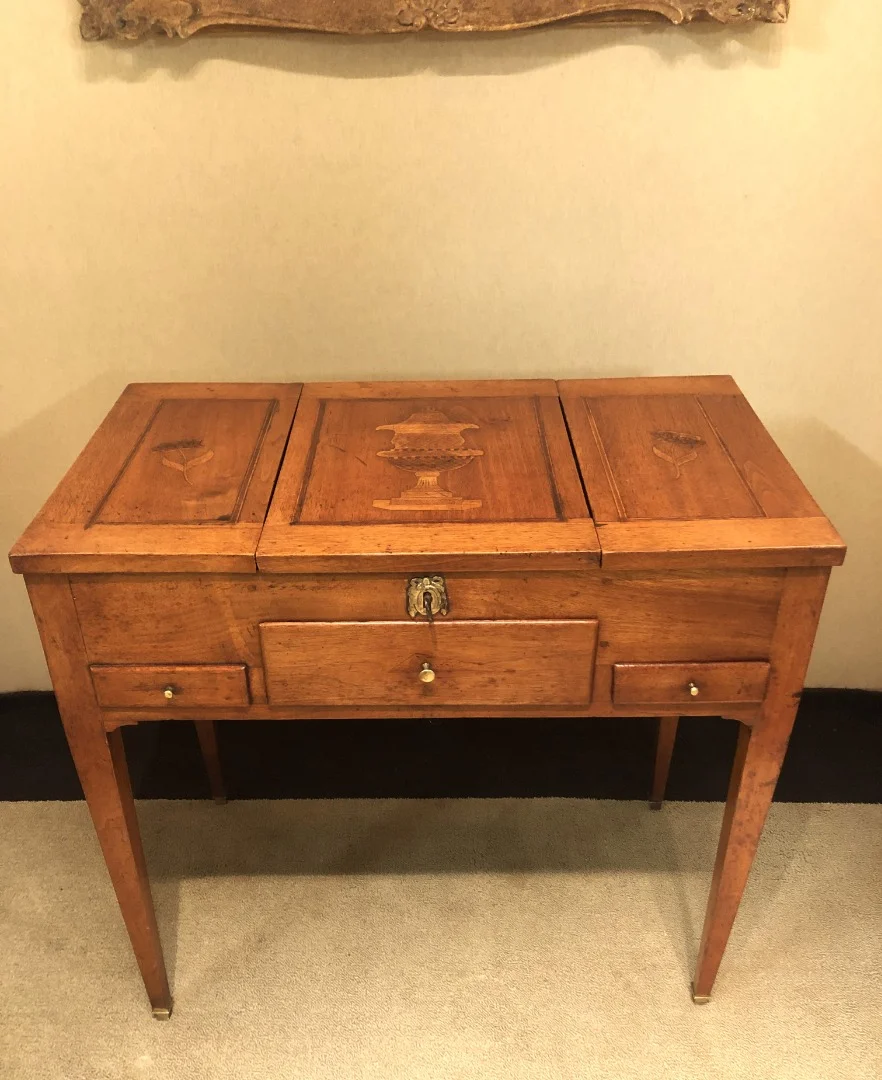
TRADITION Dupasquier Bouley Josiane — Le Plantay
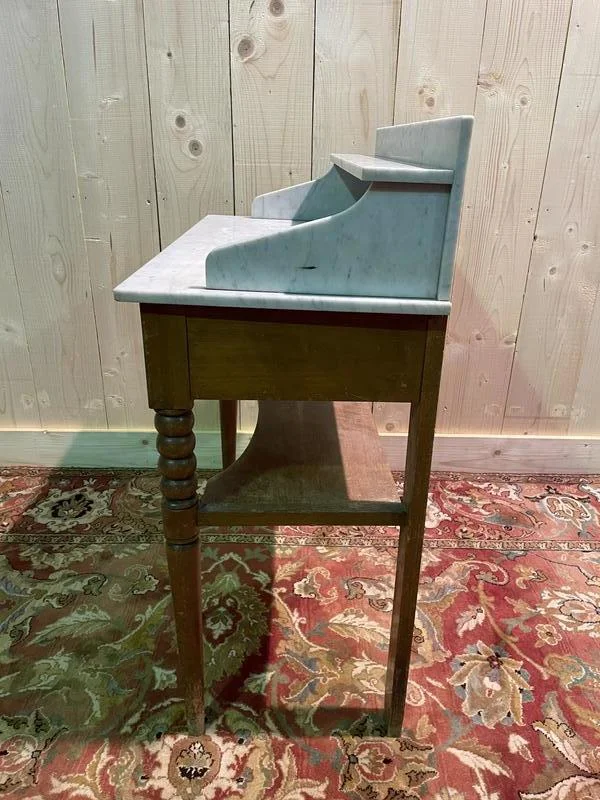
L’ESTAMPILLE — Navilly
Antiquités Lecomte — Héric

L’ESTAMPILLE — Navilly
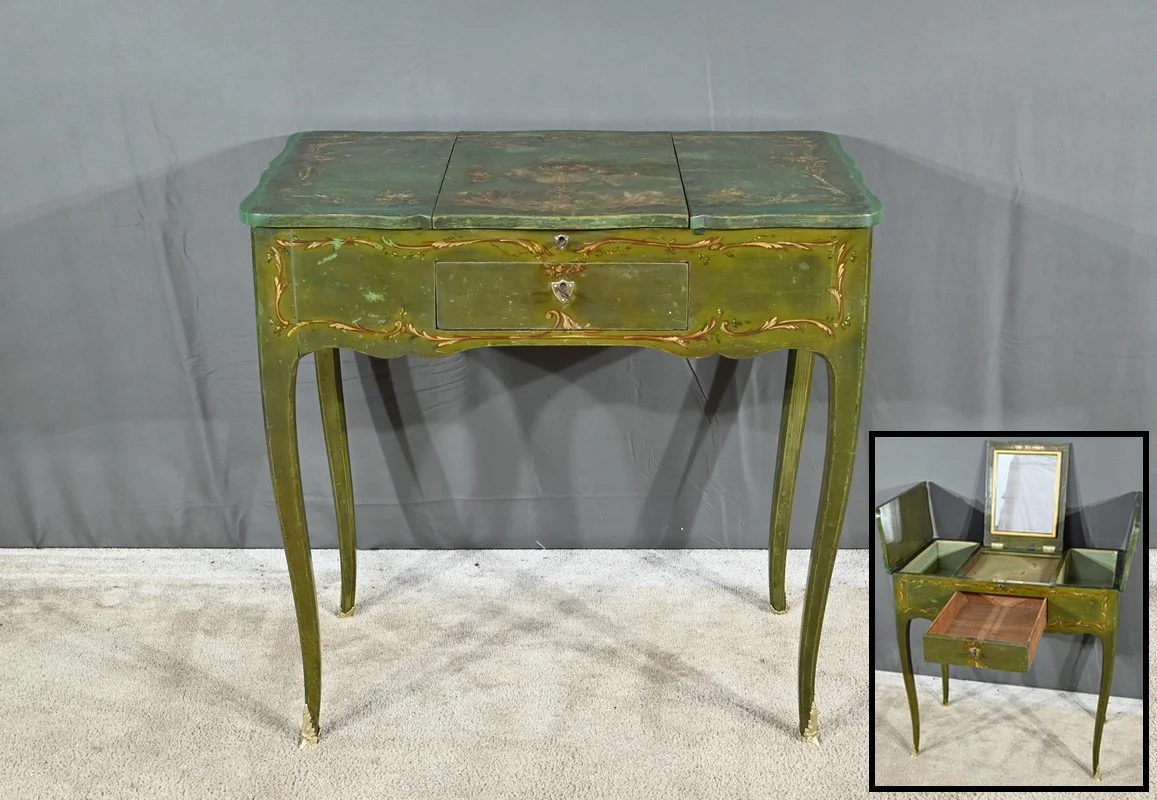
Antiquités Lecomte — Héric
L’ESTAMPILLE — Navilly
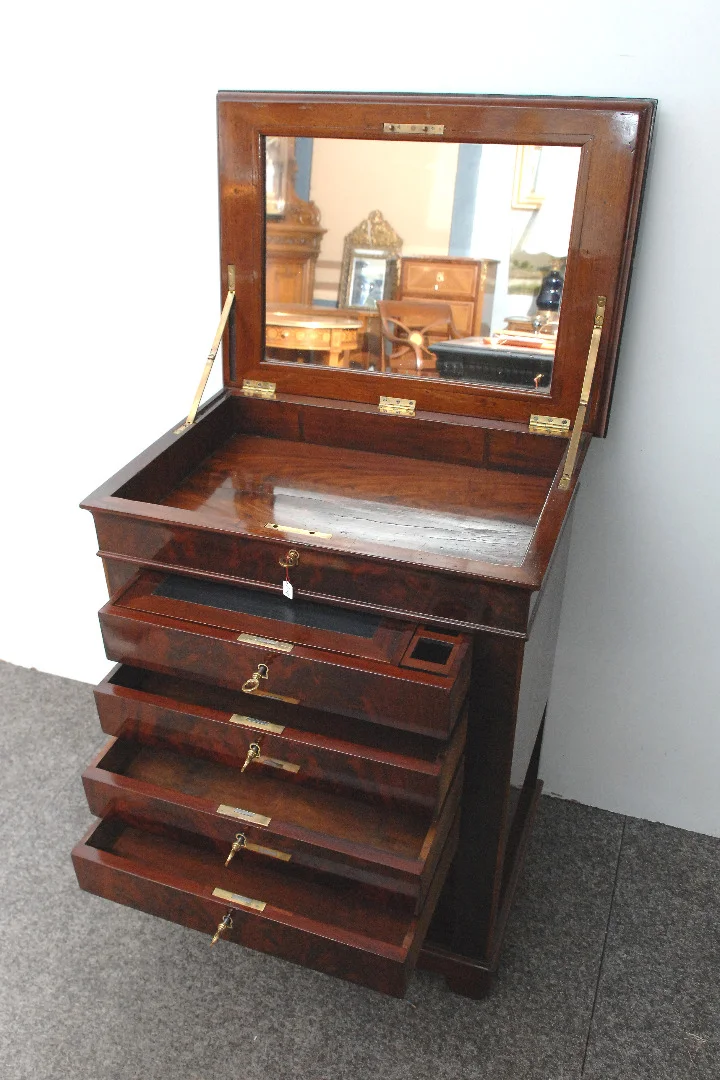
Antiquités GUY Jacques — Buchères
To authenticate an antique dressing table, start with the construction. Period drawers are fitted with hand-cut dovetails — slightly irregular and asymmetric — and their bases are lined in a secondary timber such as oak, poplar or beech. Turn the piece over and inspect the feet: on a genuine Louis XV example, the cabriole legs will show a natural patina and wear marks consistent with two or more centuries of use. A cabinetmaker's stamp struck into the carcass or beneath the top is a further mark of quality and significantly increases value.
In terms of budget, a good-condition dressing table in a common period style typically sells for between £250 and £700. Stamped pieces, those veneered in precious timbers, or examples retaining their original antique mirror glass, regularly reach £1,200 to £4,500 — and signed work by a notable ébéniste can go considerably higher. Always check the condition of the mirror (original silvering or a later replacement), the flatness of the top, and the tightness of all joints before committing to a purchase.
Caring for an antique dressing table in solid or veneered wood is straightforward: dust with a lightly dampened cloth, then apply a thin coat of beeswax twice a year. Keep the piece away from direct sunlight and heat sources, both of which cause veneers to lift and split over time. For gilded or silvered mirror frames, entrust any stain removal to a specialist conservator to avoid damaging the original backing. You may also wish to explore antique silver dressing-table accessories — brushes, hand mirrors and trinket boxes — to complete a period toilet set.
On Antiquités en France, every dressing table is offered by a verified professional dealer who can supply detailed photographs, exact dimensions and a provenance certificate on request. Broaden your search to include antique bedroom furniture to create a harmonious interior, and contact the seller directly with any questions before you buy.