
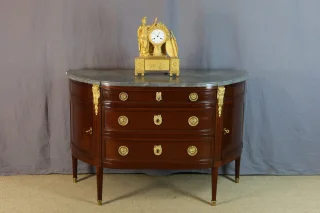
Louis XVI Period Chest of Drawers
Philippe Cote Antiquites — Chauffailles
7 800,00 €
Restored
109 objects found
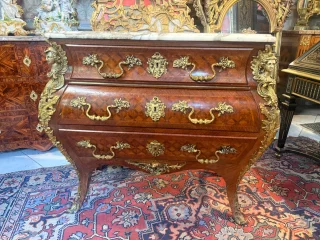
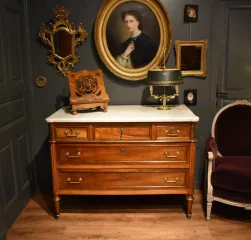
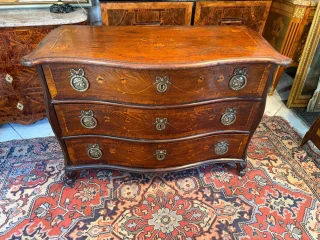
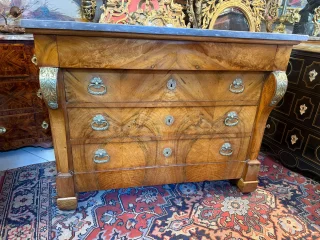
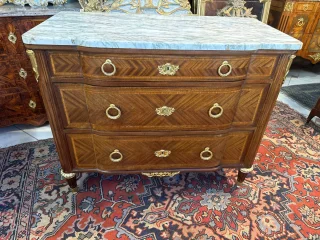
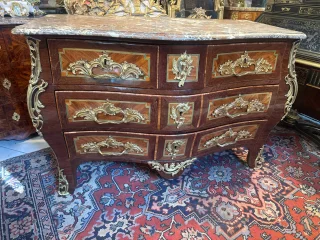
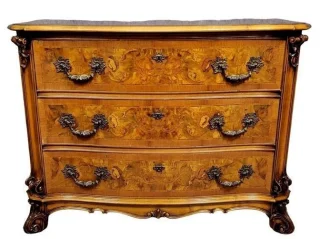
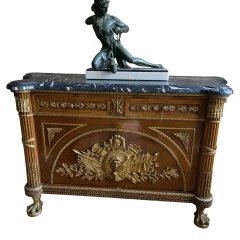
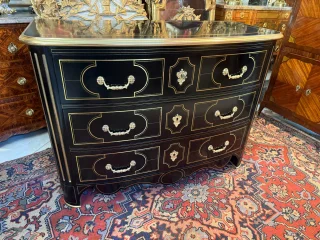
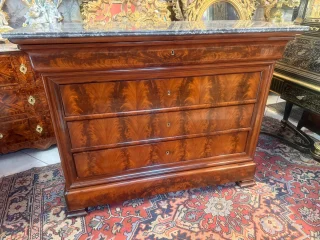
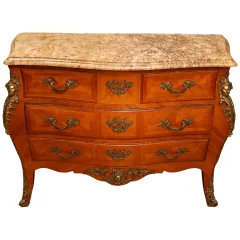
The tombeau commode is one of the most distinctive forms in early 18th-century French furniture. Emerging during the Régence period, it is defined by its deeply bowed, sarcophagus-like profile — swelling outward on both the front and the sides — which gives the piece an imposing sculptural presence. Crafted in solid walnut, mahogany or rosewood, and frequently enriched with marquetry or finely chased gilt bronze mounts, it stands as a centrepiece of the antique commode tradition.
The finest examples bear an ébéniste's stamp and retain their original hardware — both strong indicators of authenticity that serious collectors prize above all else. Explore our listings of tombeau commodes with marquetry for some of the most ornate surviving examples.
109 objects found
Philippe Cote Antiquites — Chauffailles
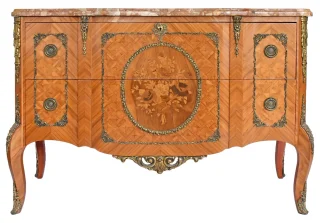
Espaces et Formes — Paris XVIII Arrdt
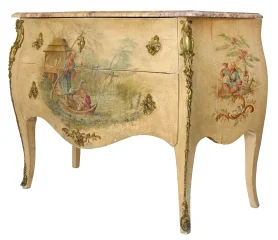
Espaces et Formes — Paris XVIII Arrdt
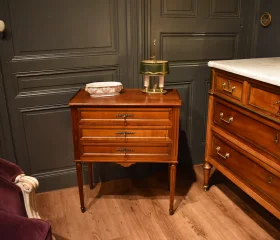
Antiquités Anne Marie Perrier — La Boisse
Romain Lichtensztein — Maignelay-Montigny
Antiquités Anne Marie Perrier — La Boisse
Romain Lichtensztein — Maignelay-Montigny
Romain Lichtensztein — Maignelay-Montigny
Romain Lichtensztein — Maignelay-Montigny
le village des brocanteurs 58 — Dun-les-Places
le village des brocanteurs 58 — Dun-les-Places
Romain Lichtensztein — Maignelay-Montigny
le village des brocanteurs 58 — Dun-les-Places
le village des brocanteurs 58 — Dun-les-Places
Romain Lichtensztein — Maignelay-Montigny
Romain Lichtensztein — Maignelay-Montigny
le village des brocanteurs 58 — Dun-les-Places
Antiquités Rousseau — Évry
Antiquités Rousseau — Évry
Antiquités Rousseau — Évry
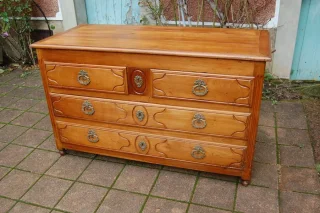
Antiquités Rousseau — Évry
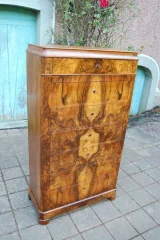
Antiquités Rousseau — Évry
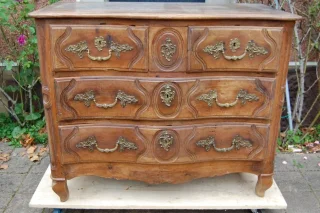
Antiquités Rousseau — Évry
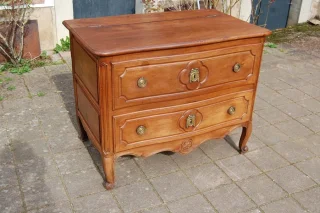
Antiquités Rousseau — Évry
Authenticating a genuine period tombeau commode requires careful examination of several details. The carcase — typically oak or walnut depending on the region of origin — should show mortise-and-tenon joinery, hand-tool marks on the back of the drawers, and drawer bottoms running with the grain. The chased gilt bronze mounts — corner chutes, escutcheons and bail handles — must be screwed from the inside and display a patina consistent with the age of the piece. An ébéniste's stamp struck in hot iron on the carcase or beneath the marble top is a major asset: celebrated Parisian makers such as Charles Cressent and Antoine-Robert Gaudreaus produced tombeau commodes of exceptional quality that remain benchmarks for the form.
In terms of budget, a provincial solid-walnut tombeau commode without a maker's stamp but genuinely of the period typically sells for between £1,500 and £5,000, depending on condition and the quality of the bronze mounts. A stamped Parisian example with its original marble top and complete mounts can reach several tens of thousands of pounds. Always check the condition of the veneer or solid wood, the flatness of the top, the absence of concealed restorations, and the colour consistency between the front and the sides.
To date a piece, pay close attention to the feet: cabriole legs ending in a hoof or scroll foot are characteristic of the Régence–Louis XV period (1715–1750), while straighter or differently shaped legs suggest a later production date or a subsequent restoration. Tombeau commodes with original cabriole legs of the period are particularly sought after by collectors. For broader context, our full selection of antique commodes allows you to compare different forms, periods and price points side by side.
Every tombeau commode listed on Antiquités en France is offered by a verified professional antique dealer who can provide detailed photographs, precise dimensions and full provenance information. Contact the dealer directly to request a condition report or certificate of authenticity before committing to a purchase — it is the surest way to buy with complete confidence.