
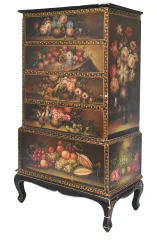
Louis XV style chiffonnier with rich painted decoration
Espaces et Formes — Paris XVIII Arrdt
1 650,00 €
Fair condition
996 objects found
Flourishing during the reign of Louis XV (1715–1774), the style that bears his name represents the pinnacle of French Rococo: sinuous cabriole legs, generous curves, marquetry in tulipwood and kingwood, and gilt-bronze mounts chiselled with unrivalled refinement. Louis XV furniture is defined by its complete rejection of rigid symmetry in favour of a natural, living elegance — an aesthetic mastered by the great ébénistes of the age: Cressent, Oeben, Migeon.
From marquetry commodes to caned bergères, every piece bears witness to a level of craftsmanship that the centuries have not diminished.
996 objects found
Espaces et Formes — Paris XVIII Arrdt
le village des brocanteurs 58 — Dun-les-Places
Antiquites d'Augers en Brie — Augers-en-Brie
jean-pierre PERNOD — Bourg-en-Bresse
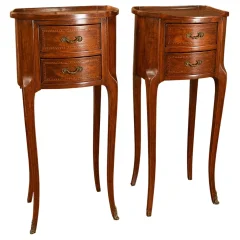
le village des brocanteurs 58 — Dun-les-Places
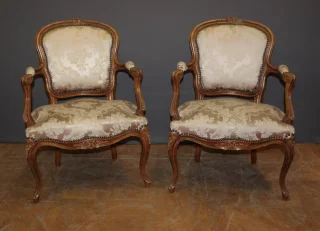
Antiquités Christophe Rochet — Villeurbanne
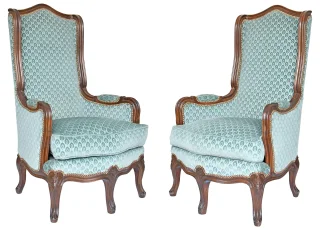
Espaces et Formes — Paris XVIII Arrdt
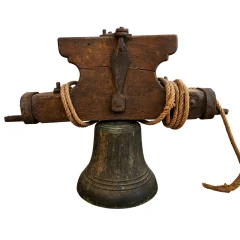
le village des brocanteurs 58 — Dun-les-Places
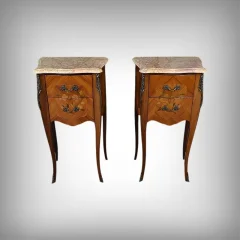
Antiquités Lecomte — Héric
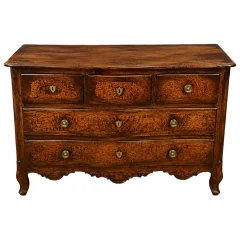
le village des brocanteurs 58 — Dun-les-Places
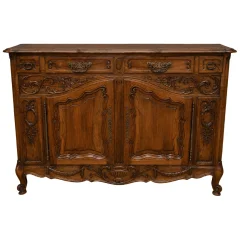
le village des brocanteurs 58 — Dun-les-Places
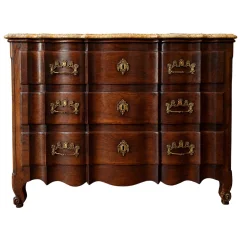
le village des brocanteurs 58 — Dun-les-Places
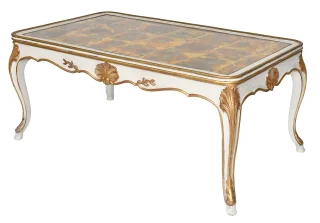
Espaces et Formes — Paris XVIII Arrdt
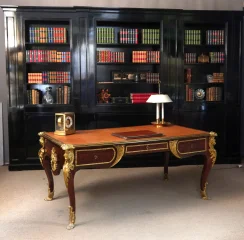
Philippe Cote Antiquites — Chauffailles
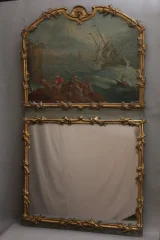
Philippe Cote Antiquites — Chauffailles
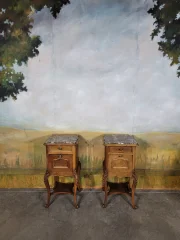
Antiquites d'Augers en Brie — Augers-en-Brie
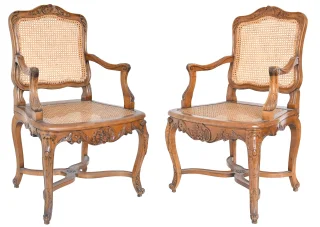
Espaces et Formes — Paris XVIII Arrdt
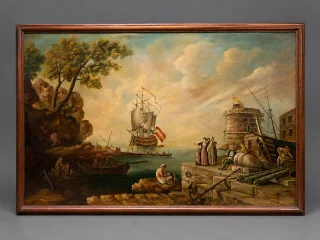
le village des brocanteurs 58 — Dun-les-Places
le village des brocanteurs 58 — Dun-les-Places
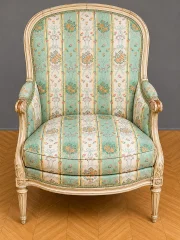
le village des brocanteurs 58 — Dun-les-Places
le village des brocanteurs 58 — Dun-les-Places
le village des brocanteurs 58 — Dun-les-Places
le village des brocanteurs 58 — Dun-les-Places
le village des brocanteurs 58 — Dun-les-Places
Recognising a genuine period Louis XV piece requires a few essential reference points. Begin with the structure: the cabriole leg, curved in a double S, is the formal hallmark of the style. The favoured timbers — tulipwood, kingwood, walnut, oak for the carcasses — develop an irreplaceable natural patina, warm and deep, that no reproduction can convincingly imitate. Original mounts, hand-chiselled and mercury-gilded, display a richness of relief and colour that modern electroplated bronze simply cannot replicate.
The ébéniste's stamp, struck in iron on the wood under the guild edict of 1743, is a mark of considerable value. Names to look for include Jean-François Oeben, Bernard II van Risenburgh (known as BVRB), Nicolas Petit and Jacques Dubois. A legible stamp combined with documented provenance can multiply the value of a piece three or fourfold. Where no stamp is present, the quality of the bronze mounts, the consistency of the veneers and traditional mortise-and-tenon construction remain reliable indicators of age and authenticity.
In terms of budget, expect to pay £700–£2,500 for a stamped chair or armchair in good condition, £2,500–£12,000 for a good standard period commode, and considerably more for a piece bearing a master's stamp or royal provenance. Smaller Louis XV pieces — bedside tables, bonheurs-du-jour, corner cabinets — often represent excellent value for collectors starting out. Always check the condition of the veneers, the soundness of the joints and the coherence of any restorations: a careful, early restoration is perfectly acceptable; a recent structural alteration is far less so.
On Antiquités en France, every piece is offered by a verified professional dealer able to provide detailed photographs, supporting documentation and care advice. To broaden your search, explore the Directoire style, the refined heir to the Louis XV aesthetic, or Empire furniture for a complete picture of French cabinet-making across the 18th and 19th centuries. Contact your chosen dealer directly for enquiries, condition reports or to arrange a reservation.