
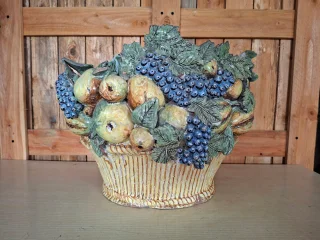
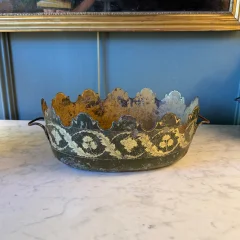
18th-century decorative bowl in barbotine or trompe-l'œil faïence
Les Trésors d'avril 71. — Saint-Bonnet-de-Vieille-Vigne
450,00 €
Fair condition
1008 objects found
The 18th century marks the golden age of French decorative arts — from the exuberant curves of Louis XV to the disciplined neoclassicism of Louis XVI. Stamped masters such as Oeben, Riesener and Jacob, the porcelain manufactories of Sèvres and Meissen, and the finest Parisian bronziers all flourished in this era, producing pieces of unrivalled craftsmanship. Browse our selection of 18th century furniture and authentic decorative objects, each offered by a verified professional antique dealer.
1008 objects found
Les Trésors d'avril 71. — Saint-Bonnet-de-Vieille-Vigne
Antiquités Christophe Rochet — Villeurbanne
Antiquités Christophe Rochet — Villeurbanne

Philippe Cote Antiquites — Chauffailles
Philippe Cote Antiquites — Chauffailles
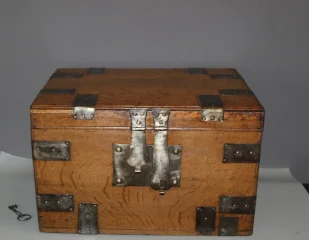
Antiquités Christophe Rochet — Villeurbanne
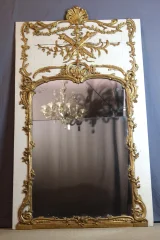
Philippe Cote Antiquites — Chauffailles
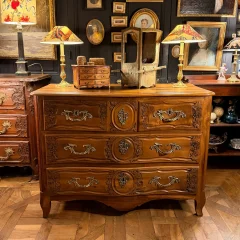
Ponvianne Antiquités — Marcy-l'Étoile
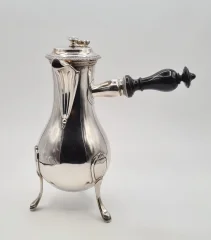
Anne Besnard — Saint-Ouen
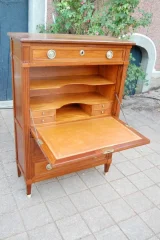
Antiquités Rousseau — Évry
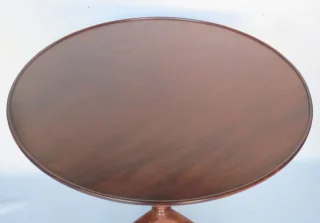
Anne Besnard — Saint-Ouen
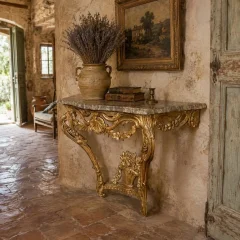
L'atelier De La Dorure — Calmont
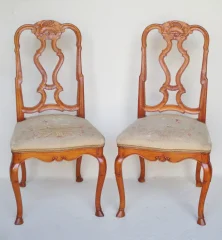
Anne Besnard — Saint-Ouen
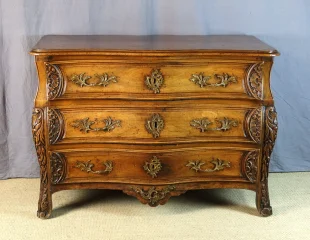
Philippe Cote Antiquites — Chauffailles
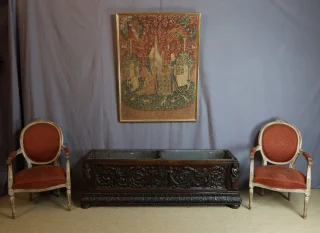
Philippe Cote Antiquites — Chauffailles
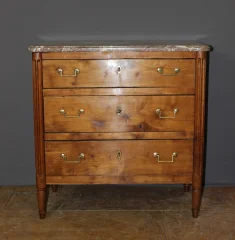
Antiquités Christophe Rochet — Villeurbanne
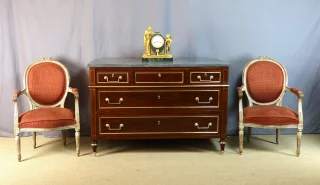
Philippe Cote Antiquites — Chauffailles
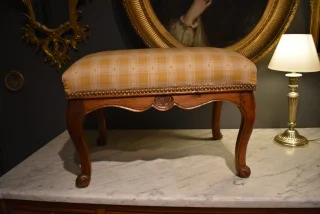
Antiquités Anne Marie Perrier — La Boisse
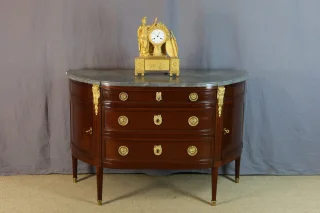
Philippe Cote Antiquites — Chauffailles
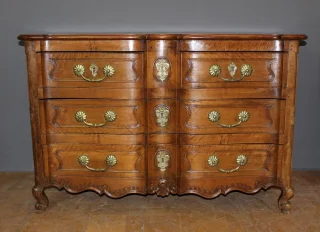
Antiquités Christophe Rochet — Villeurbanne
Ponvianne Antiquités — Marcy-l'Étoile
Ponvianne Antiquités — Marcy-l'Étoile
Ponvianne Antiquités — Marcy-l'Étoile
Antiques Provence — Cheval-Blanc
Authenticating a piece of 18th century furniture begins with the ébéniste's stamp, struck beneath the top or on the back of a drawer. Between 1743 and 1791, the Parisian guild of menuisiers-ébénistes required every master to mark his work — a stamp from Oeben, Riesener or Leleu is a powerful guarantee of origin. Look also at the timbers: Saint-Domingue mahogany, tulipwood and kingwood were the prestige choices of the period, typically paired with geometric or floral marquetry and mercury-gilded bronze mounts of exceptional refinement. For stamped 18th century seating, examine the carving for consistency, the natural patina of the beech or walnut, and the age of the upholstery foundation.
Among 18th century decorative arts, porcelain and faience are identified by their factory marks on the base: the interlaced Ls of Sèvres, Meissen's crossed swords, or the initials of the Rouen and Strasbourg faïenceries. For bronzes and 18th century mantel clocks, the quality of the chasing and the depth of the fire-gilding — warm, matte and luminous — distinguish period pieces from the many 19th-century reproductions that closely imitate them. A documented provenance or a specialist's opinion remains the surest safeguard against confusion. To understand the stylistic evolution, it is worth exploring pieces from the 17th century that preceded this era, or the 19th century works that carried its traditions forward.
In terms of budget, prices range from a few hundred pounds or euros for a small decorative object — a tortoiseshell box, a period print, an everyday faience piece — to tens of thousands for a stamped masterpiece by a leading ébéniste or a first-rate clock. Condition is decisive: a well-executed period restoration is entirely acceptable, but extensive veneer replacements or recently repatinated bronzes will weigh on value. Always ask the dealer for a detailed condition report and, where possible, a provenance history.
On Antiquités en France, every 18th century antique is offered by a professional dealer who can provide high-resolution photographs, precise dimensions and, on request, a certificate of authenticity. Start browsing now and contact your chosen dealer directly with any questions.