
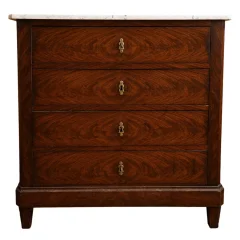
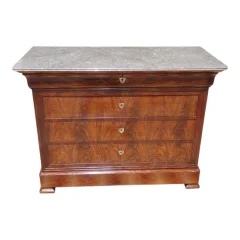
Commode in flame mahogany, Louis-Philippe period, white marble top
le village des brocanteurs 58 — Dun-les-Places
650,00 €
Good condition
390 objects found
Flourishing between 1830 and 1848 during the reign of the King of the French, the Louis-Philippe style embodies the bourgeois aesthetic of the 19th century: rounded, comfortable forms, generous proportions and restrained ornament inherited from the Empire style. Solid mahogany, walnut and rosewood dominate, typically enhanced by carefully matched veneers and gilt-bronze handles.
Louis-Philippe mahogany furniture is instantly recognisable by its gently curved console or sabre legs, bowed drawer fronts and distinctive medallion-back chair frames — reliable hallmarks of a genuine period piece.
390 objects found
le village des brocanteurs 58 — Dun-les-Places
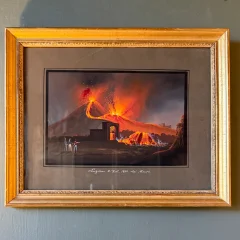
Ponvianne Antiquités — Marcy-l'Étoile
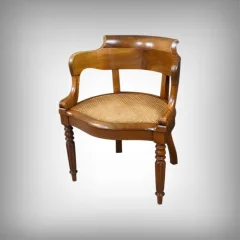
Antiquités Lecomte — Héric
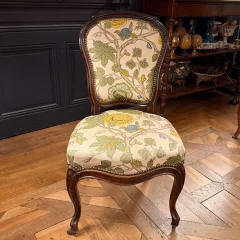
Ponvianne Antiquités — Marcy-l'Étoile
Ponvianne Antiquités — Marcy-l'Étoile
L'atelier De La Dorure — Calmont
Antiquités Christophe Rochet — Villeurbanne

Antiquites d'Augers en Brie — Augers-en-Brie
Romain Lichtensztein — Maignelay-Montigny
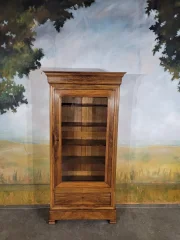
Antiquites d'Augers en Brie — Augers-en-Brie

Romain Lichtensztein — Maignelay-Montigny
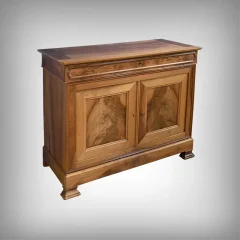
Antiquités Lecomte — Héric
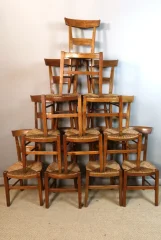
Philippe Cote Antiquites — Chauffailles
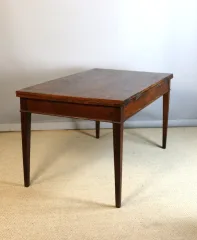
Philippe Cote Antiquites — Chauffailles
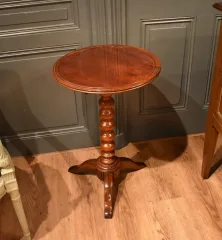
Antiquités Anne Marie Perrier — La Boisse

Antiquités Christophe Rochet — Villeurbanne

Antiquités Lecomte — Héric
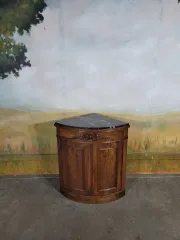
Antiquites d'Augers en Brie — Augers-en-Brie
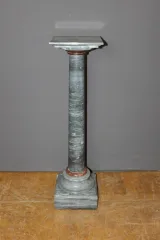
Antiquités Christophe Rochet — Villeurbanne
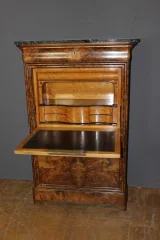
Antiquités Christophe Rochet — Villeurbanne

L'atelier De La Dorure — Calmont
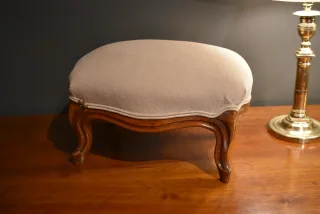
Antiquités Anne Marie Perrier — La Boisse
Antiquités Lecomte — Héric
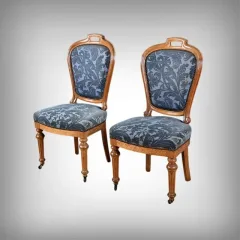
Antiquités Lecomte — Héric
Authenticating a genuine Louis-Philippe piece begins with the timber. Cuban or Central American mahogany — close-grained with a warm, reddish tone — is characteristic of the period, as are solid walnut and Rio rosewood. Turn the piece over: hand-cut dovetails on drawer backs, secondary woods such as poplar or oak for drawer bottoms, and visible hand-plane marks all point to pre-industrial craftsmanship made before mechanisation transformed French cabinet-making in the 1850s.
Louis-Philippe chests of drawers with three or four bowed drawers, fall-front secretaires and medallion-back armchairs upholstered in original velvet or silk are among the most sought-after pieces. A Parisian ébéniste's stamp — less systematic than in the 18th century but not uncommon — or a retailer's label adds both value and traceability.
Budget-wise, expect to pay from a few hundred pounds or euros for a small storage piece in good condition, rising to several thousand for a signed secretaire or a matched pair of original armchairs. Always inspect veneer condition (lifting or losses), check that the hardware is consistent throughout, and look for any concealed restoration. Pieces with an even, undisturbed patina and unstripped wood retain significantly higher value. To broaden your search, the Directoire style offers the refined lines from which Louis-Philippe design ultimately descends.
On Antiquités en France, every piece of Louis-Philippe furniture is listed by a verified professional antique dealer who can supply detailed photographs, precise dimensions and provenance documentation. Contact the dealer of your choice directly for expert advice or any enquiry before you buy.