
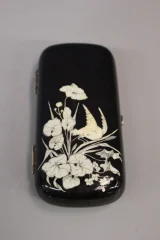
Tortoiseshell and ivory inlay étui, 19th century
Antiquités Christophe Rochet — Villeurbanne
130,00 €
Very good condition
366 objects found
Born in the 1890s and reaching its apogee at the 1900 Paris World's Fair, Art Nouveau was the first truly modern decorative style — sinuous, plant-inspired lines, deliberate asymmetry, and a radical union of fine art and craft. In France, two creative centres defined the movement: the Paris school led by Hector Guimard, and the École de Nancy, where Émile Gallé, Louis Majorelle and the Daum brothers produced marquetry furniture, blown glassware and enamelled ceramics of unrivalled quality.
Art Nouveau furniture is instantly recognisable by its curved feet, floral inlays and precious timbers — mahogany, walnut, stained pear — often enriched with cast bronze mounts in the form of iris stems or lily pads. These pieces sit as naturally in a contemporary interior as alongside a collection of Art Déco antiques.
366 objects found
Antiquités Christophe Rochet — Villeurbanne
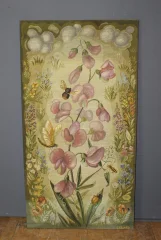
Antiquités Christophe Rochet — Villeurbanne
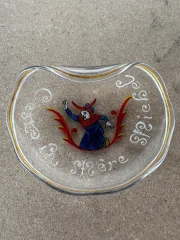
Maison Schoumer — Beaune
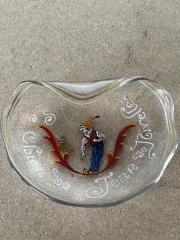
Maison Schoumer — Beaune
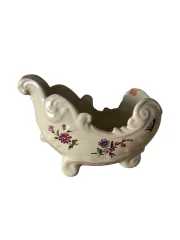
Maison Schoumer — Beaune
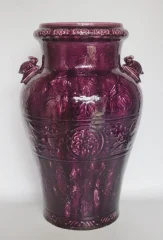
Anne Besnard — Saint-Ouen
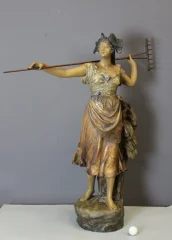
Antiquités Christophe Rochet — Villeurbanne
L'atelier De La Dorure — Calmont
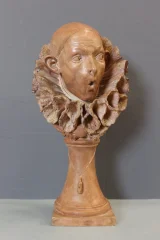
Antiquités Christophe Rochet — Villeurbanne
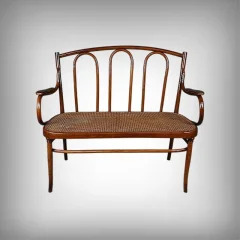
Antiquités Lecomte — Héric
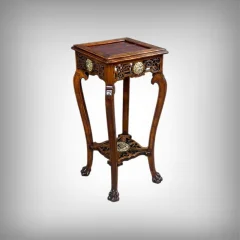
Antiquités Lecomte — Héric
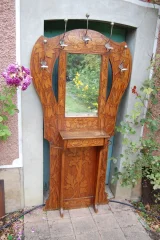
Antiquités Rousseau — Évry
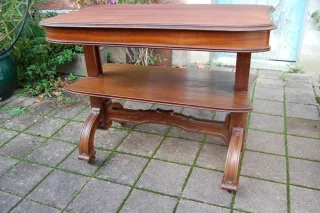
Antiquités Rousseau — Évry
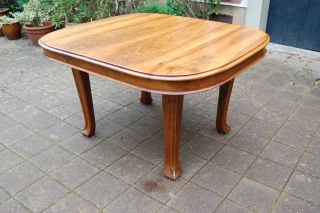
Antiquités Rousseau — Évry
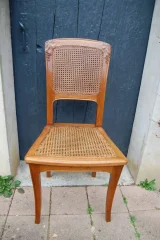
Antiquités Rousseau — Évry
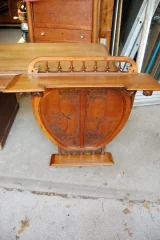
Antiquités Rousseau — Évry
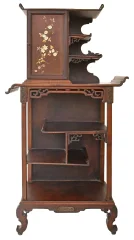
Espaces et Formes — Paris XVIII Arrdt
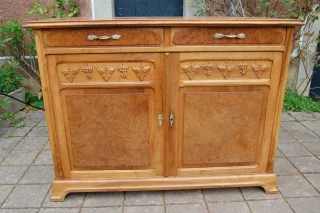
Antiquités Rousseau — Évry

Antiquités Rousseau — Évry
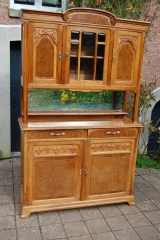
Antiquités Rousseau — Évry
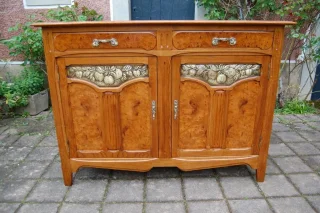
Antiquités Rousseau — Évry
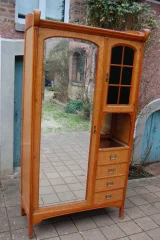
Antiquités Rousseau — Évry
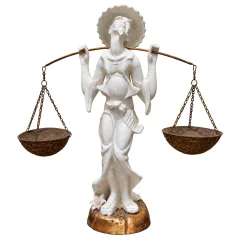
le village des brocanteurs 58 — Dun-les-Places
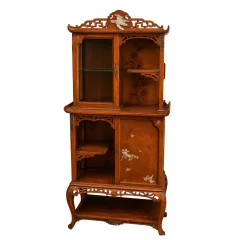
le village des brocanteurs 58 — Dun-les-Places
Identifying a genuine Art Nouveau antique starts with signatures and maker's marks. Gallé signed his glass consistently — wheel-engraved, inlaid or acid-etched — while Majorelle stamped his bronze mounts and Daum engraved the firm's name alongside the Cross of Lorraine. On furniture, look for a maker's stamp on the back rail or underside of the top; a documented provenance — original invoice, exhibition catalogue — adds considerable value. Unsigned pieces clearly attributable to an École de Nancy workshop remain highly sought-after, provided the quality of execution is beyond question.
In terms of budget, expect to pay from a few hundred pounds for a small signed ceramic or silver-and-enamel brooch, rising to tens of thousands for a large Gallé pâte de verre lamp or a Majorelle cabinet in fruitwood marquetry. Condition is decisive: check the integrity of inlays, the absence of cracks in glassware, and the coherence of any restorations. A mahogany piece retaining its original bronze mounts is worth significantly more than one with replacement hardware.
Art Nouveau pairs naturally with neighbouring collecting areas. Those drawn to geometric clarity will find a logical progression in Art Déco, while collectors who appreciate romantic, historicist forms may discover sympathetic pieces among Louis-Philippe antiques. For the transition towards mid-century modernism, our Design selection offers compelling counterpoints.
Every Art Nouveau piece listed on Antiquités en France is offered by a verified professional antique dealer who can supply detailed photographs, a precise condition report, and where applicable a certificate of authenticity or independent appraisal. Browse the selection above and contact your chosen dealer directly for questions about provenance, condition or international shipping.