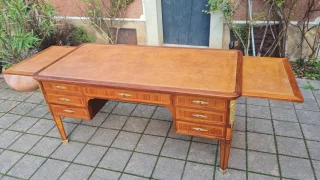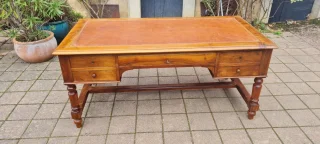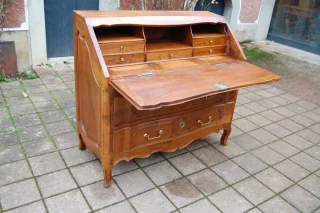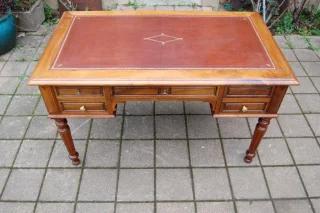
Antique Secretaire Desks

145 objects found

Loading
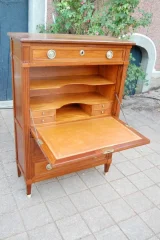
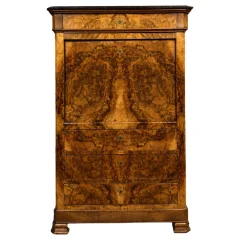
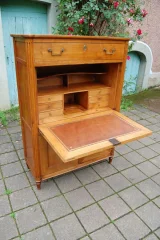
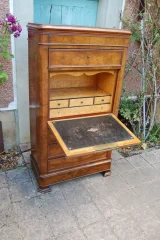
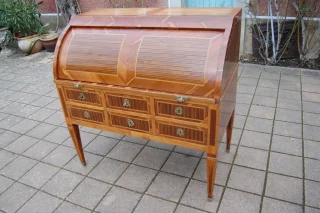
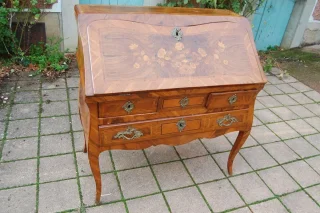
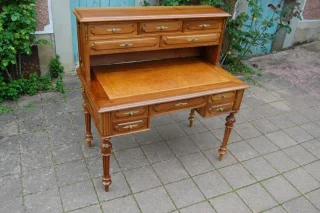
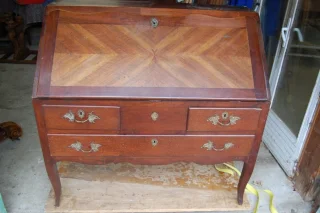
Antique secretaire desks rank among the most ingenious achievements of French cabinet-making: from the gently sloping Louis XV slant-top to the monumental fall-front secretaire of the Empire period, each piece combines elegance with hidden practicality. Interior pigeonholes, secret drawers and fold-out writing surfaces are crafted in the finest timbers — mahogany, rosewood, walnut, kingwood — often enriched with marquetry, gilt-bronze mounts or Sèvres porcelain plaques. The lighter, more feminine bonheur-du-jour writing cabinet sits alongside grand statement pieces here, offering a complete panorama of French antique writing furniture. Browse the related category of antique bureaux and desks to widen your search.

Fall-front secretaires, slant-top desks and bonheur-du-jour from professional antique dealers

145 objects found

How to choose and authenticate a quality antique secretaire desk

Authenticating an antique secretaire desk begins with the construction details. Period drawers run on wooden slides without modern metal runners, and secondary timbers — oak, poplar or pine — are used for drawer bottoms and backboards, joined with hand-cut dovetails. An ébéniste's stamp, struck hot into a rail or drawer bottom, is a strong indicator of quality: look for names such as Riesener, Leleu, Saunier or Topino for 18th-century pieces, and Jacob-Desmalter or Bellangé for the Empire period. The styles are clearly distinguishable. The Louis XV slant-top features cabriole legs and rocaille bronze mounts; the Louis XVI fall-front adopts straight lines, fluted pilasters and neoclassical ormolu. The Empire model is recognisable by its engaged columns, sphinx or swan mounts in gilt bronze against a ground of flame mahogany. Always check that the fall-front lies perfectly flat when open, that the original hinges are intact and that the bronze mounts are consistent throughout — later replacements significantly reduce value. In terms of budget, a good-quality 18th-century slant-top secretaire typically sells for between £1,200 and £7,000 depending on timber and maker. A stamped bonheur-du-jour or a signed fall-front by a master ébéniste can exceed £12,000. Restoration and Charles X pieces from the 19th century offer excellent value from around £500, combining period craftsmanship with more accessible pricing. Every antique secretaire listed on Antiquités en France is offered by a verified professional dealer who can provide full provenance details, precise dimensions and a thorough condition report. Ask for close-up photographs of the interior compartments and drawer bottoms before committing — a reputable antiquaire will always oblige.

Frequently asked questions about Antique Secretaire Desks

What is the difference between a fall-front secretaire and a slant-top desk?
A slant-top desk has a fixed angled lid that hinges forward to reveal the interior fittings. A fall-front secretaire, more common from the Louis XVI period onward, has a vertical front panel that drops down horizontally to form the writing surface, typically offering more interior storage and a more imposing appearance.
How can I date an antique secretaire desk accurately?
Examine the drawer construction — hand-cut dovetails indicate pre-1830 manufacture, while machine-cut joints suggest a later date. The timber choice, style of bronze mounts and any ébéniste's stamp are equally telling. Auction catalogues and specialist reference books on French cabinet-makers help identify makers and narrow the date range.
What should I expect to pay for an authentic antique secretaire?
Budget from around £500 for a sound 19th-century piece, £1,200–£7,000 for a quality 18th-century example, and considerably more for a stamped work by a named ébéniste. Original bronze mounts, documented provenance and an intact interior all push the price upward significantly.
How do I care for an antique secretaire with marquetry or veneer?
Apply natural beeswax polish twice a year and avoid silicone-based products. Keep the piece in a stable environment at 45–55% relative humidity to prevent veneer lifting. Never force the fall-front open; check hinges and original locks regularly, and have any loose veneer re-laid promptly by a specialist restorer.
Can an antique secretaire desk be shipped safely?
Yes, provided you use a specialist fine-art shipper. The fall-front must be secured in the closed position, bronze mounts individually wrapped, and the piece packed in moving blankets inside a bespoke crate. Always arrange insurance cover matched to the declared value and request photographic documentation before and after transit.