
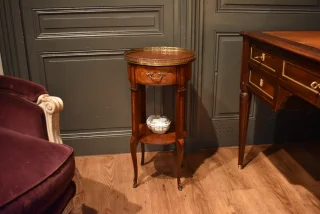
Small Marquetry Side Table
Antiquités Anne Marie Perrier — La Boisse
420,00 €
Very good condition
119 objects found
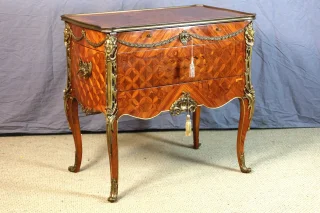
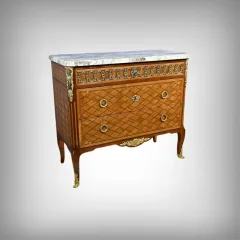
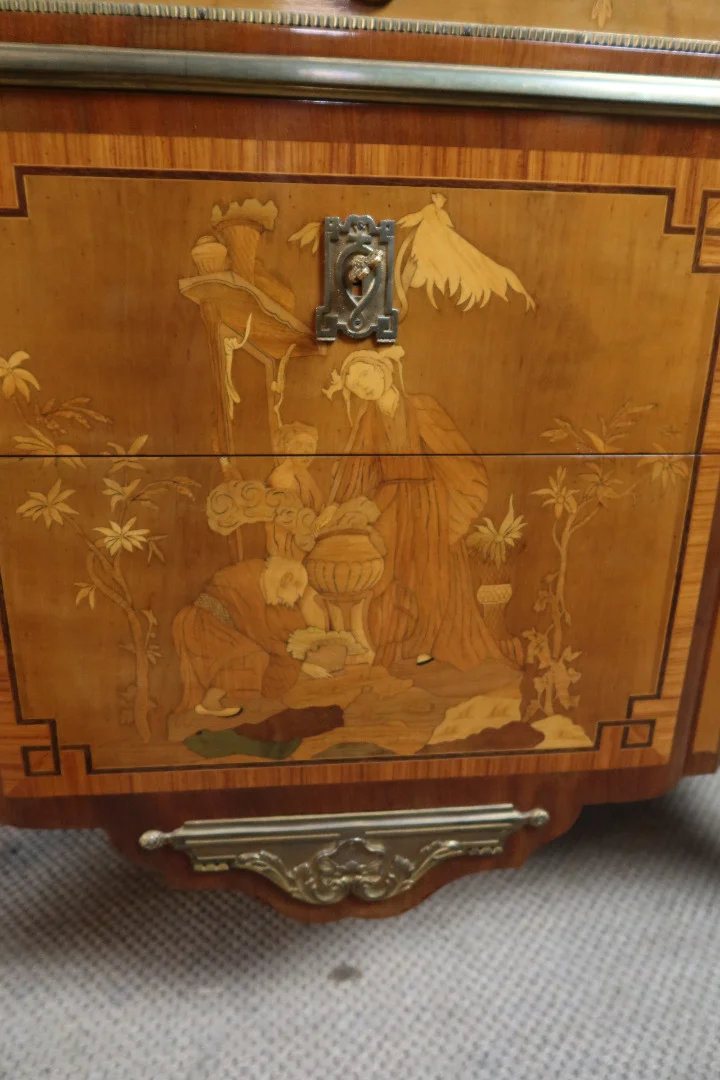
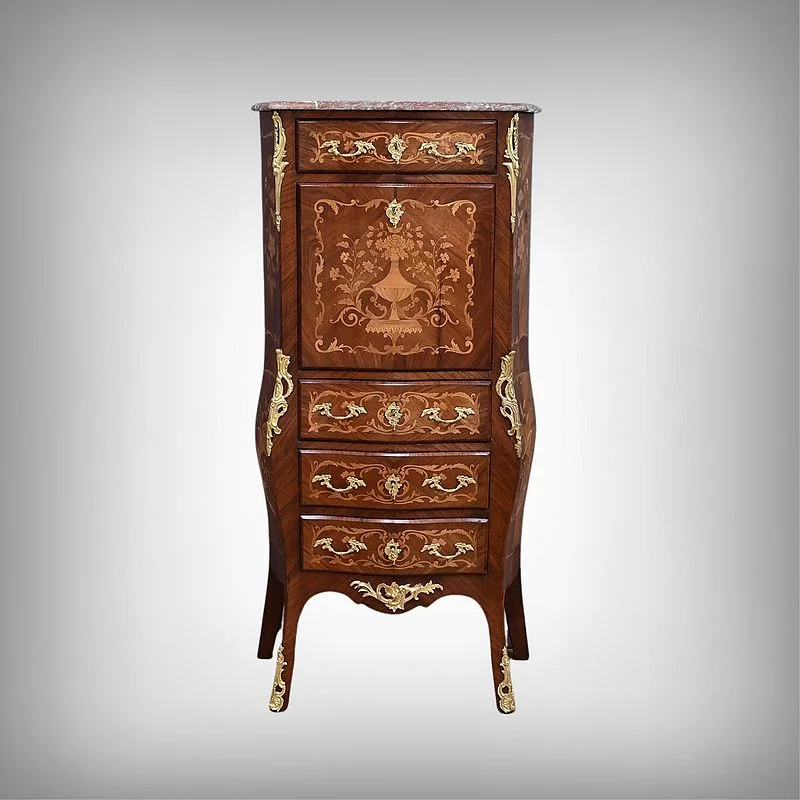
Emerging between approximately 1755 and 1775, Transition style furniture marks the elegant passage from the generous curves of Louis XV Rococo to the disciplined neoclassicism of Louis XVI. Legs straighten from cabriole to tapering flute, yet gilded bronze mounts and floral marquetry retain the lightness of the earlier style. This brief, refined period is prized by collectors for its rarity and sophistication — a genuine meeting point of two great French decorative traditions.
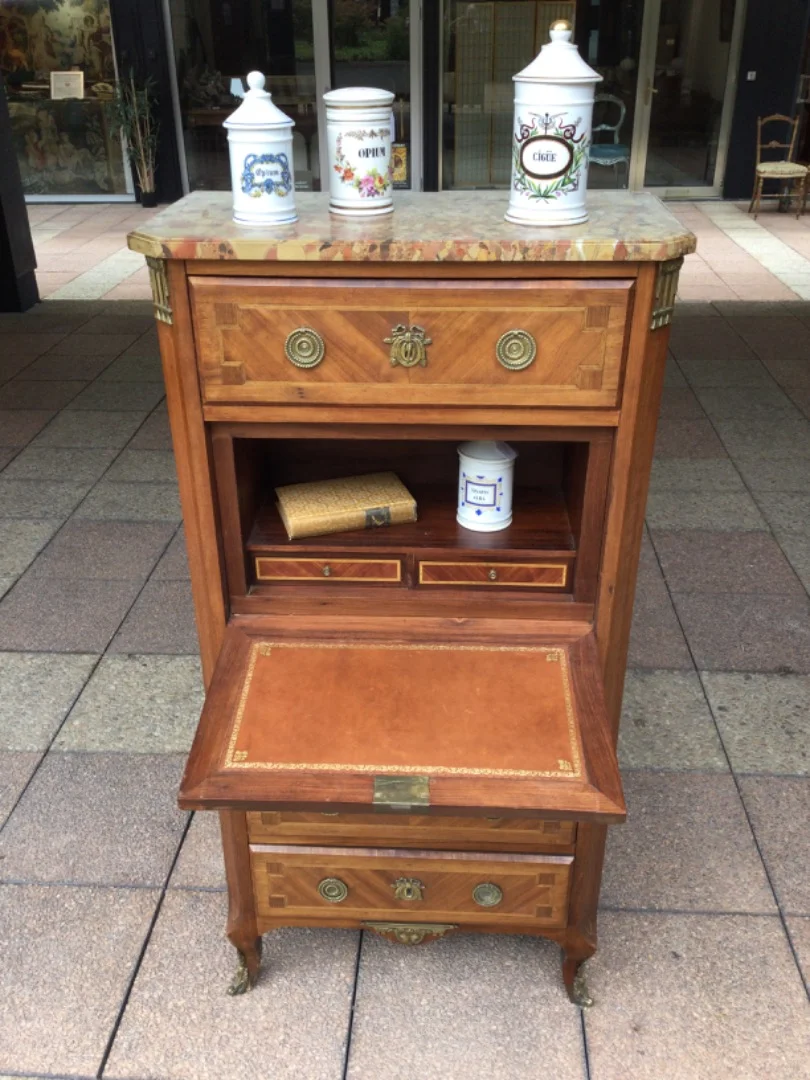
The leading Parisian ébénistes of the era — Leleu, Topino, Riesener — produced Transition style commodes and fall-front secrétaires of exceptional quality, typically veneered in pre-Directoire rosewood or kingwood enriched with finely chiselled gilt bronze.
119 objects found
Antiquités Anne Marie Perrier — La Boisse
Philippe Cote Antiquites — Chauffailles

2R Antiquites — Caluire-et-Cuire
Antiquités Lecomte — Héric
Antiquités Lecomte — Héric

Antiquités Lecomte — Héric

Eric Saget — Paris
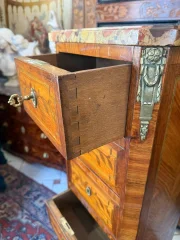
Romain Lichtensztein — Maignelay-Montigny
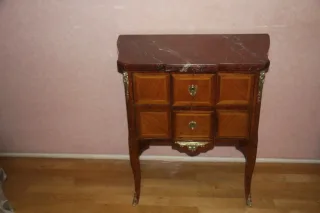
jean-pierre PERNOD — Bourg-en-Bresse
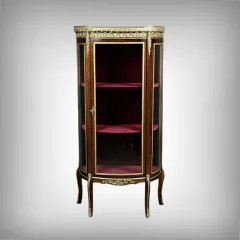
Antiquités Lecomte — Héric
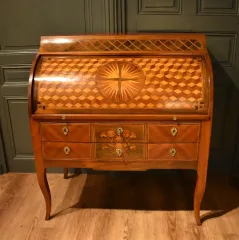
Antiquités Anne Marie Perrier — La Boisse
Philippe Cote Antiquites — Chauffailles
L'atelier De La Dorure — Calmont
Antiquités Anne Marie Perrier — La Boisse

Antiquités Lecomte — Héric
Antiquités Lecomte — Héric
Antiquités Lecomte — Héric
Philippe Cote Antiquites — Chauffailles

Philippe Cote Antiquites — Chauffailles
Eric Saget — Paris
Antiquités Lecomte — Héric
Romain Lichtensztein — Maignelay-Montigny

Antiquités Lecomte — Héric

Antiquités Lecomte — Héric
Identifying an authentic Transition style piece requires reading several converging details. The structure is the first clue: on earlier examples the legs remain slightly curved, progressively straightening toward the tapered flute as the 1760s give way to the 1770s. Façades shed the pronounced bombé swell of Louis XV without yet adopting the strict planarity of Empire furniture. It is precisely this creative tension between two aesthetics that gives Transition furniture its singular character and enduring appeal among serious collectors.
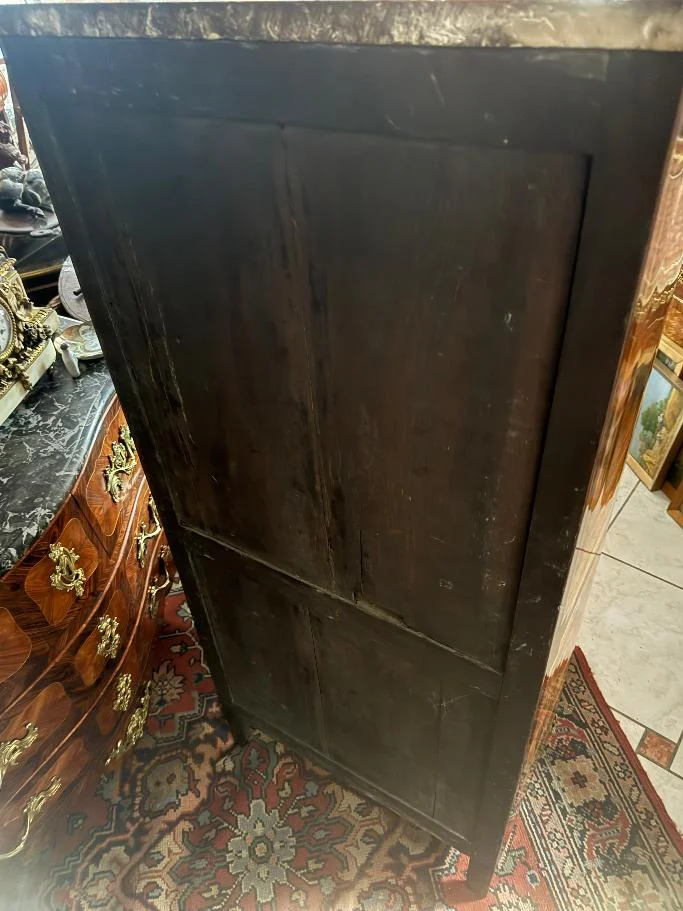
The most characteristic veneers are Rio rosewood, kingwood and mahogany, frequently enhanced by geometric or floral marquetry panels. Gilt bronze mounts — baguette handles, fluted sabots, pearl-bead friezes — are often of finer chasing quality than those found on later periods. A guild master's stamp (JME) on the back or underside is a valuable guarantee of authenticity: look for the names Leleu, Topino, Montigny, Vandercruse (RVLC) or Riesener.
Budget expectations vary widely. A small side table or night table without a stamp can be acquired from a few hundred pounds, while a quality stamped commode typically ranges from £3,000 to £15,000 or more, and a museum-grade fall-front secrétaire by a named master can reach well into five figures. Always inspect veneer condition carefully — lifting or missing sections are costly to restore — and check that bronze mounts are original (later replacements show coarser casting). The presence of the original marble top and any documented provenance, such as an old inventory or auction label, adds meaningful value.
On Antiquités en France, every Transition style antique is offered by a verified professional dealer who can provide detailed photographs, condition reports and care advice before purchase. Broaden your search to include Louis XVI fall-front secrétaires for related pieces, or explore the wider world of French decorative arts — then contact your chosen dealer directly to discuss provenance, restoration history or shipping.