Directoire Furniture & Antiques

167 objects found

Loading
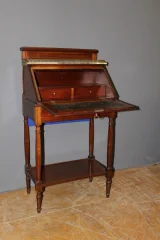
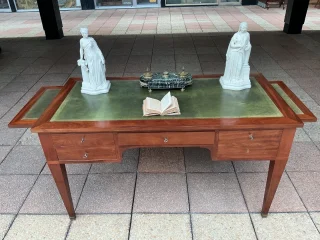
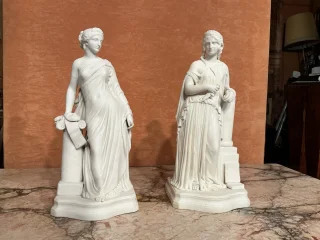
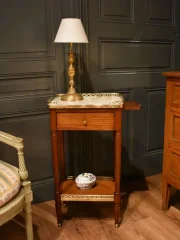
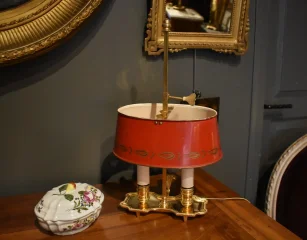
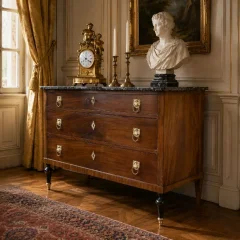
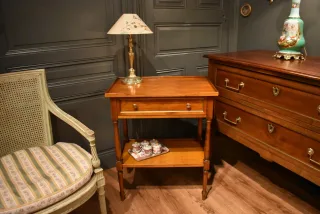
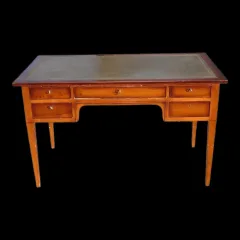
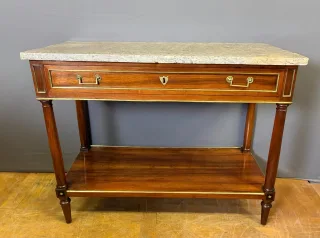
Directoire style emerged between 1795 and 1799 under the French Directory government, bridging the refined neoclassicism of Louis XVI and the austere grandeur of the Empire style. It is defined by clean rectilinear forms, an ornamental vocabulary drawn from Greco-Roman and Egyptian antiquity — sphinxes, fasces, stars, pike heads — and a strong preference for solid Cuban mahogany enriched with finely chiselled gilt bronze mounts. Directoire mahogany furniture combines understated elegance with exceptional durability, qualities that make these pieces highly sought after by collectors today.

Antique Directoire furniture and decorative objects from professional dealers

167 objects found

How to choose and authenticate a genuine Directoire piece

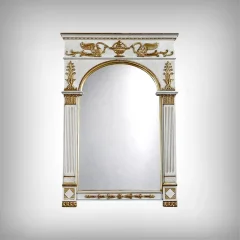
Recognising an authentic Directoire piece requires a few reliable benchmarks. The dominant timbers are Cuban mahogany and lemonwood, with walnut or ash appearing in regional workshop production. Original bronze mounts — ring pulls, rosettes, sabots — display the warm, slightly uneven tone of mercury gilding, quite distinct from the flat finish of 19th-century electroplated reproductions. Sabre legs, gondola-back Directoire armchairs, and marble tops in grey Saint-Anne or violet breccia are all dependable stylistic markers. To date a piece accurately, examine the construction: hand-cut mortise-and-tenon joints, irregular dovetail drawers and unplaned poplar or oak drawer bottoms all point to period craftsmanship. An ébéniste stamp — Jacob Frères, Bellangé, Marcion — or a marchand-mercier seal adds considerably to both value and traceability. Never overlook the underside of a drawer or the back of a carcass; that is where the most telling evidence hides. In terms of budget, expect to pay from a few hundred pounds or euros for a small guéridon side table or a pediment mirror, rising to several thousand for a fall-front secretaire or a stamped pair of armchairs. The condition of the veneer, the coherence of any restorations and the presence of original bronze mounts are the three factors that drive price. Be wary of suspiciously uniform mahogany tones, which can indicate a recent rewax concealing repairs. Pieces with documented provenance — an old inventory, an auction label, a family history — command a well-deserved premium. On Antiquités en France, every Directoire antique is offered by a verified professional dealer who can supply detailed photographs, exact dimensions and full provenance information before purchase. Broaden your search towards Louis-Philippe furniture, which carries forward several Directoire lines into the mid-19th century, or explore the wider world of neoclassical French seating to build a coherent interior. Contact your chosen dealer directly for any enquiry or reservation.

Frequently asked questions about Directoire Furniture & Antiques

What are the exact dates of the Directoire style?
Strictly speaking, Directoire corresponds to 1795–1799, the years of the Directory government. In practice, dealers often extend the term to cover roughly 1793–1804, including the Consulate period, which is stylistically very close and shares the same craftsmen and workshops.
What woods are typical of Directoire furniture?
Cuban mahogany is the defining timber, used as veneer over an oak or poplar carcass. Lemonwood, walnut and ash appear in regional pieces. Lighter woods such as maple or birch are rarer and usually reflect northern European influence on French workshops of the period.
How do I tell a period Directoire piece from a later reproduction?
Check the bronze mounts first: mercury gilding has a warm, subtly uneven glow that electroplated gilding cannot replicate. Look for hand-cut joinery, irregular dovetails and unplaned drawer bottoms. A natural mahogany patina and an ébéniste stamp on the back or underside are strong indicators of authenticity.
What prices should I expect for Directoire antiques from a dealer?
Prices range from around £300–£800 for a small mirror or a single chair, to £2,000–£6,000 for a fall-front secretaire or a mahogany commode. A stamped pair of Jacob Frères armchairs can exceed £10,000. Original bronze mounts, documented provenance and sound veneer are the main value drivers.
How should I care for a Directoire mahogany piece?
Dust regularly with a soft, dry cloth. Apply natural beeswax once or twice a year, avoiding any areas where veneer is lifting. Keep the piece away from direct heat sources and strong sunlight, both of which bleach mahogany and weaken period hide glues over time.