Description
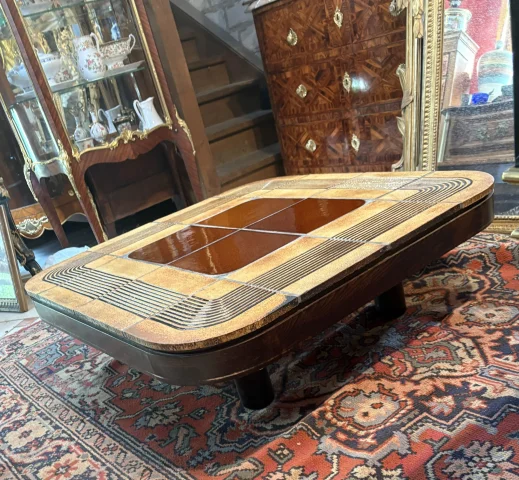
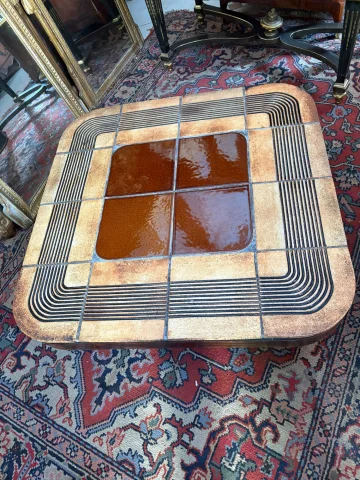
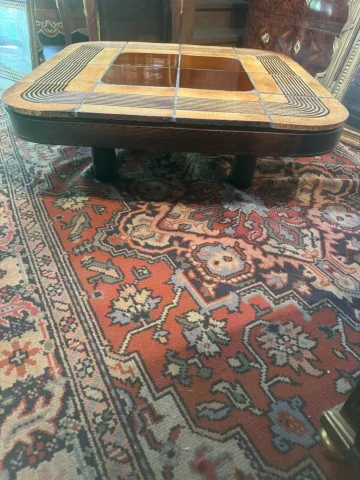
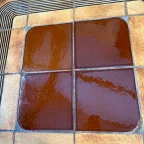
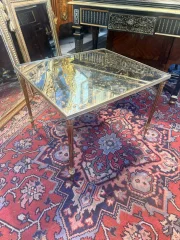
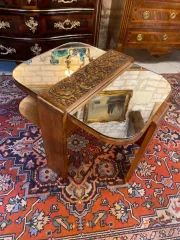
COFFEE TABLE BY Roger CAPRON (1922/2006) Known as the Mambo model,
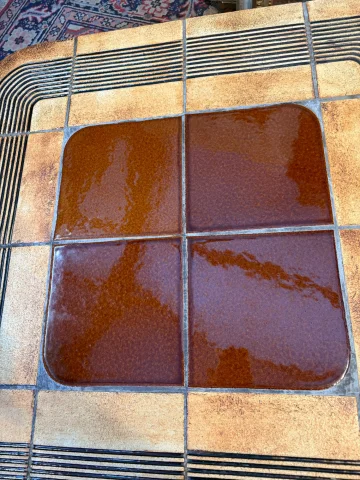
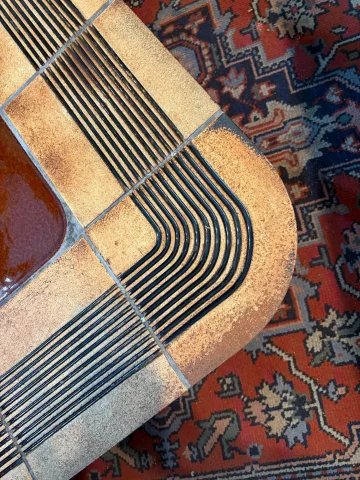
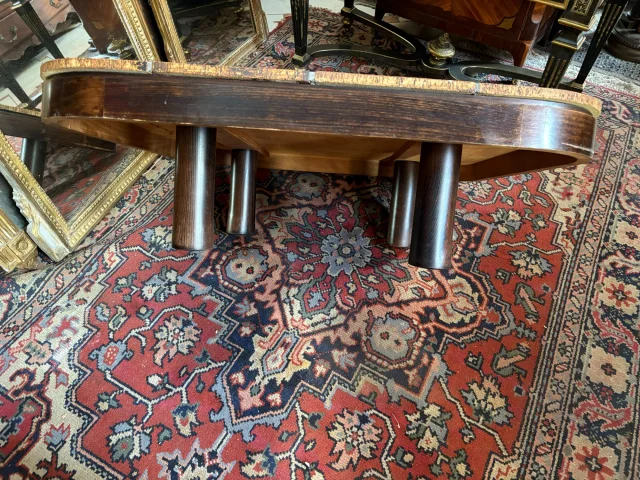
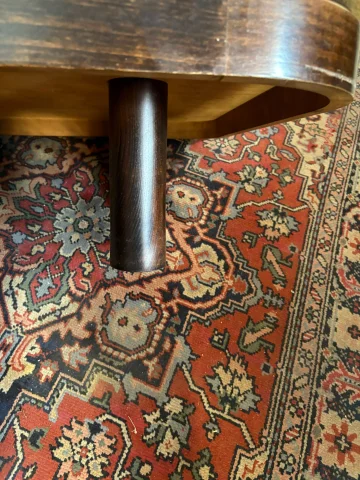
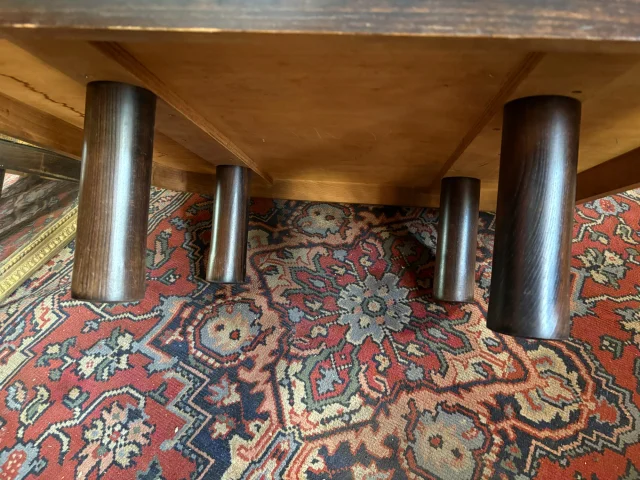
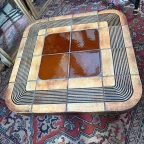
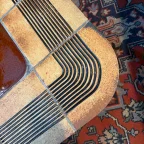
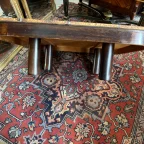
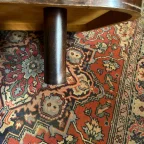
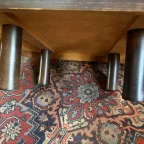
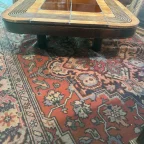
Square top with rounded edges in beige and brown glazed ceramic, with a wooden base,
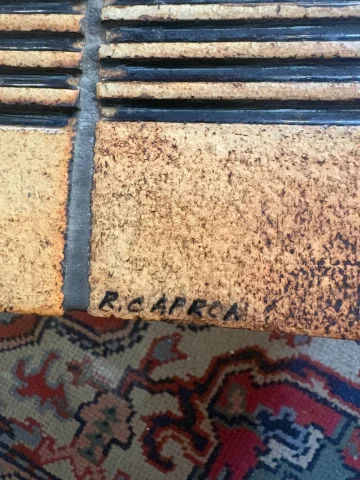
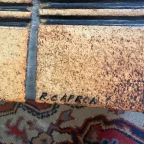
signed R CAPRON on the top.
Biography: Roger Capron, born in Vincennes in 1922, was a multi-talented artist: ceramist, painter and sculptor. From an early age, he showed a keen interest in art, initially devoting himself to drawing. From 1938 to 1943, he studied at the École des Arts Appliqués in Paris (now known as École Duperré). His discovery of ceramics gradually led him to set aside drawing and devote himself entirely to this new medium. In 1946, he settled in Vallauris, in the Alpes-Maritimes, where he opened his first ceramics studio. In 1948, he joined fellow ceramists Robert Picault and Jean Derval at the Callis workshop, contributing to the revival of ceramics in Vallauris. Roger Capron strived to put into practice what his mentor, designer René Gabriel, had taught him: "Making beauty accessible to all." In 1952, he acquired a pottery in Vallauris, initially employing seven workers to produce decorative panels and objects for local businesses. The following year, he began manufacturing faïence tiles and tables. It was also in 1955 that he married Jacqueline Hubin, known as "Jacotte", who would become his collaborator and unwavering support throughout his career. Roger Capron quickly achieved success: he received a gold medal at the 10th Milan Triennale in 1954, a silver medal at the International Exhibition in Cannes in 1955, and a gold medal in Brussels in 1959. In 1970, he was awarded the Grand Prix International de la Céramique. During this period, he collaborated with various artists, ceramists, painters and architects, including Jean-Michel Carré and Philippe Sicardon, on the ceramic decoration project for the Hôtel Byblos in Saint-Tropez. However, from 1980 onwards, the artist went through a difficult period. Although his studio employed nearly 120 people, the economic crisis forced him into bankruptcy. Capron was compelled to sell his designs, patents and manufacturing processes to the Établissements Carré in Paris. Despite these hardships, Roger Capron continued to create in his Vallauris studio. In the 1990s, having primarily produced serial objects, he explored a new artistic direction by focusing on unique pieces closer to sculpture. With the help of his wife and Jean-Paul Bonnet, he opened a new studio dedicated to fired pieces. In the 2000s, he also turned to three-dimensional sculpture, and his work continued to gain international recognition, with exhibitions in prestigious galleries such as Neotu in Paris and Hammer in New York. In 2003, the Musée national de la céramique de Sèvres dedicated a retrospective exhibition to him entitled "Les Capron."