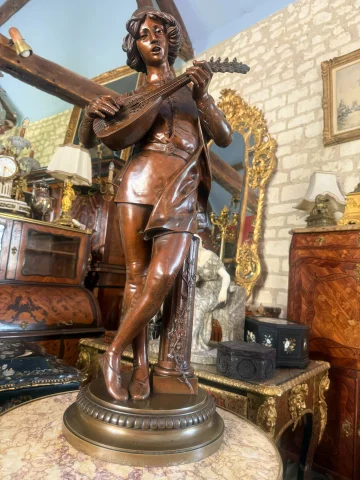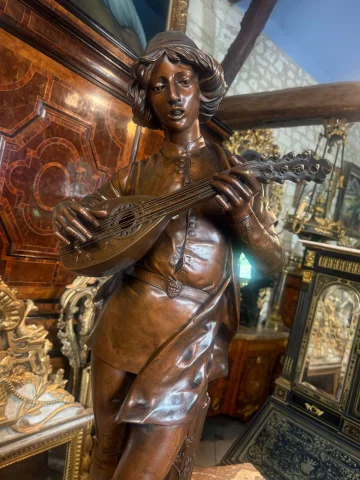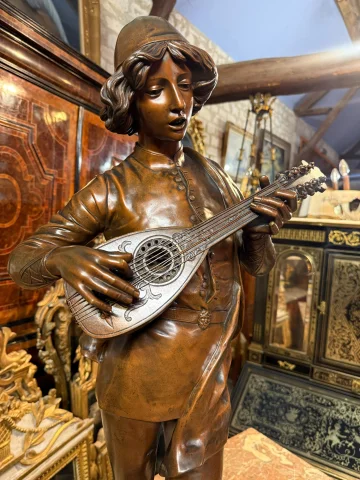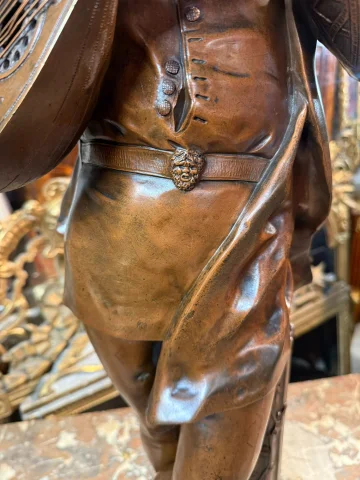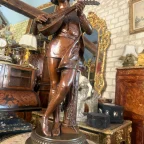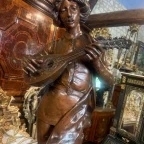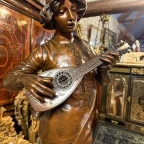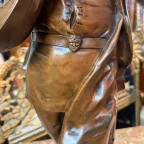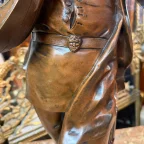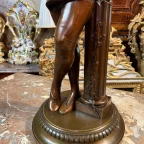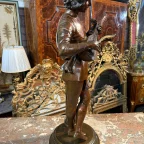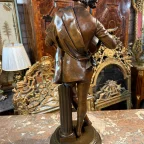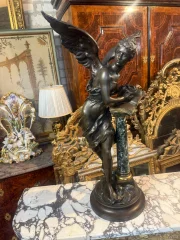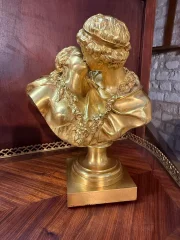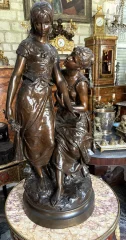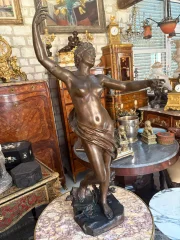
• BRONZE by Paul DUBOIS (1829 – 1905) FLORENTINE SINGER — Very good condition
  • BRONZE by Paul DUBOIS (1829 – 1905) FLORENTINE SINGER — Very good condition
  • BRONZE by Paul DUBOIS (1829 – 1905) FLORENTINE SINGER — Very good condition
  • BRONZE by Paul DUBOIS (1829 – 1905) FLORENTINE SINGER — Very good condition
  • BRONZE by Paul DUBOIS (1829 – 1905) FLORENTINE SINGER — Very good condition
  • BRONZE by Paul DUBOIS (1829 – 1905) FLORENTINE SINGER — Very good condition
  • BRONZE by Paul DUBOIS (1829 – 1905) FLORENTINE SINGER — Very good condition
  • BRONZE by Paul DUBOIS (1829 – 1905) FLORENTINE SINGER — Very good condition
  • BRONZE by Paul DUBOIS (1829 – 1905) FLORENTINE SINGER — Very good condition
  • BRONZE by Paul DUBOIS (1829 – 1905) FLORENTINE SINGER — Very good condition
  • BRONZE by Paul DUBOIS (1829 – 1905) FLORENTINE SINGER — Very good condition
  • BRONZE by Paul DUBOIS (1829 – 1905) FLORENTINE SINGER — Very good condition
Romain Lichtensztein

BRONZE by Paul DUBOIS (1829 – 1905) FLORENTINE SINGER

2 800,00 € Very good condition

Shipping

Shipping on quote

Request a quote
Hauteur 88 cm
Published on 03/07/2026

Description

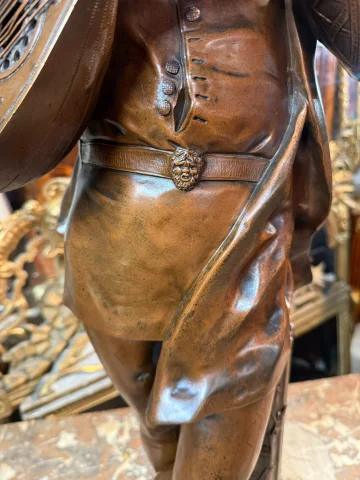
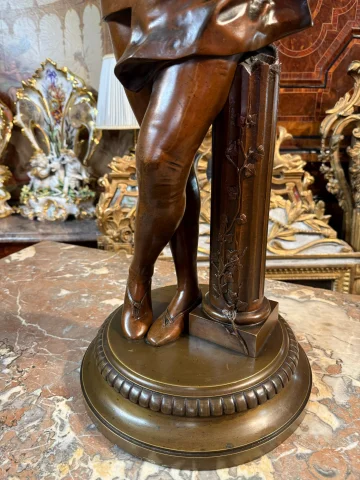
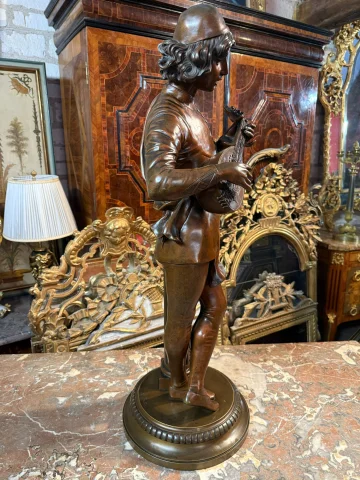
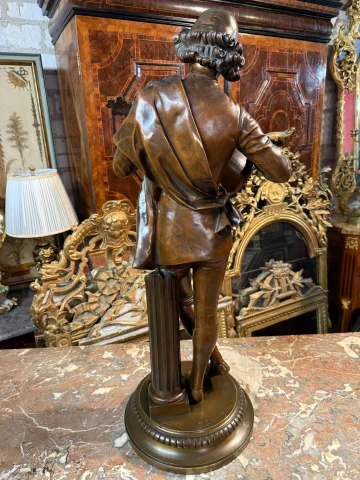
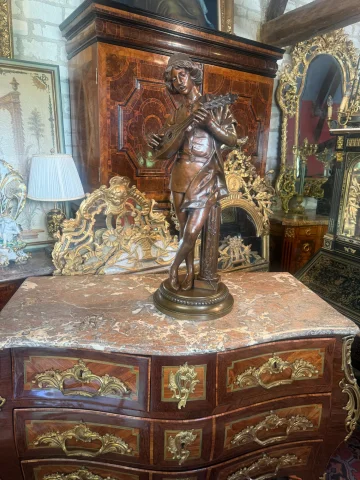
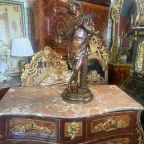
FLORENTINE SINGER by Paul DUBOIS (1829 – 1905)
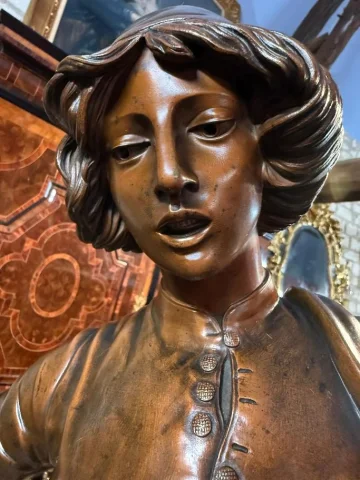
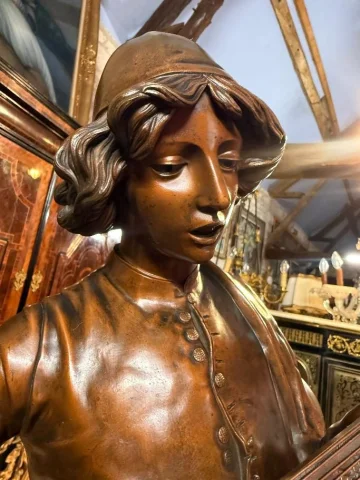
Bronze with gilt and copper patina,
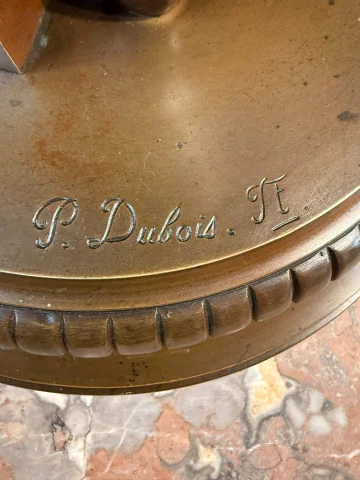
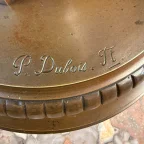
15th-century Florentine singer at the column. Manuscript signature engraved on the base.

Legend: Dubois Paul, author, Nogent-sur-Seine, Aube (10) (France) 1829 – Paris (France) 1905
Maison Barbedienne, publisher – founder
Place of activity: Paris (France) between 1838 and 1954

Marked by his time in Italy, History: Paul Dubois attracted immediate and enthusiastic success with refined works inspired by the Italian Renaissance. It was in this vein that he modelled the Florentine Singer, winning the medal of honour at the Salon of 1865. The work met with tremendous acclaim and, as one of the most popular sculptures of its era, was produced by the leading publisher Barbedienne in several sizes for nearly a century.

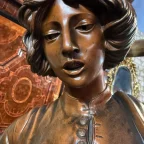
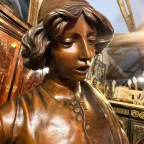
The slender, elegant silhouette of the young boy and the smooth, elongated lines of his legs contrast with the extraordinarily precise rendering of his clothing and accessories: the lacing of his shoes, the pleated trunk hose at the knees, the buttons on his sleeves, the strings and keys of his instrument, and the chiselled detail of his hair. A subtle sense of archaism is combined with a supremely refined execution. The silver plating applied over the bronze further enhances the precious quality of the work, leaving one torn between sculpture and goldsmithery.

The first example was purchased by Princess Mathilde, who presided over one of the most brilliant artistic and literary salons of the Second Empire.

More from this dealer