
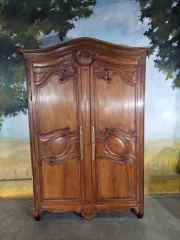
Pine armoire
Antiquites d'Augers en Brie — Augers-en-Brie
990,00 €
Very good condition
47 objects found
The antique regional French armoire embodies the rich diversity of French provincial craftsmanship from the 17th to the 19th century. Each region developed its own decorative language: tulip and heart carvings in Alsatian painted wardrobes, wheat-sheaf friezes and Celtic interlace in Brittany, boldly moulded panels and hand-forged ironwork in Normandy, and gently curved walnut facades in Provence. Built to last generations, these pieces were fashioned from local timbers — oak, walnut, cherry, chestnut — by regional joiners whose skill is legible in every mortise and tenon.
Antiquités en France brings together a curated selection of antique armoires offered by verified professional dealers, each listing with detailed photographs and full dimensions.
47 objects found
Antiquites d'Augers en Brie — Augers-en-Brie
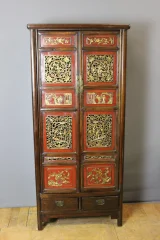
Antiquités Christophe Rochet — Villeurbanne
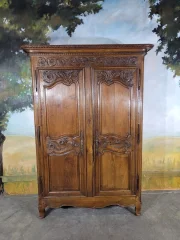
Antiquites d'Augers en Brie — Augers-en-Brie
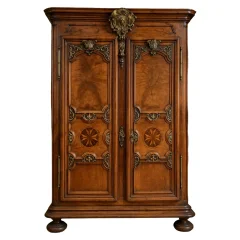
le village des brocanteurs 58 — Dun-les-Places
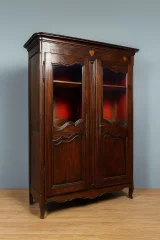
le village des brocanteurs 58 — Dun-les-Places
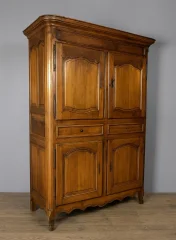
le village des brocanteurs 58 — Dun-les-Places
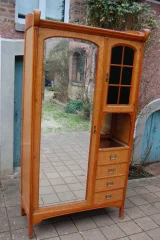
Antiquités Rousseau — Évry
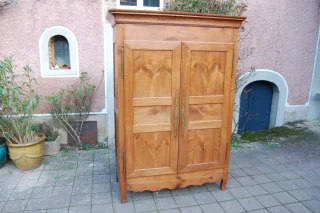
Antiquités Rousseau — Évry
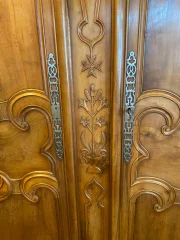
jean-pierre PERNOD — Bourg-en-Bresse
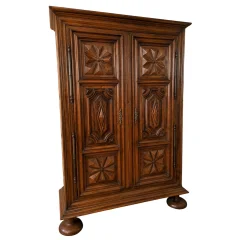
le village des brocanteurs 58 — Dun-les-Places
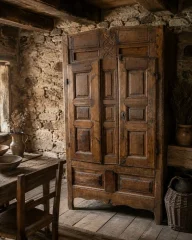
L'atelier De La Dorure — Calmont
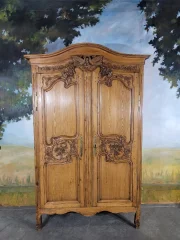
Antiquites d'Augers en Brie — Augers-en-Brie
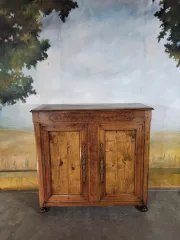
Antiquites d'Augers en Brie — Augers-en-Brie
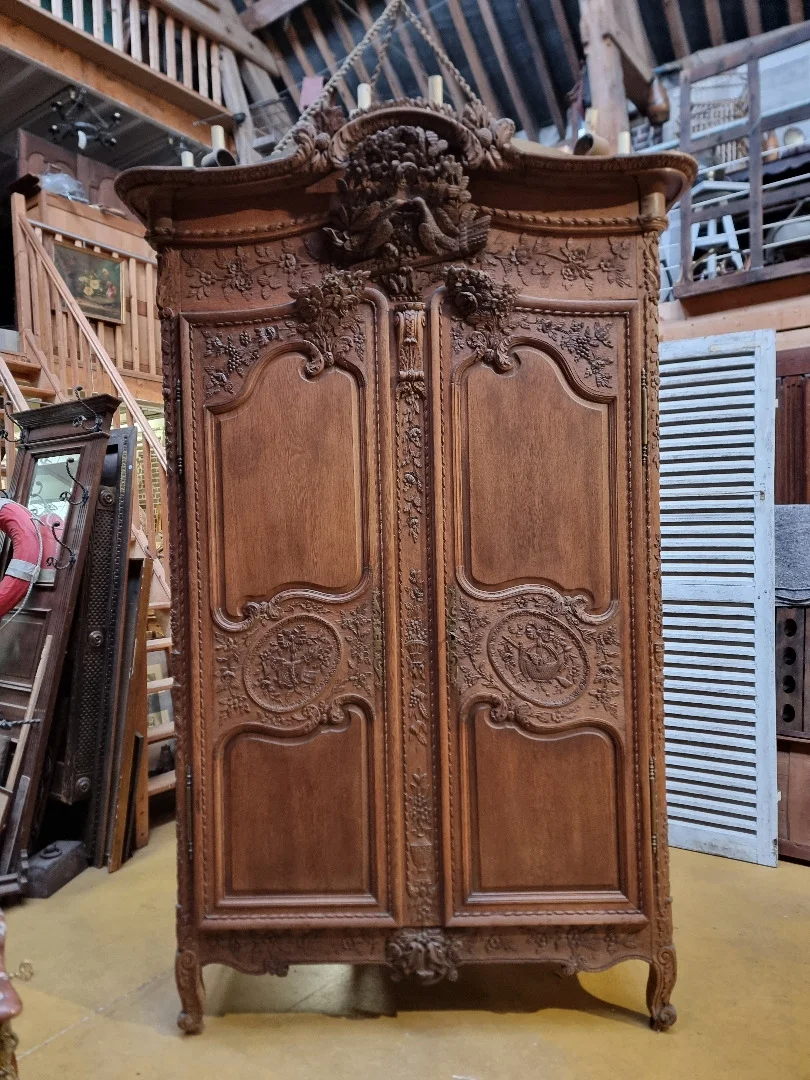
French-antiques.fr — Rouen
L'atelier De La Dorure — Calmont
Antiquités Christophe Rochet — Villeurbanne
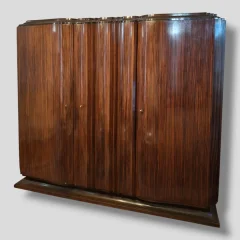
L'atelier De La Dorure — Calmont
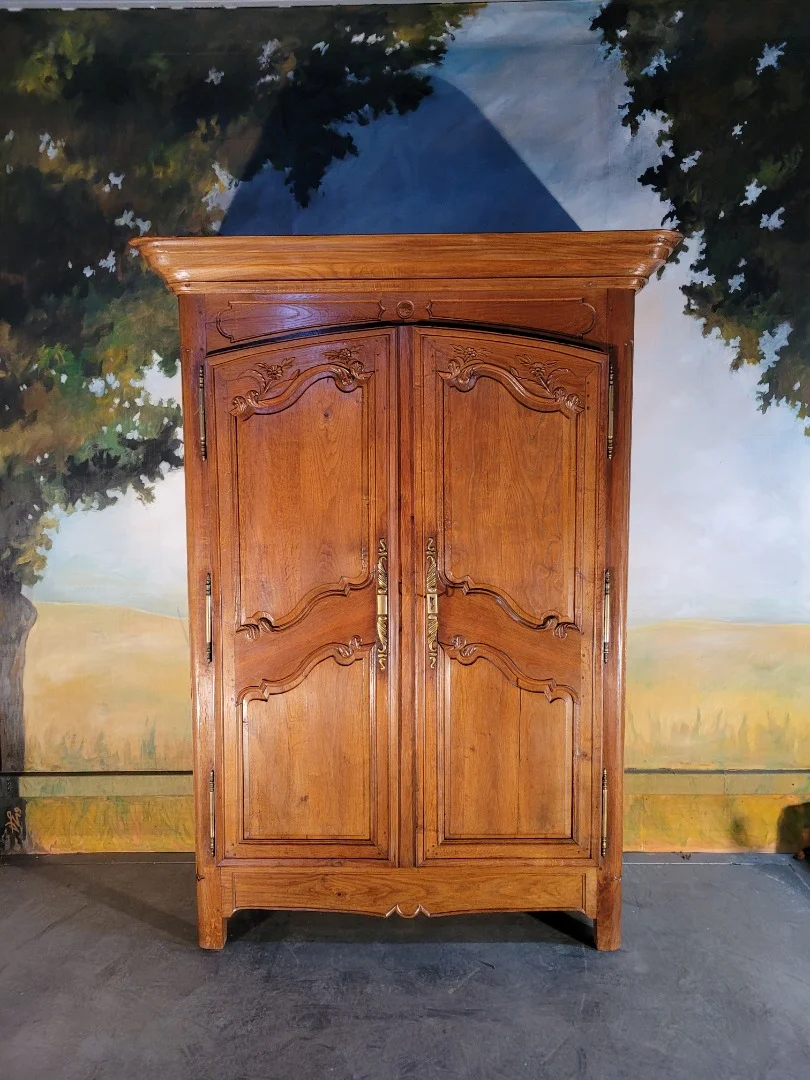
Antiquites d'Augers en Brie — Augers-en-Brie
ANTIQUITES VANGEON — Chartres
Antiquités Lecomte — Héric
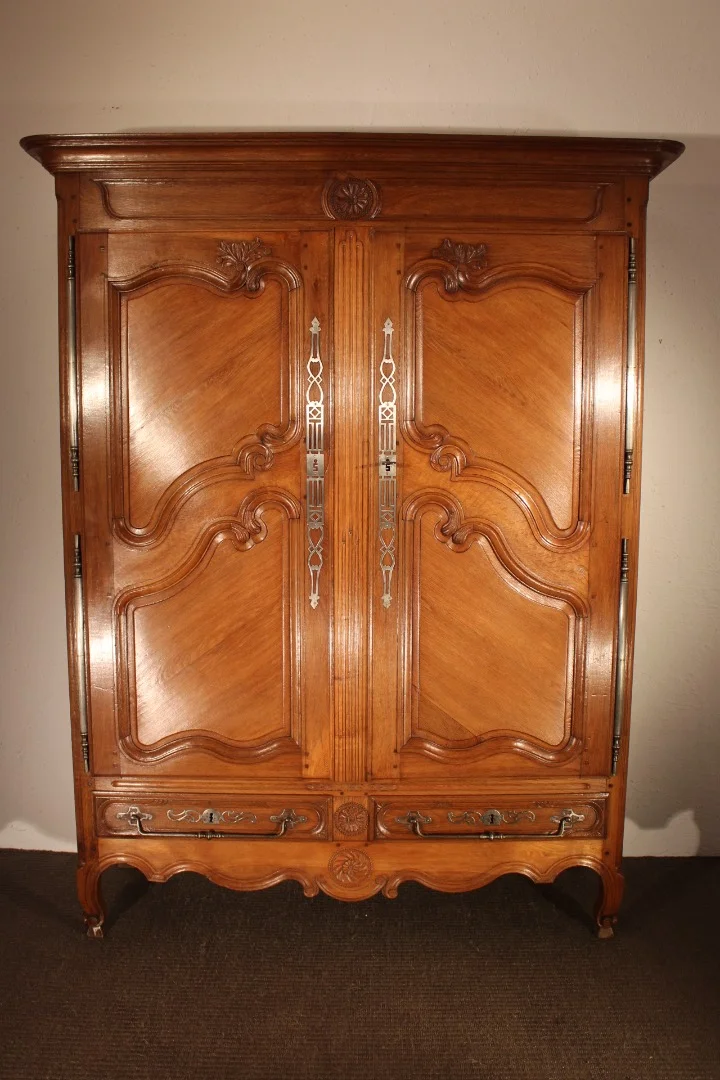
Au Réveil Du Temps — Saint-Nabord
L'atelier De La Dorure — Calmont
Antiquités Christophe Rochet — Villeurbanne
L'atelier De La Dorure — Calmont
Authenticating an antique regional French armoire begins with the timber and the joinery. Look for solid oak or walnut with naturally irregular grain, hand-pegged mortise-and-tenon joints, and floating panels that allowed the wood to breathe — hallmarks of pre-industrial craftsmanship. Tool marks from hand planes and scratch stocks on the edges and back boards are reliable indicators of genuine age. Original hand-forged ironwork, with its characteristic asymmetries, adds significantly to a piece's value and should never be replaced with modern hardware.
Regional identity is written into every detail. A Norman armoire typically features bombé panels and repoussé copper hinges; an Alsatian example is recognised by its polychrome painted or low-relief carved decoration, often dated and monogrammed by the original owner. Provençal walnut armoires are distinguished by their curved front panels and richly profiled cornices, while Breton oak wardrobes carry geometric or floral carvings rooted in Celtic folk art traditions.
In terms of budget, a well-preserved French provincial wardrobe typically ranges from around £700 to £4,500, depending on region, timber, quality of carving and overall condition. A dated, monogrammed or documented piece can comfortably exceed these figures. Always check the flatness of the doors, the integrity of the hinges and locks, and whether any restoration work has been sympathetically carried out. A professional antiquaire will tell you frankly whether the fittings are original and can supply additional photographs on request. Explore our antique French country buffets to complete a characterful interior scheme.
Every piece listed on Antiquités en France is offered by a vetted professional dealer who can provide provenance details, precise measurements and condition reports before you commit. Browse the full range of antique armoires to widen your search, and contact the dealer of your choice directly — expert guidance is part of the service.