
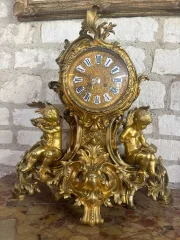
Louis XV Style Mantel Clock – Napoléon III
Romain Lichtensztein — Maignelay-Montigny
2 200,00 €
Good condition
130 objects found
An antique mantel clock is far more than a timekeeping instrument — it is a self-contained work of decorative art, reflecting the taste and craftsmanship of its era. From the restrained neoclassical white marble cases of the Louis XVI period to the triumphant gilt bronzes of the Empire, and the Sèvres porcelain cartouches of the Second Empire, each piece unites finely chiselled gilt bronze with the finest materials of its day. The great Parisian workshops — Thomire, Ravrio, Leroy — brought this art to its peak between the late 18th and mid-19th centuries.
Browse our carefully vetted selection of mantel, cartel and longcase clocks, offered by professional antiquaires within our dedicated antique horology section.
130 objects found
Romain Lichtensztein — Maignelay-Montigny
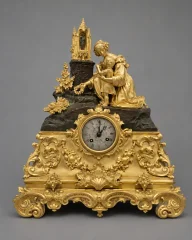
Les Trésors d'avril 71. — Saint-Bonnet-de-Vieille-Vigne

Romain Lichtensztein — Maignelay-Montigny
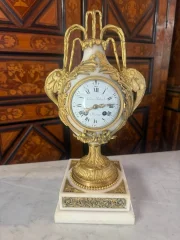
Romain Lichtensztein — Maignelay-Montigny
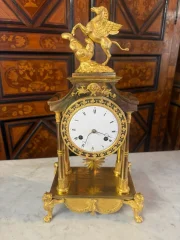
Romain Lichtensztein — Maignelay-Montigny

Romain Lichtensztein — Maignelay-Montigny
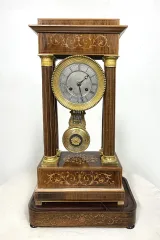
Antiquités GUY Jacques — Buchères
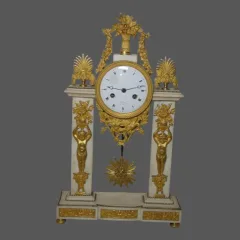
L'atelier De La Dorure — Calmont
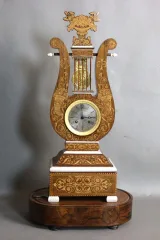
Philippe Cote Antiquites — Chauffailles
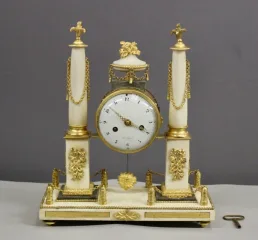
Antiquités Christophe Rochet — Villeurbanne
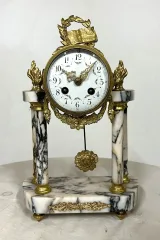
Antiquités GUY Jacques — Buchères
A.ABC PASCAL — Saint-Ouen

Philippe Cote Antiquites — Chauffailles
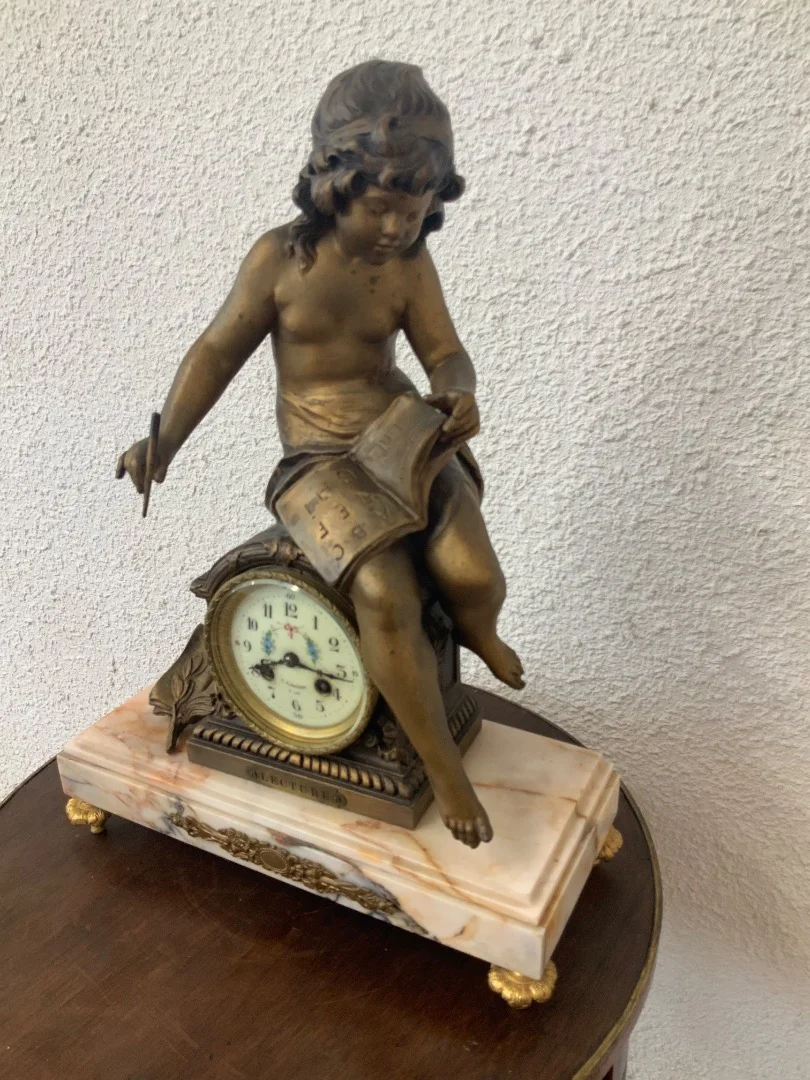
Antiquités Lyonnaises — Villeurbanne
Au Réveil Du Temps — Saint-Nabord
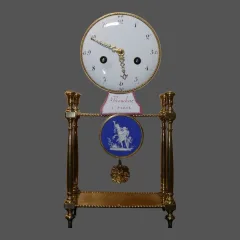
L'atelier De La Dorure — Calmont
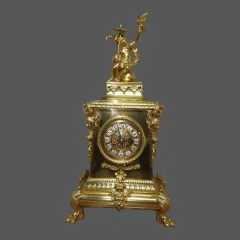
L'atelier De La Dorure — Calmont
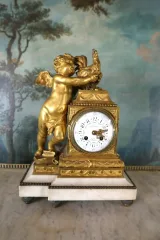
Philippe Cote Antiquites — Chauffailles

Sarl Cave — Limoges
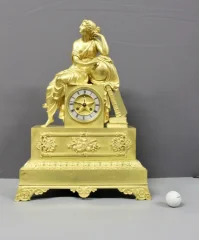
Antiquités Christophe Rochet — Villeurbanne
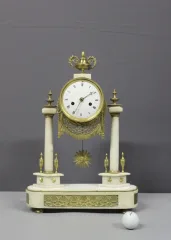
Antiquités Christophe Rochet — Villeurbanne
Antiquités Lecomte — Héric
Antiquités Lecomte — Héric

Antiquités Lecomte — Héric
Identifying a genuine antique mantel clock begins with the movement: a calibre signed by a respected clockmaker — Breguet, Berthoud, Lepaute — or bearing a guild mark is an unmistakable sign of quality. The case deserves equal scrutiny. On an Empire clock, mercury-gilded bronzes display a warm, deep patina with subtle wear at the high points — a quality no modern electroplating can convincingly replicate. Original marbles — vert de mer, Belgian black, white statuary — should be free of crude repairs or structural cracks.
In terms of style, the Louis XVI mantel clock is characterised by fluted columns, bead-and-reel friezes and allegorical figures in patinated bronze. Empire examples favour triumphal imagery: winged victories, eagles, sphinxes and military trophies. The Napoleon III period introduces painted porcelain panels and more exuberant ornament, often enriched with cloisonné enamels.
On the question of budget, expect to pay a few hundred pounds or euros for a good working production clock, rising to several thousand for a fine signed Empire piece with its original movement and winding key. Always verify that the movement runs — or can be restored by a qualified clockmaker — that the bronzes have not been repainted, and that any marble damage is cosmetic rather than structural. A documented provenance — an old receipt, a probate inventory, an auction house label — adds meaningfully to both value and traceability. Complement your search with antique cartel clocks for a wall-mounted alternative in the same tradition.
On Antiquités en France, every antique mantel clock is listed by a verified professional dealer who can supply detailed photographs of the movement, precise dimensions and the known history of the piece. Explore the full breadth of our antique horology collection to find the timepiece that suits your interior and your collection — then contact the dealer directly to discuss condition, shipping and any restoration history before you buy.