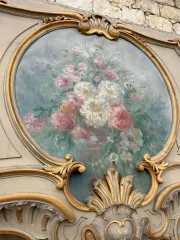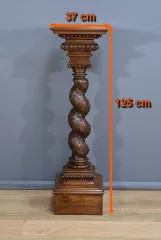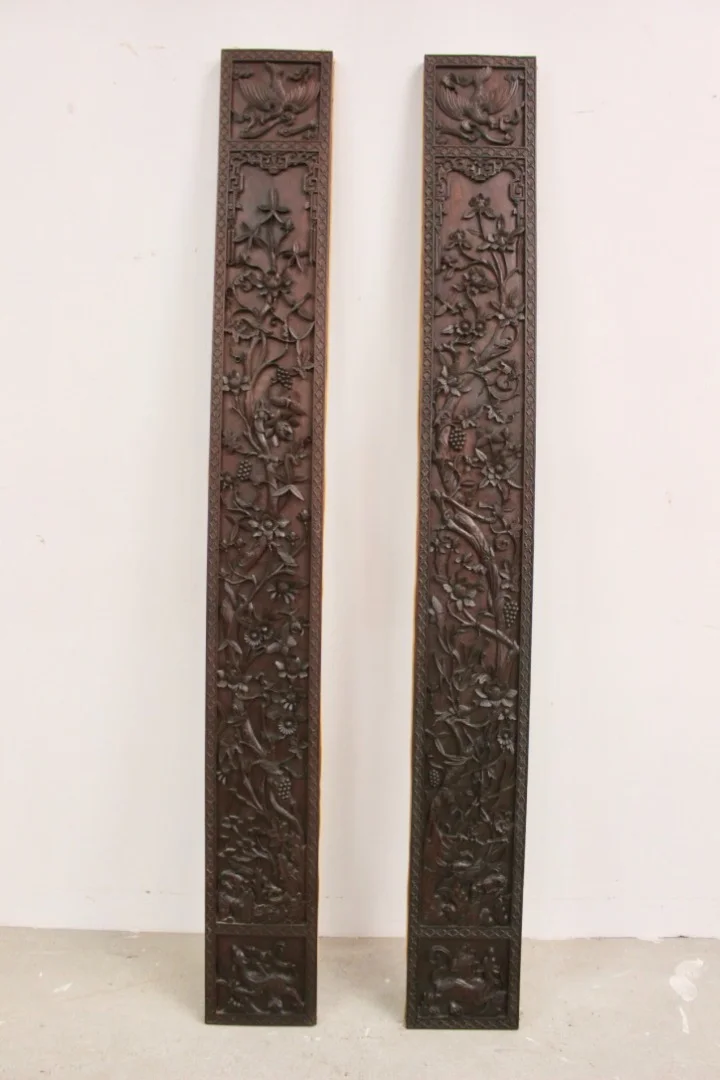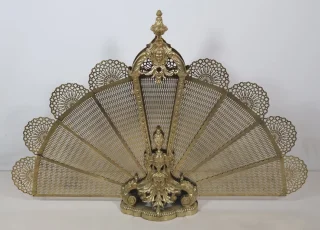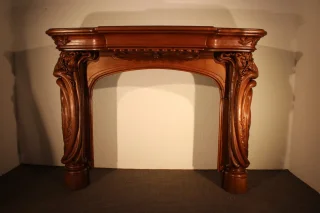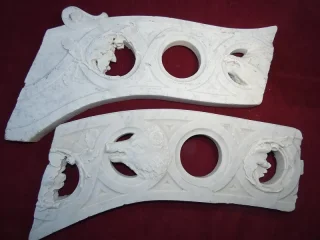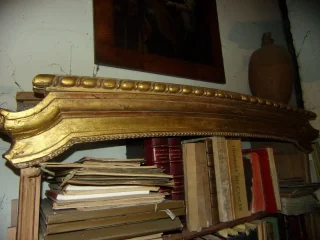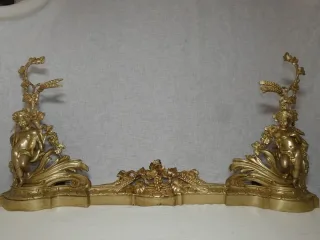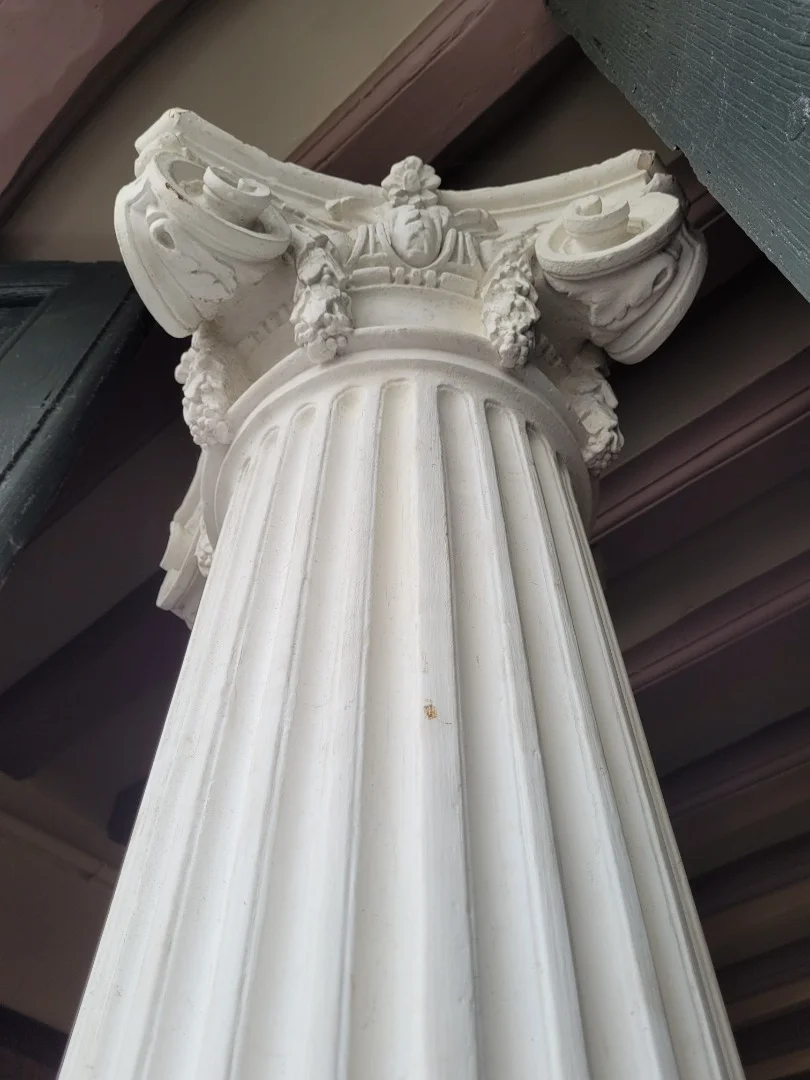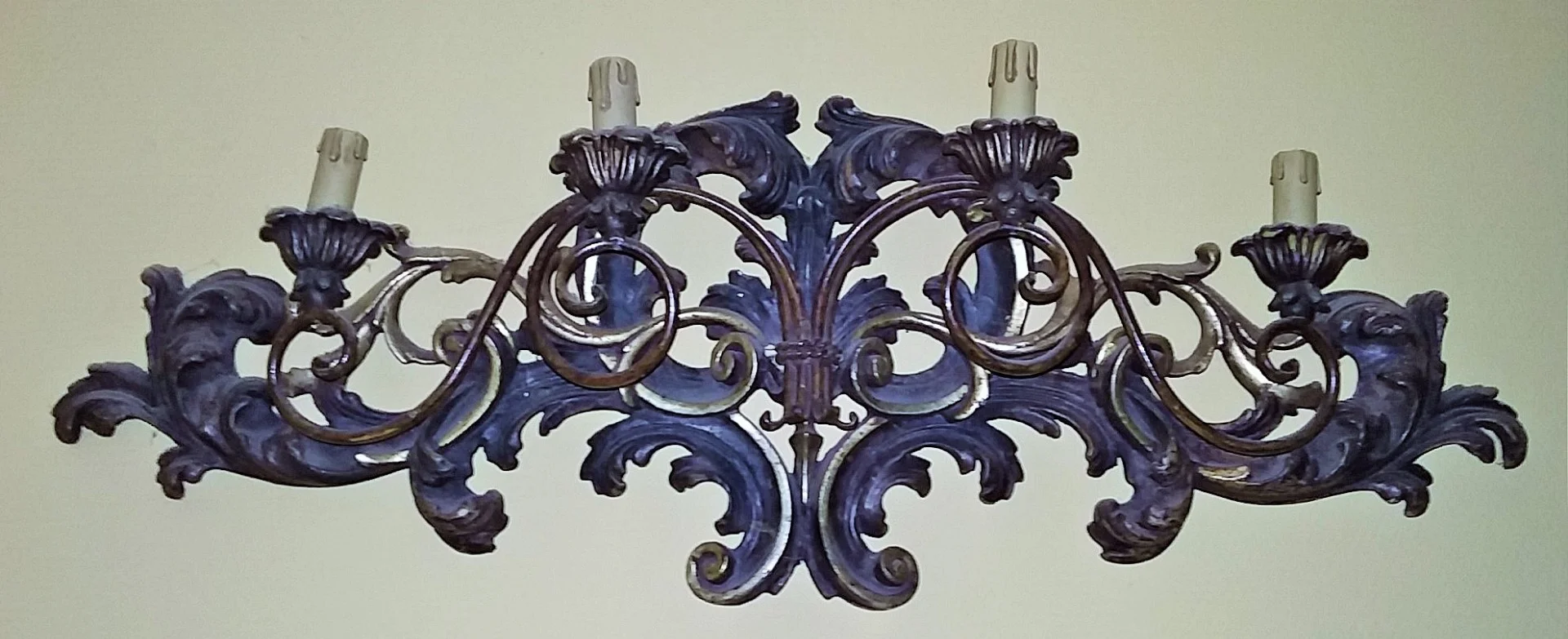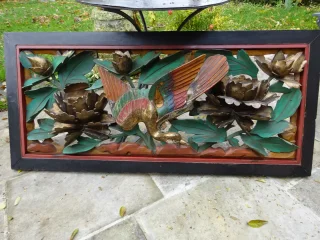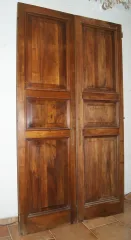
Antique wood panelling and boiseries span a remarkable range of styles and timbers: solid oak for the grand bourgeois interiors of the 17th century, sculpted walnut for Régence reception rooms, painted and gilded pine for Louis XV salons, and moulded mahogany for Empire and Restauration schemes. Before purchasing, examine the quality of the carving closely — the crispness of acanthus scrolls, the depth of recessed fields, the regularity of moulding profiles — and check the condition of the mortise-and-tenon joints, which are the true guarantee of structural integrity.
Authenticating a period boiserie requires looking at the back of each panel: hand-tool marks from gouges and chisels, chalk or charcoal assembly numbers applied during the original installation, and successive layers of paint or gilding revealed by careful examination in a discreet area are all reliable indicators of age. A documented provenance — a château inventory, an early photograph, or a notarial appraisal — adds considerably to market value. Look in particular for
18th century painted lambris that retain their original polychromy, as these are among the most sought-after pieces on the market.
In terms of budget, expect to pay from a few hundred pounds or euros for a single panel in good condition, rising to tens of thousands for a complete 18th-century salon suite with matching overdoors and a trumeau. Always check for signs of active woodworm infestation and ensure the assembly is stable before committing to a purchase. If in doubt, consult a specialist conservator before installation.
On Antiquités en France, every piece of
antique wood panelling is offered by a verified professional dealer who can supply detailed photographs, precise dimensions and reassembly guidance. Explore our listings of
antique decorative joinery to complete a scheme, or browse the full range of
antique architectural elements for a coherent restoration project.