
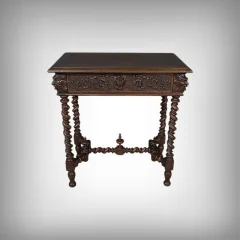
Small Walnut Desk Table, Henri II style – Late 19th century
Antiquités Lecomte — Héric
1 600,00 €
Restored
133 objects found
The antique flat-top desk — the bureau plat — stands as one of the most iconic achievements of French cabinet-making. Emerging at the turn of the 18th century, it is defined by its broad, uninterrupted writing surface, traditionally covered in original leather, set on cabriole or straight legs depending on the period. From the sinuous curves of Louis XV to the restrained neoclassicism of Louis XVI and the disciplined lines of the Empire style, each era produced pieces of remarkable character. Browse our curated selection of antique flat-top desks offered by specialist antique desk dealers.
133 objects found
Antiquités Lecomte — Héric
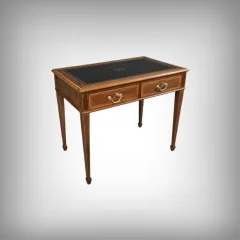
Antiquités Lecomte — Héric
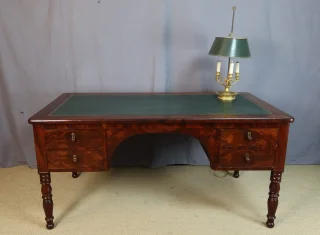
Philippe Cote Antiquites — Chauffailles
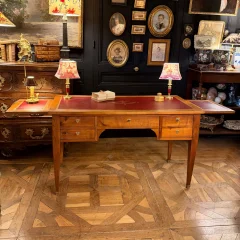
Ponvianne Antiquités — Marcy-l'Étoile
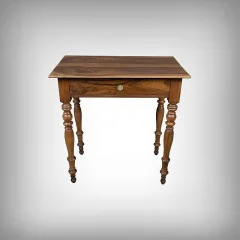
Antiquités Lecomte — Héric
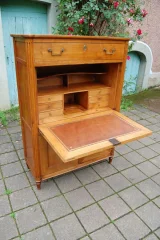
Antiquités Rousseau — Évry
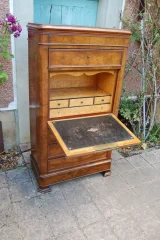
Antiquités Rousseau — Évry
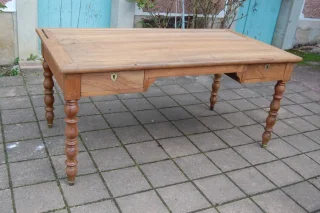
Antiquités Rousseau — Évry
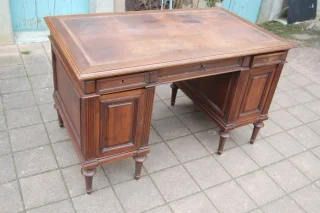
Antiquités Rousseau — Évry
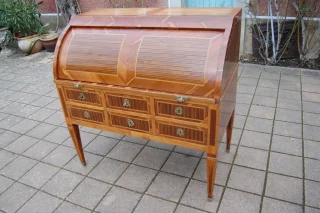
Antiquités Rousseau — Évry
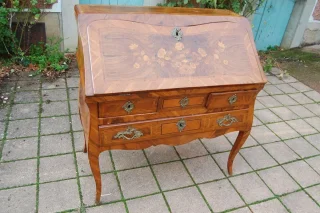
Antiquités Rousseau — Évry
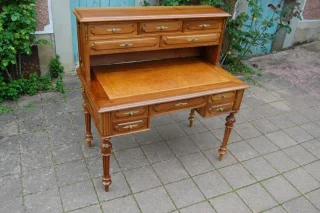
Antiquités Rousseau — Évry
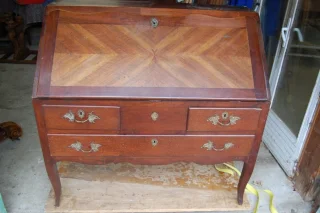
Antiquités Rousseau — Évry
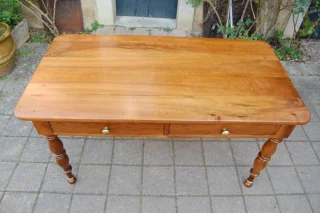
Antiquités Rousseau — Évry
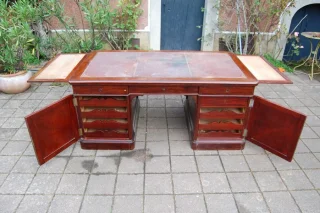
Antiquités Rousseau — Évry
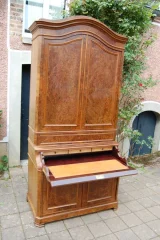
Antiquités Rousseau — Évry
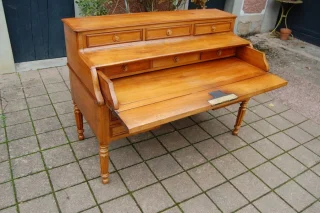
Antiquités Rousseau — Évry
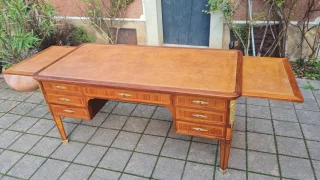
Antiquités Rousseau — Évry
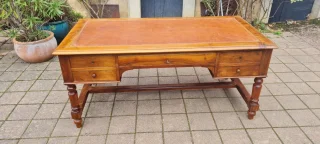
Antiquités Rousseau — Évry
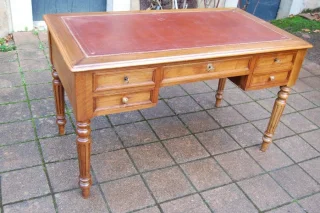
Antiquités Rousseau — Évry
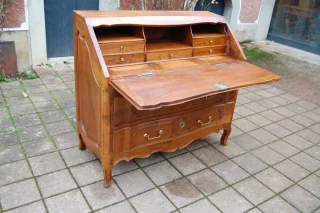
Antiquités Rousseau — Évry
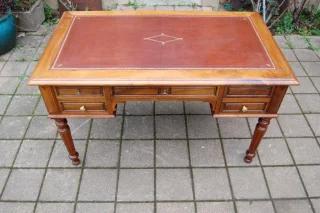
Antiquités Rousseau — Évry
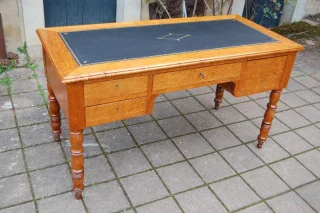
Antiquités Rousseau — Évry
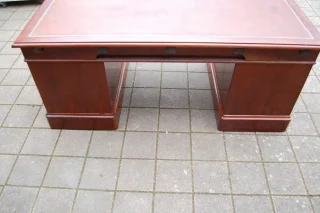
Antiquités Rousseau — Évry
Authenticating a genuine period bureau plat begins with the construction: drawers should run on wooden guides with no modern metal runners, and the carcase joints should show the slight irregularities of hand-craftsmanship. The finest examples were made in precious timbers — Cuban mahogany, Rio rosewood, solid walnut — whose deep, uneven patina no reproduction can convincingly replicate. An ébéniste's stamp struck beneath the top or on the frieze rail is the single most reliable mark of quality; names to look for include Boudin, Migeon and Riesener for the 18th century, and Jacob-Desmalter for the Empire period.
Pay close attention to the writing surface: an original leather top, even one showing honest wear, is far more desirable than a recent replacement. Examine the gilt-bronze mounts — handles, sabots, escutcheons — for the warm, slightly uneven tone of genuine mercury gilding, which has a depth and irregularity that modern electro-gilding cannot match. Consistent, well-matched ormolu mounts across all fittings are a strong indicator of an unaltered piece.
In terms of budget, a good-quality period-style flat-top desk can be found from a few hundred pounds or euros, while a stamped 18th-century masterpiece by a named ébéniste may reach tens of thousands. Between those extremes lies a rich market: Napoléon III desks in solid mahogany, Directoire models in fruitwood, and well-made Belle Époque pieces that combine elegance with accessibility. Always ask the dealer for exact dimensions, the condition of the leather, and a clear account of any restoration work carried out.
On Antiquités en France, every antique flat-top desk is listed by a verified professional dealer who can provide additional photographs, precise measurements and provenance documentation on request. Explore the full range of antique desks and writing furniture to refine your search, and contact the dealer directly to arrange viewing or shipping.