
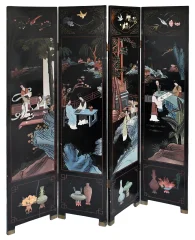
Four-panel Coromandel lacquered wood screen
Espaces et Formes — Paris XVIII Arrdt
1 450,00 €
Good condition
5 objects found
From the Louis XV fauteuil in carved beechwood to the Empire bergère in solid mahogany, antique seating embodies both the craft of the great menuisiers and ébénistes and the art of living of their age. Recognising a quality piece means examining the structure — hand-cut mortise-and-tenon joints, solid timber with no composite board — as well as the original period upholstery: silk, velvet, needlepoint or toile de Jouy are all telling signs of authenticity.
On Antiquités en France, every piece of antique seating is offered by a verified professional dealer who stands behind the authenticity and provenance of each item.
5 objects found
Espaces et Formes — Paris XVIII Arrdt
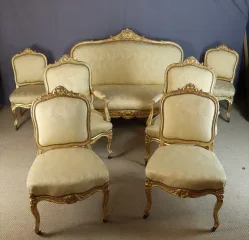
Philippe Cote Antiquites — Chauffailles

L'atelier De La Dorure — Calmont
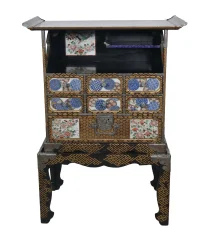
Galerie Lauretta — Mandelieu-la-Napoule
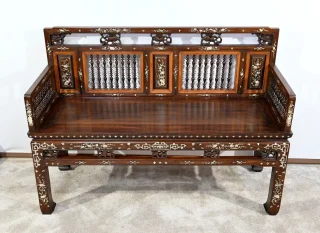
Antiquités Lecomte — Héric
To authenticate antique seating, start with the maker's stamp. From 1743, Parisian menuisiers-ébénistes were required by guild law to strike their work. A legible stamp — Lelarge, Brizard, Sené, Jacob — on the underside of the seat rail is the strongest guarantee of authenticity and directly affects value. Where no stamp is present, close analysis of the timber (stained beech for Louis XV, mahogany for Empire pieces), the joinery and the original hardware can still allow precise dating.
Upholstery matters enormously: intact period needlepoint upholstery or original silk velvet can multiply a chair's value several times over. A recent re-upholstery is not a dealbreaker, but check that the webbing, coil springs and horsehair padding have been respected — a sympathetic restoration preserves the piece's market value. Be wary of injected synthetic foam hidden beneath a fine antique fabric.
Prices vary widely by style, stamp and condition. Expect to pay from a few hundred pounds for a antique provincial rush-seat chair to several thousand for a pair of stamped Louis XVI fauteuils in original upholstery. Sets — pairs, suites of four or six matching chairs — are especially sought after and command a premium accordingly. If your interest extends to Eastern-influenced seating, our Asian furniture section features lacquered and bamboo chairs of the period.
Every dealer on Antiquités en France provides detailed photographs, exact dimensions and a full history of each piece. Contact them directly for additional information or to discuss shipping arrangements — it is the surest way to acquire authentic antique seating with complete confidence.