
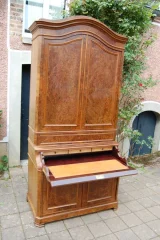
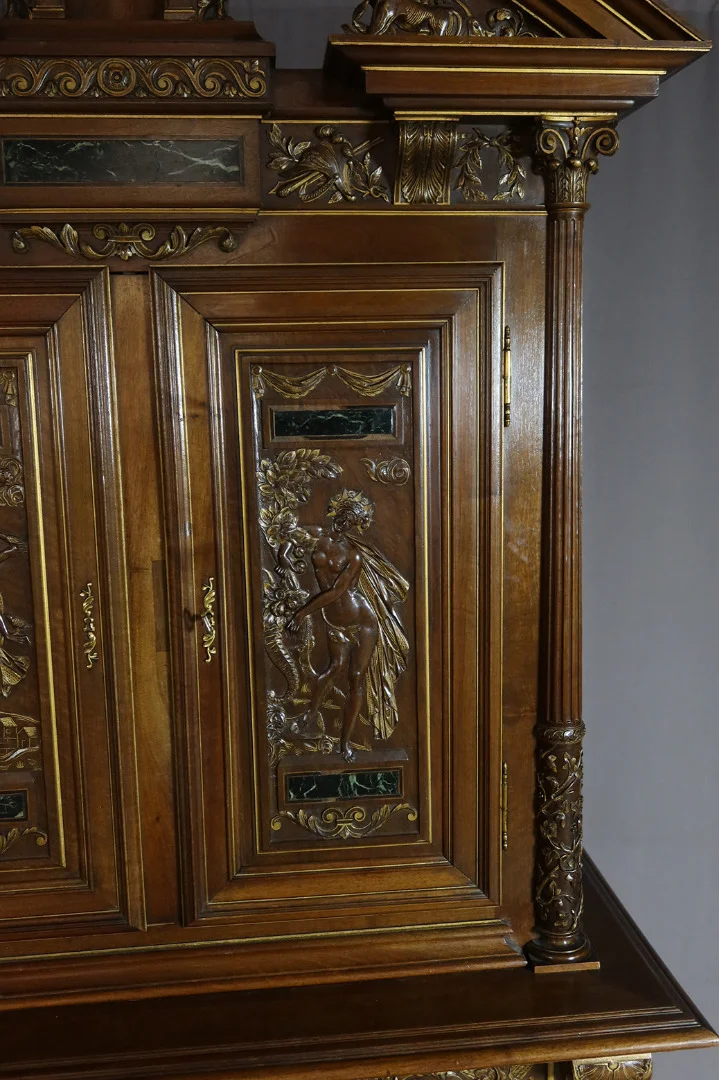
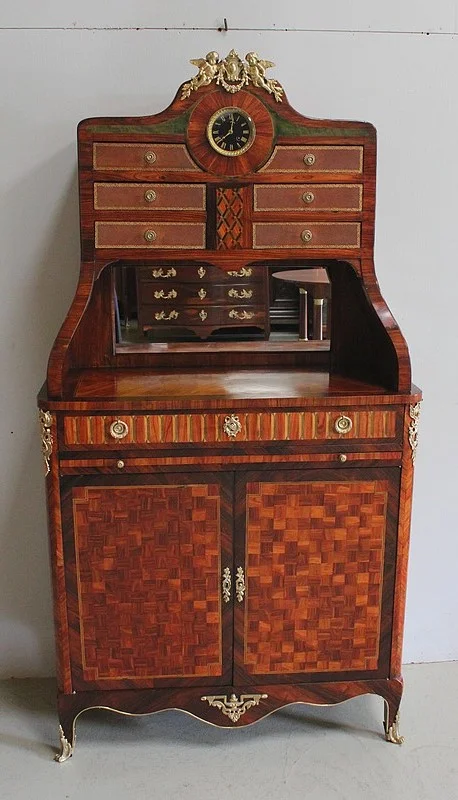
Louis-Philippe two-part bureau-bookcase in walnut, 19th century
Antiquités Rousseau — Évry
1 500,00 €
Excellent condition
21 objects found
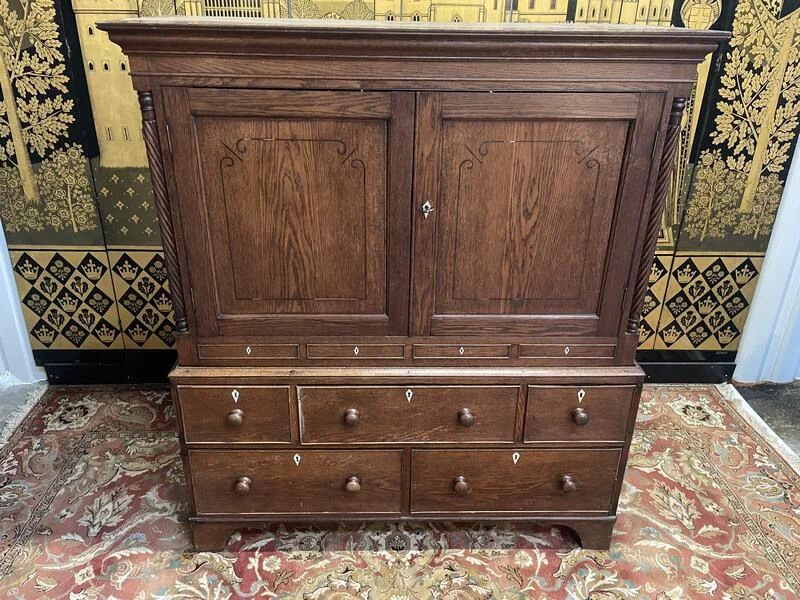
The antique two-part cabinet — known in France as the meuble deux-corps — stands as one of the defining forms of French furniture history. Composed of two superimposed sections, a deeper lower body and a lighter upper one, it emerged during the Renaissance as a prestige piece in both bourgeois and aristocratic interiors. The finest examples, in carved oak, display twisted columns, acanthus-leaf friezes, grotesque masks and lozenge-shaped panels that are hallmarks of the Henri II and Louis XIII styles.
From the 16th to the 18th century, regional craftsmen across Burgundy, Brittany, Normandy and the Île-de-France each developed their own decorative vocabulary, making the two-part cabinet a vivid record of local French craftsmanship.
21 objects found
Antiquités Rousseau — Évry
jean-pierre PERNOD — Bourg-en-Bresse
L’ESTAMPILLE — Navilly

Antiquités "Le Vieux Matos" L.V.M — La Chapelle-Saint-Martin-en-Plaine
Galerie Lauretta — Mandelieu-la-Napoule
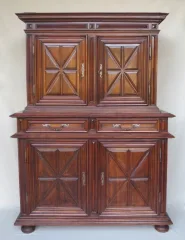
Anne Besnard — Saint-Ouen
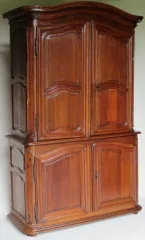
Anne Besnard — Saint-Ouen
Philippe Cote Antiquites — Chauffailles
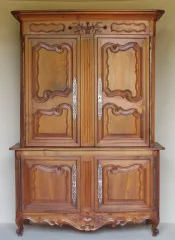
Anne Besnard — Saint-Ouen
Antiquités Lecomte — Héric
Antiquités Lecomte — Héric
Antiquités Lecomte — Héric
Antiquités Lecomte — Héric
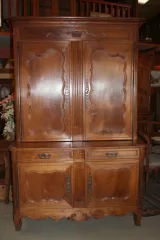
Antiquités Lecomte — Héric
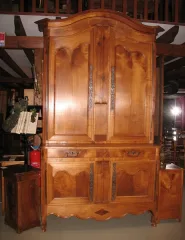
Antiquités Lecomte — Héric
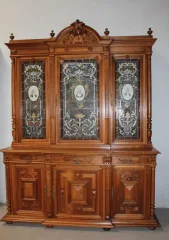
Antiquités Lecomte — Héric
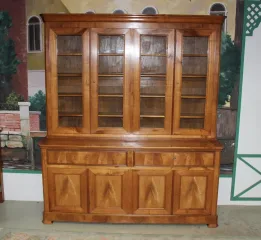
Antiquités Lecomte — Héric
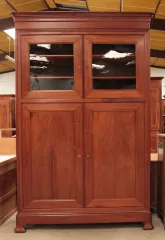
Antiquités Lecomte — Héric
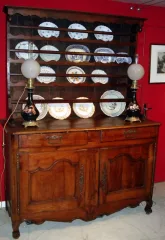
Antiquites Paul Fragne Et Herve Bouyer — Angoulême
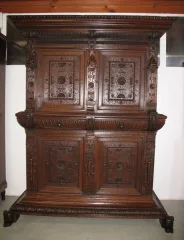
Antiquités Lecomte — Héric
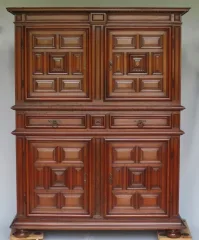
Anne Besnard — Saint-Ouen
Authenticating an antique two-part cabinet begins with the construction. Look for pegged mortise-and-tenon joints, wide single-plank backs that show no plywood, and the subtle marks of hand tools — adze strokes, hand-plane tracks — on interior surfaces. A genuine Renaissance or Louis XIII piece will display oak with an even, deep patina on all visible surfaces, while the unfinished backs age to a silvery grey naturally. Be wary of suspiciously uniform artificial patinas and modern screws hidden inside the joints.
Stylistically, Renaissance two-part buffets are distinguished by Corinthian-capital columns, sculpted acanthus friezes and diamond-point panels. The Louis XIII style simplifies the ornament slightly, favouring turned bead-and-reel mouldings and geometric strapwork. Regional pieces — particularly Breton and Burgundian examples — introduce local motifs such as wheat sheaves, clovers and hunting scenes that add a charming layer of folk character.
In terms of budget, a good-quality French deux-corps cabinet from the 17th or 18th century in honest condition typically sells for between £700 and £2,500. A well-preserved 16th-century Renaissance example with fine carving and documented provenance can exceed £7,000 to £13,000 at a specialist dealer. Always verify that both sections are original to each other — pairs are sometimes assembled from unrelated pieces — and check that the ironwork (hinges, latches, pintles) is consistent and hand-forged. A reputable dealer will readily share photographs of the backs and joinery details.
On Antiquités en France, every antique two-part cabinet is offered by a verified professional antiquaire who can guarantee authenticity and traceability. You may also wish to explore our antique kitchen antiques to complete a period interior, or browse antique oak armoires for further period storage solutions. Contact the dealer of your choice directly for precise dimensions, a full condition report and international shipping options.