
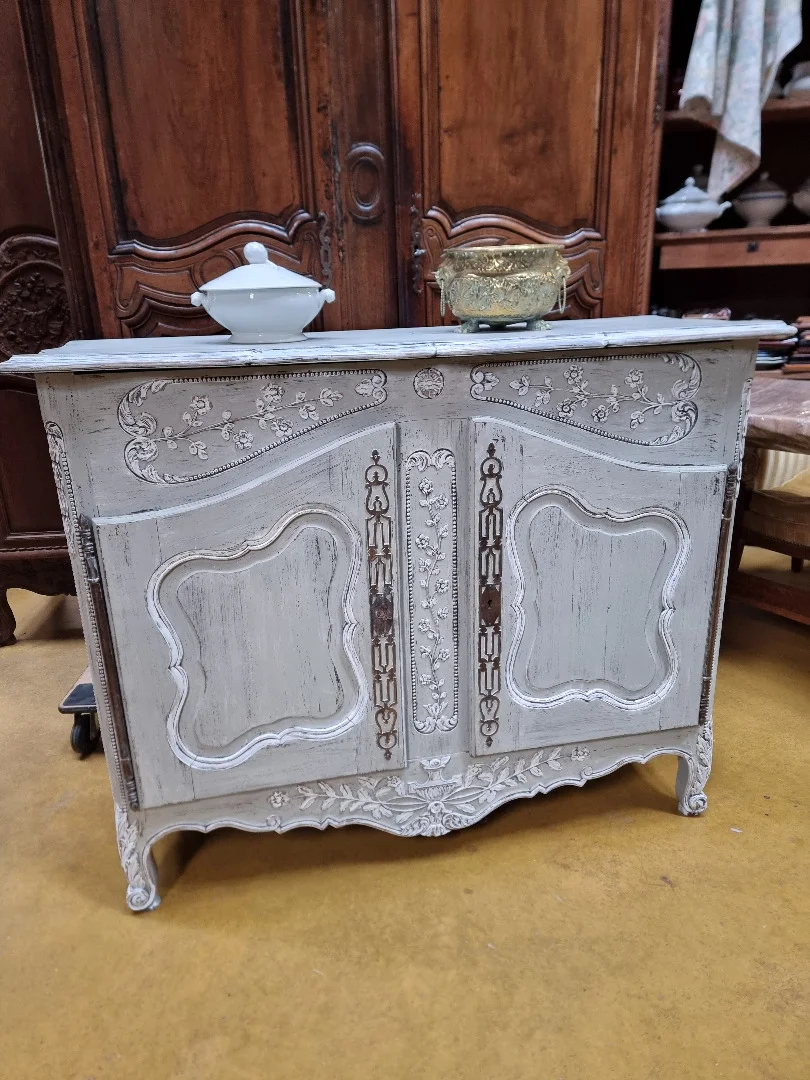
French Norman carved and painted sideboard.
French-antiques.fr — Rouen
750,00 €
11 objects found
Antique painted furniture represents a rich craft tradition spanning the 17th to the early 20th century, rooted in the great regional schools of France — Provence, Alsace, Brittany, Savoy — as well as Central Europe and Scandinavia. Painted armoires with floral panels, polychrome commodes, box beds and decorated cradles all bear witness to a refined popular craft in which colour and ornament took the place of costly exotic timbers.
The quality of a piece of polychrome furniture is revealed by the fineness of its original decoration, the consistency of its patina, and the soundness of its structure in solid oak, walnut or pine. An original painted surface — even one showing honest wear — will always be more desirable than a repainted one.
11 objects found
French-antiques.fr — Rouen
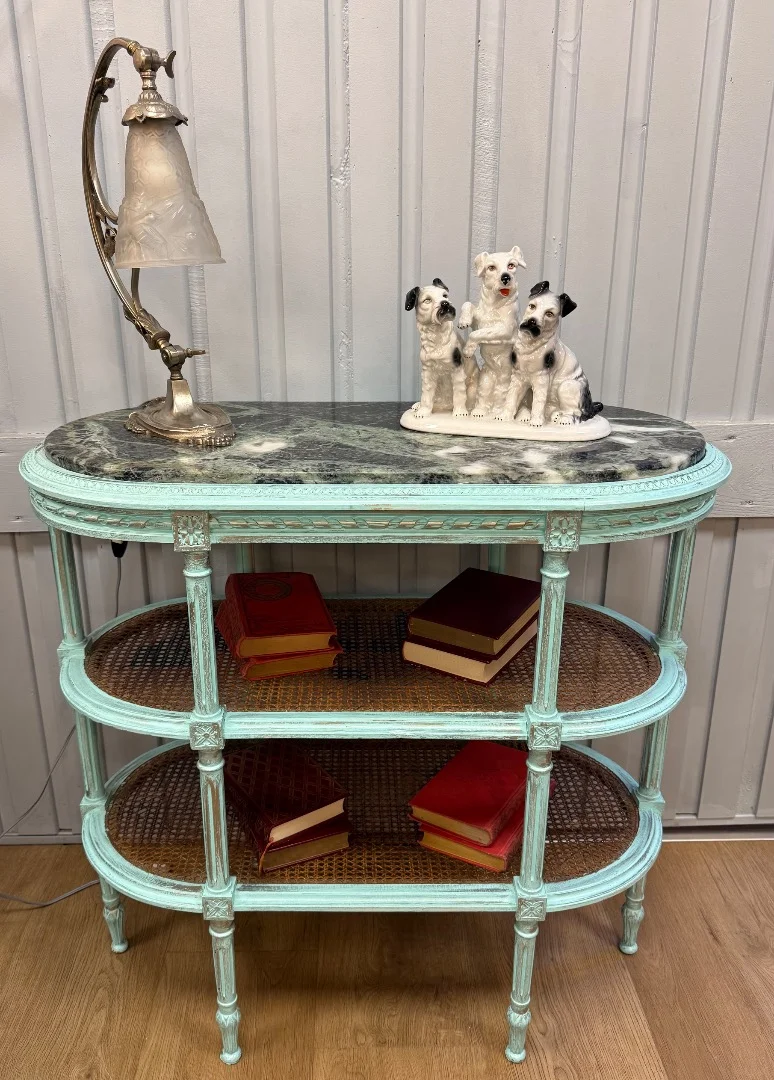
2R Antiquites — Caluire-et-Cuire
L’ESTAMPILLE — Navilly
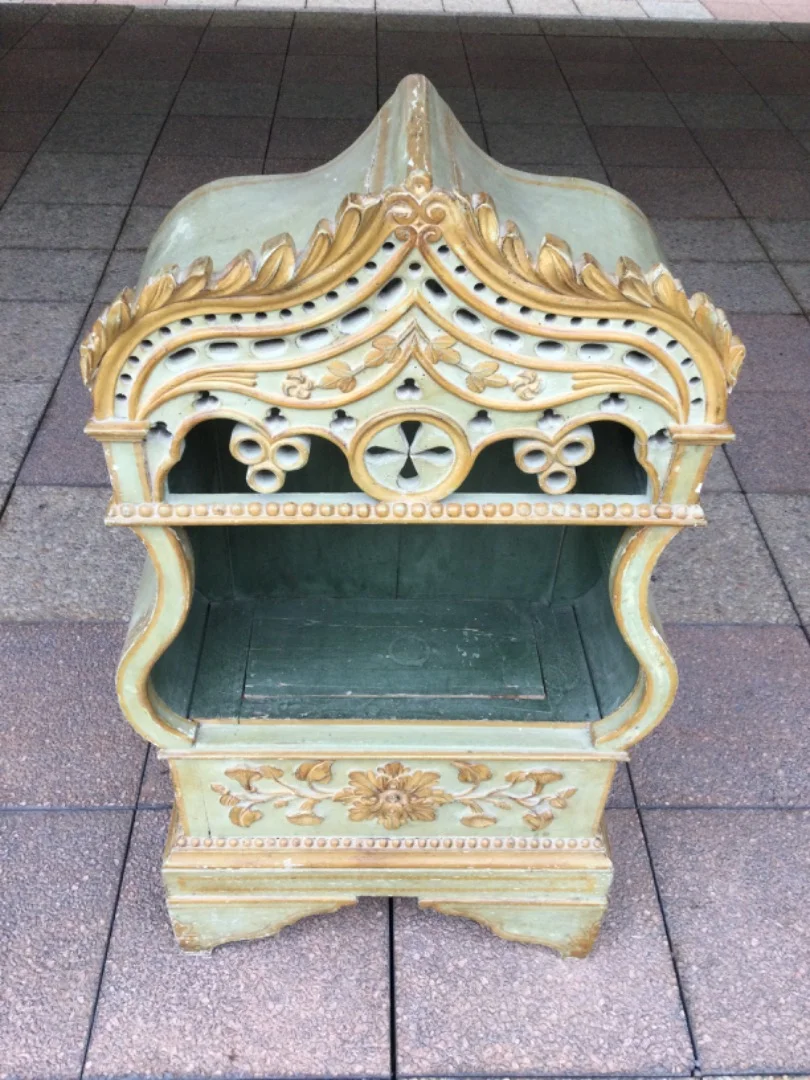
Eric Saget — Paris

Anne Besnard — Saint-Ouen
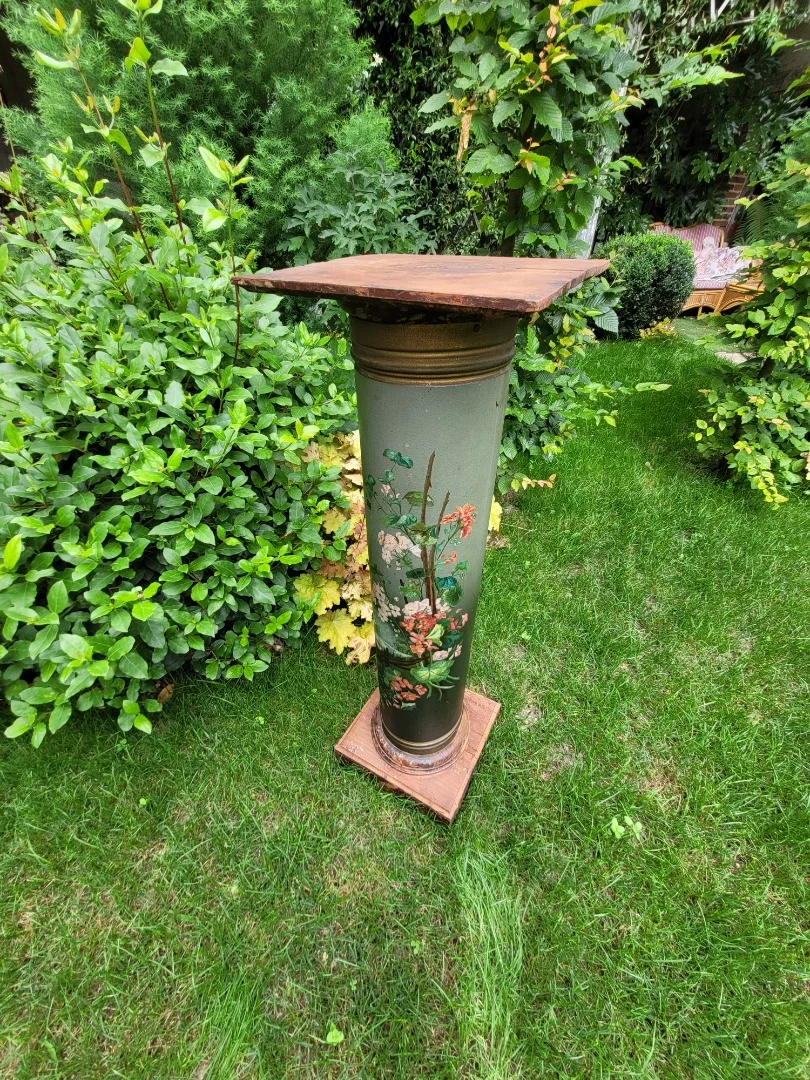
Le Grenier D'Abélard — Sens
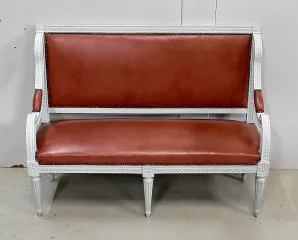
Antiquités Lecomte — Héric

Anne Besnard — Saint-Ouen
Antiquités "Le Vieux Matos" L.V.M — La Chapelle-Saint-Martin-en-Plaine
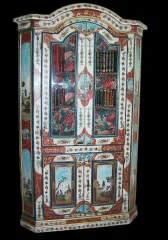
Le Grand Chêne — Anduze
Antiquités Lecomte — Héric
To authenticate antique painted furniture, begin by examining the painted surface under raking light: fine, regular craquelure, natural wear along edges and a slightly translucent patina are all hallmarks of a period decoration. A surface that looks too smooth and uniform, with no cracking or natural abrasion, often signals a recent repaint or a later reproduction. Turn the piece over: the bare wood on the back and beneath the drawers should show ageing consistent with the stated period.
Provençal painted armoires of the 18th century typically display polychrome flower bouquets on a cream or almond-green ground, while Alsatian pieces favour tulip and bird motifs on red or blue backgrounds. Savoyard and Alpine furniture often works with dark grounds enlivened by fine gilt lines. Identifying the regional origin of a piece helps to refine its dating and appreciate its rarity. Do not overlook antique painted beds and painted chests and coffers, which are often more accessible than large armoires and equally rich in decorative character.
In terms of budget, a small regional painted piece in good condition can be found from a few hundred euros; a large armoire with exceptional decoration and intact original paintwork may reach several thousand. The condition of the original paint is the single most important criterion: a well-executed partial restoration is acceptable, but a complete repaint significantly reduces value. Always ask the dealer to identify any restored areas and to provide photographs taken under raking light.
On Antiquités en France, every piece of antique painted furniture is offered by a verified professional antique dealer who can guarantee authenticity and provenance. You might also explore antique kitchen antiques to complete a rustic interior scheme, or contact the dealer directly for precise dimensions, paint condition details and shipping options.