
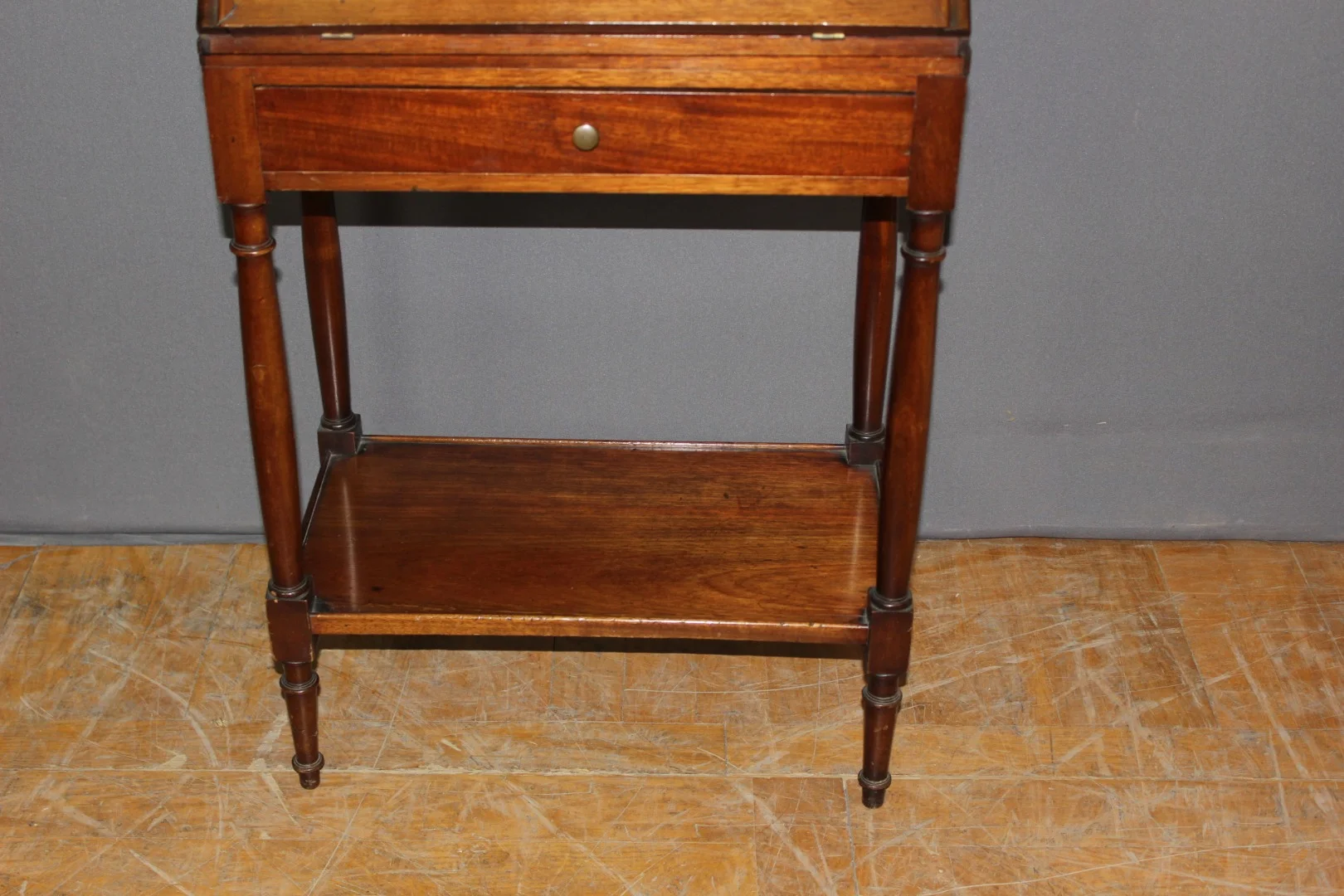
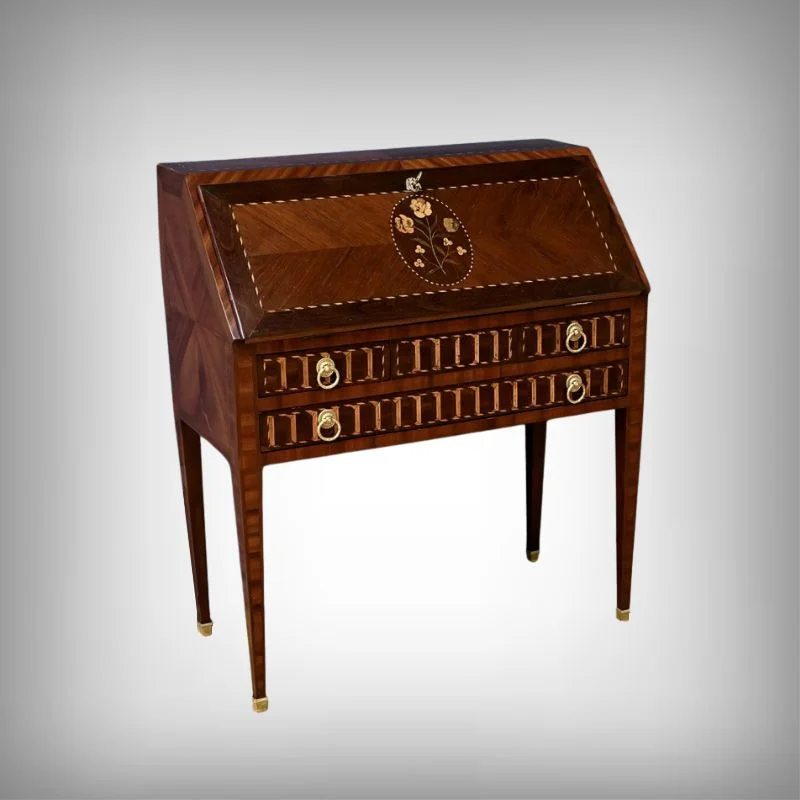
Directoire Style Mahogany Back Desk, 20th Century
Antiquités Christophe Rochet — Villeurbanne
480,00 €
54 objects found
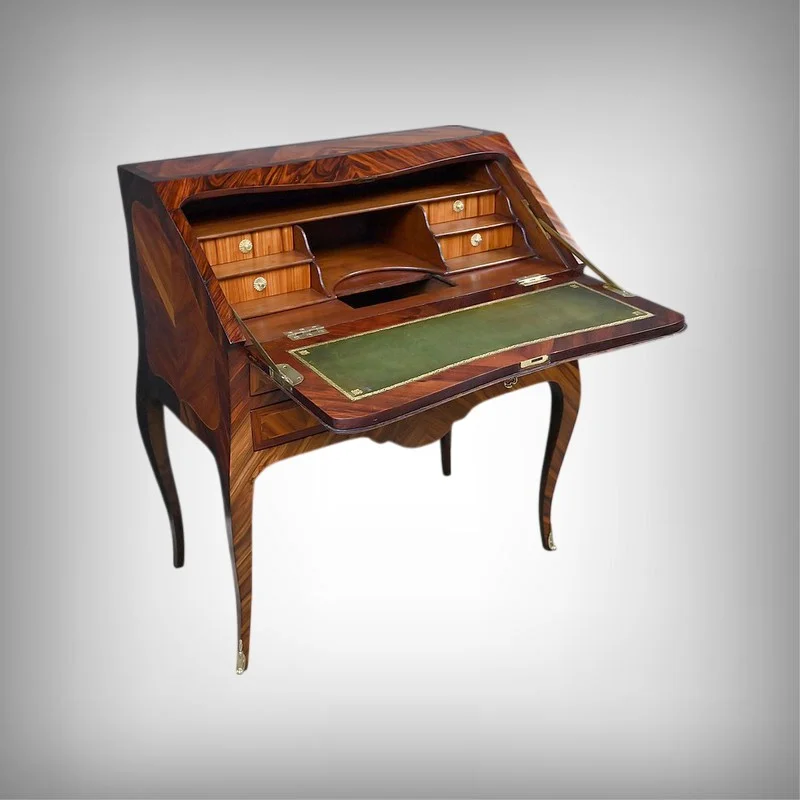
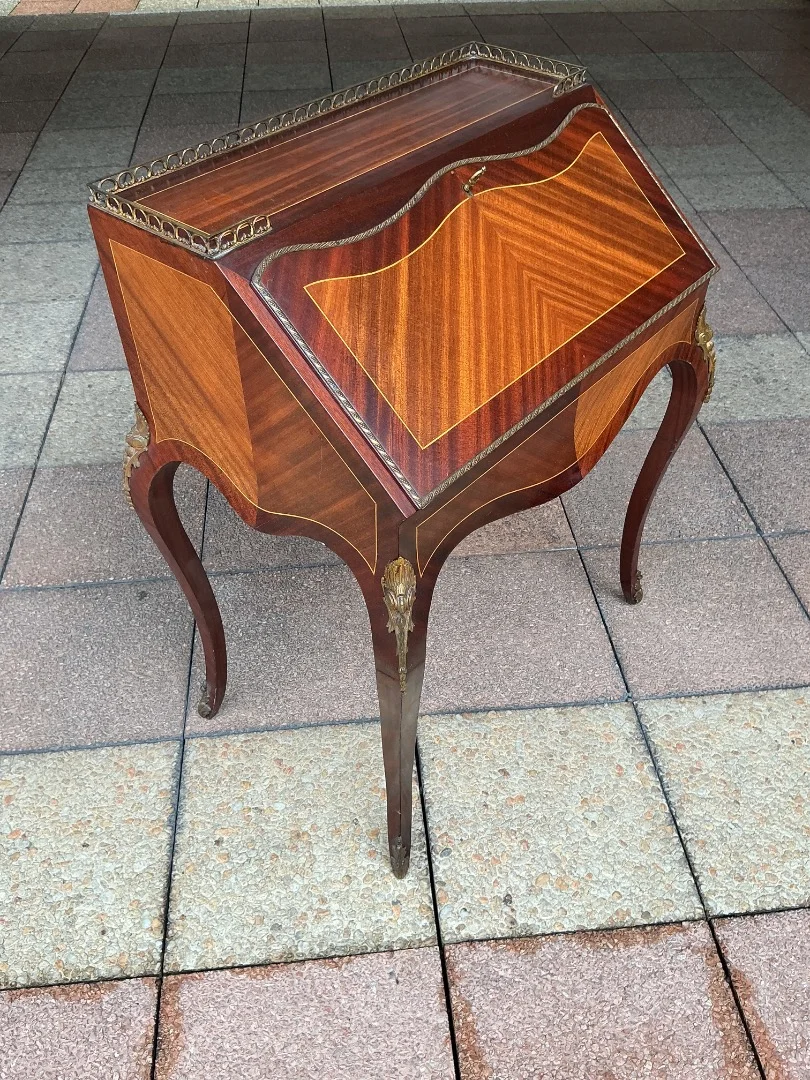
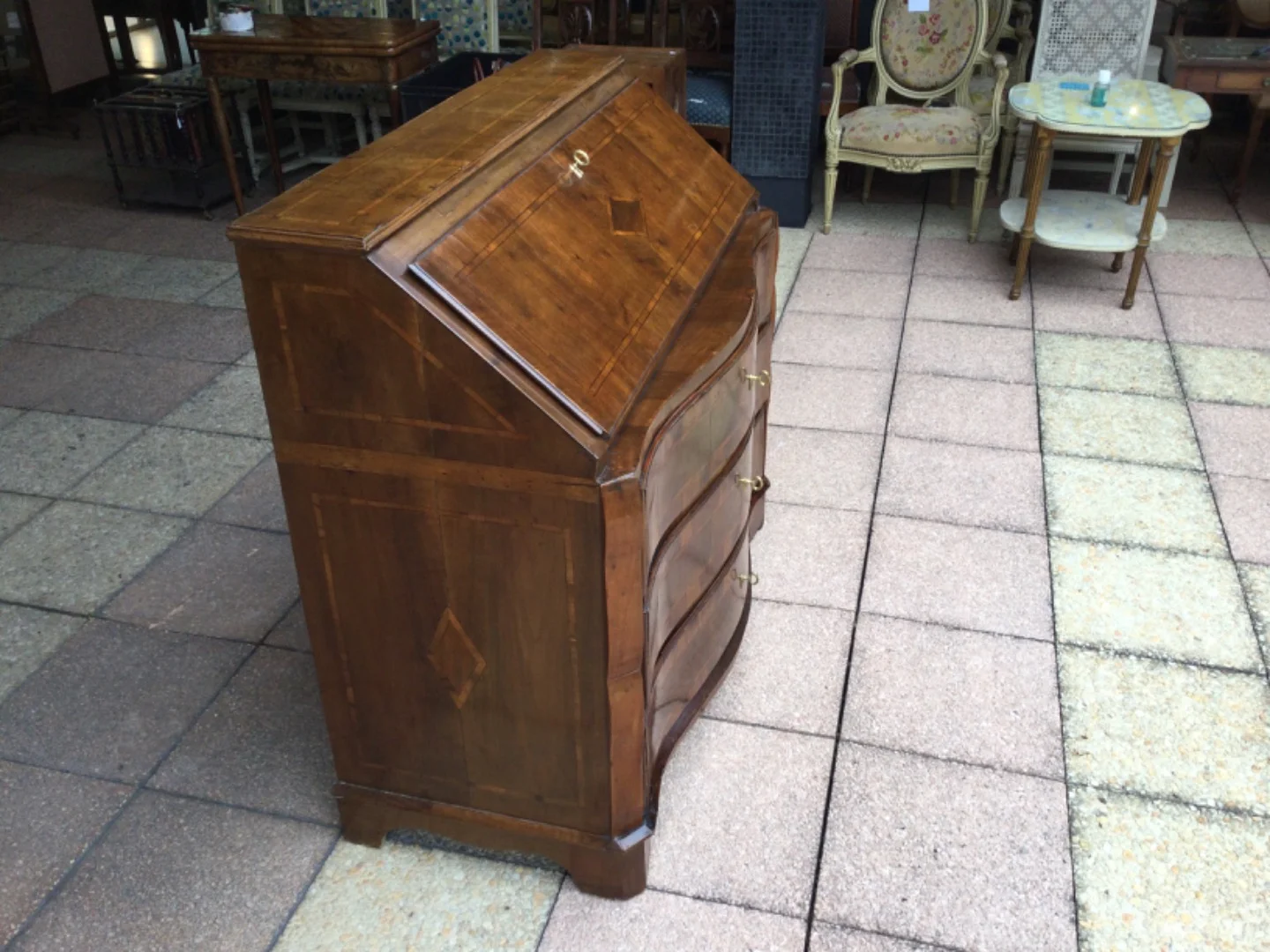
The slant-top desk — known in French as the bureau de pente — ranks among the most refined writing pieces of the 18th century: a gently angled fall-front conceals a fitted interior of small drawers and pigeonholes, combining practicality with elegant discretion. Emerging during the Régence period and perfected under Louis XV, these desks were crafted in walnut, oak, mahogany or rosewood, often enriched with gilt-bronze mounts or delicate marquetry. The antique desk in this form remains highly sought after by collectors and interior decorators alike.
Distinguished from the taller secrétaire à abattant by its lighter silhouette and more compact footprint, the slant-top desk is instantly recognisable by its bevelled writing surface and its cabriole or tapered legs, depending on the period.
54 objects found
Antiquités Christophe Rochet — Villeurbanne
Antiquités Lecomte — Héric
Eric Saget — Paris
Eric Saget — Paris
Antiquités Lecomte — Héric
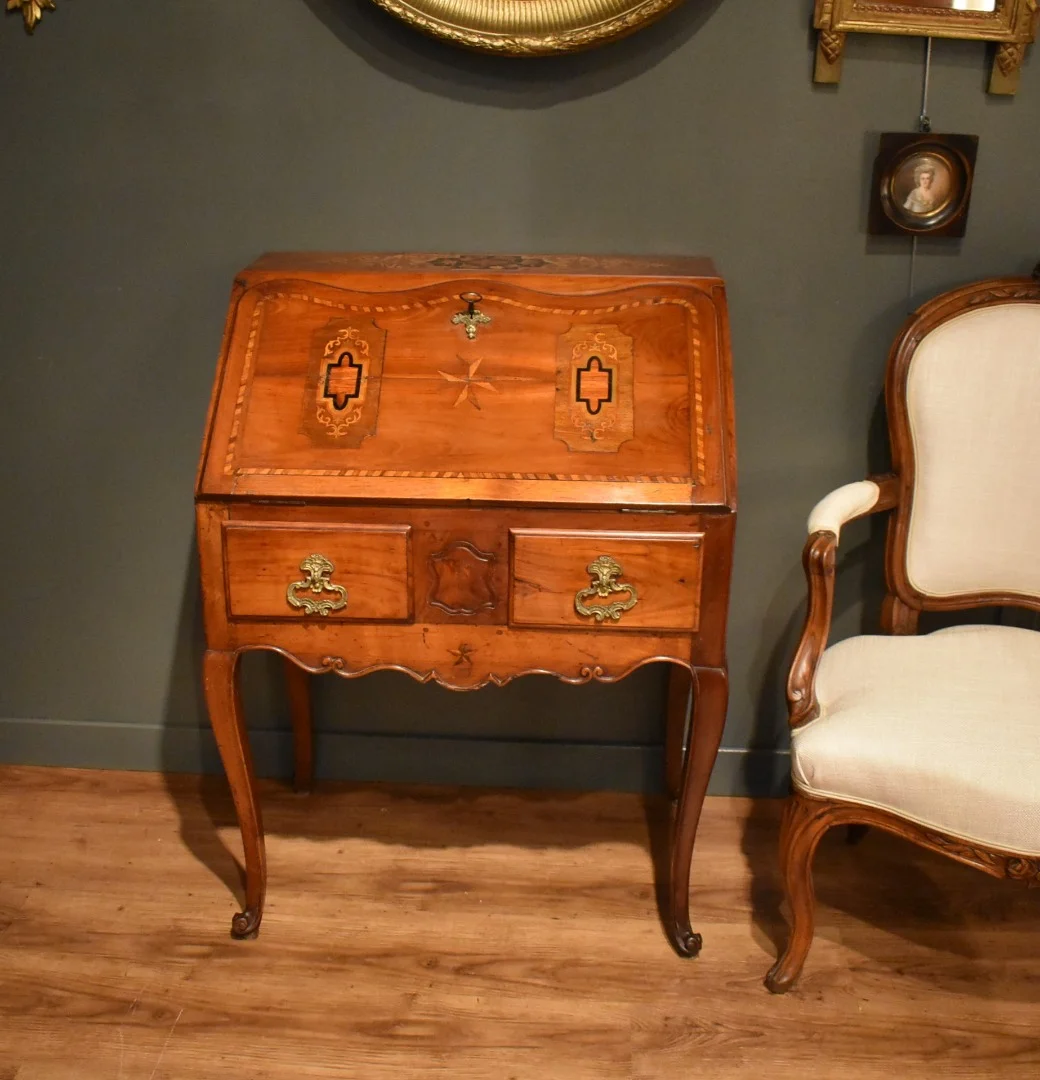
Antiquités Anne Marie Perrier — La Boisse
Eric Saget — Paris
Eric Saget — Paris
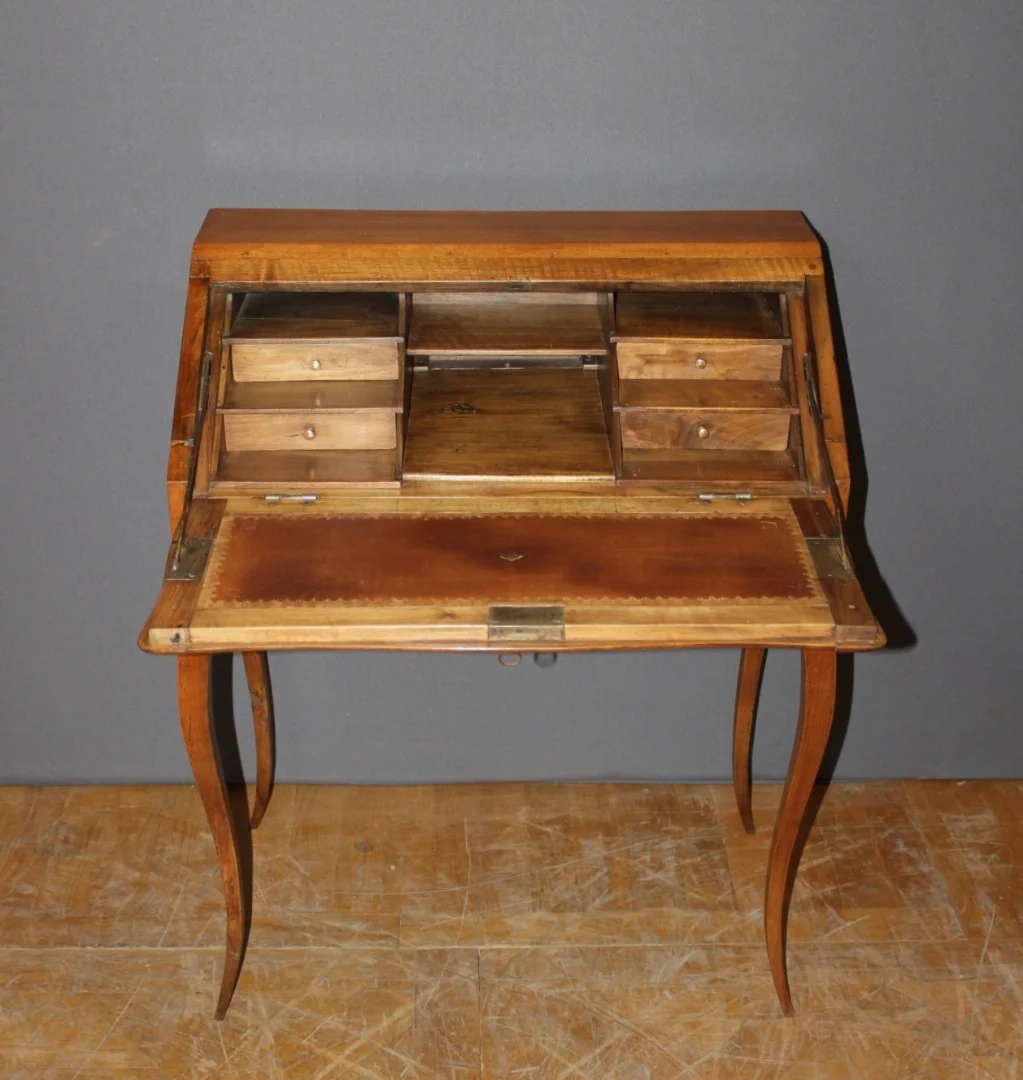
Antiquités Christophe Rochet — Villeurbanne
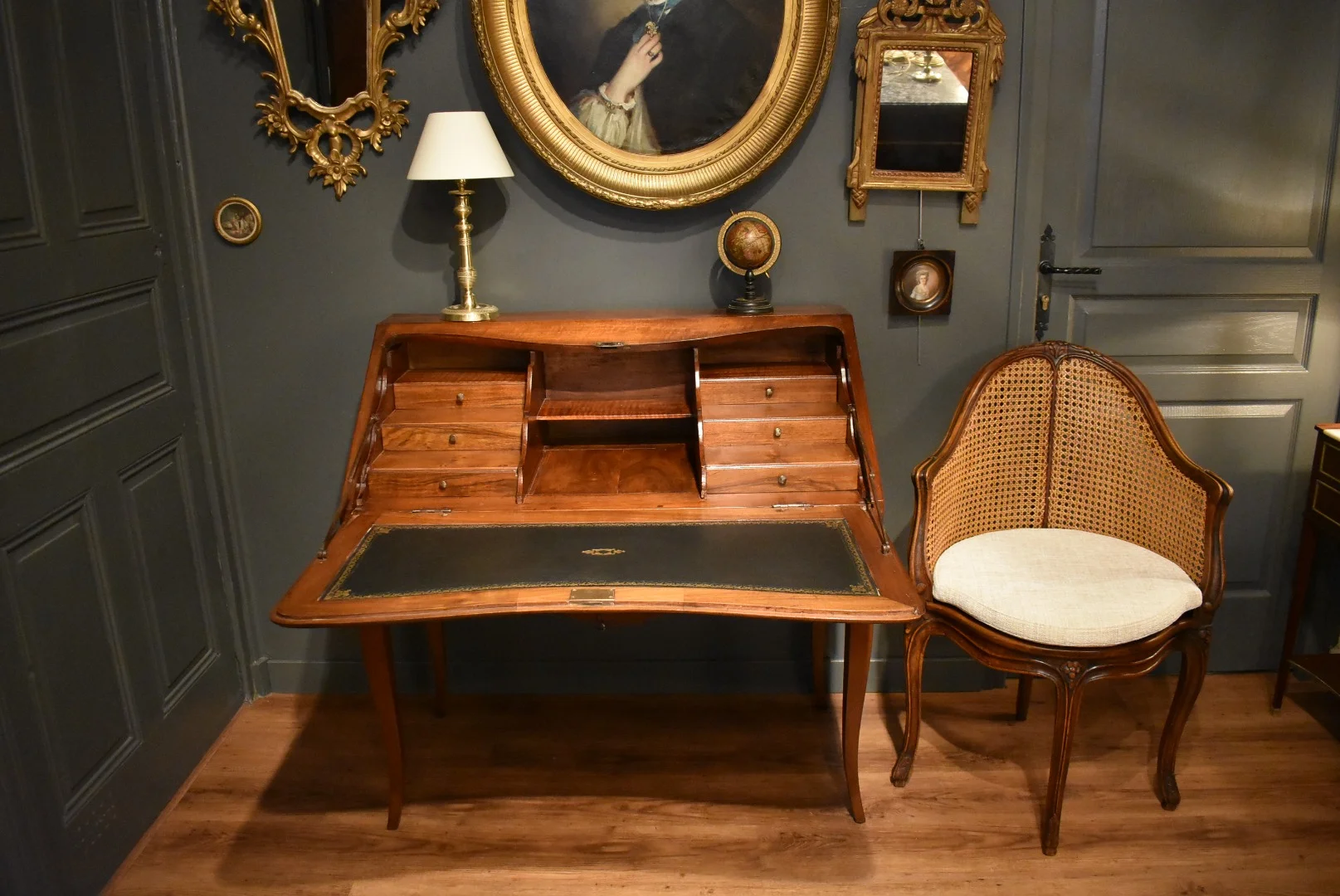
Antiquités Anne Marie Perrier — La Boisse
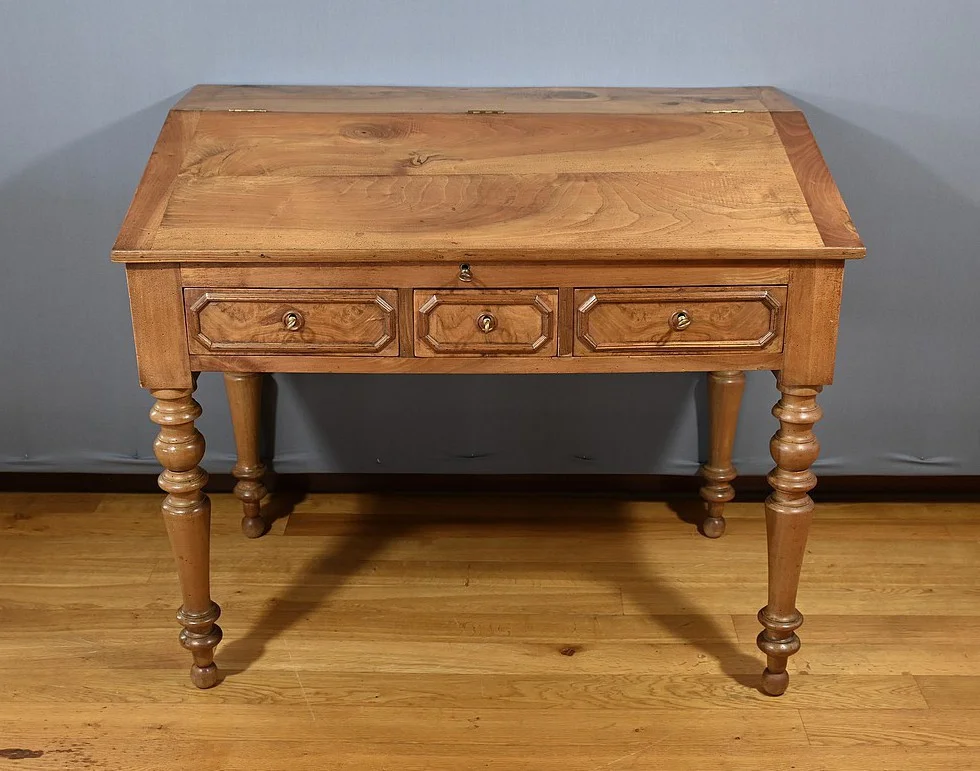
Antiquités Lecomte — Héric
Romain Lichtensztein — Maignelay-Montigny
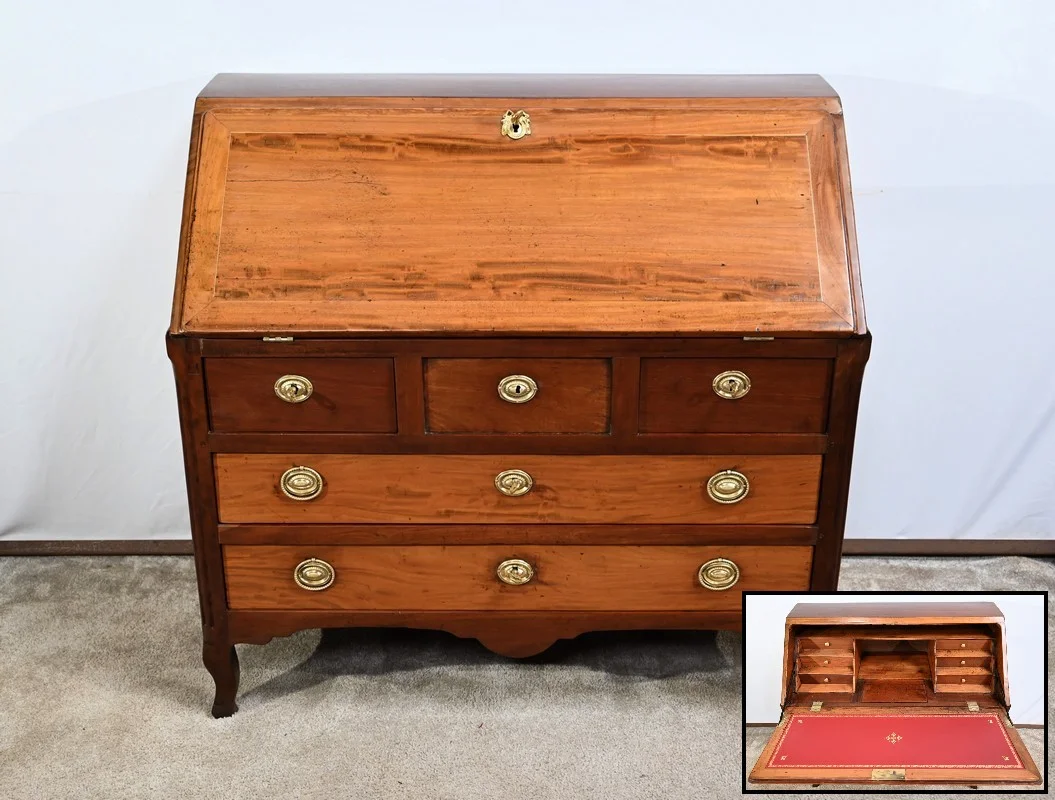
Antiquités Lecomte — Héric
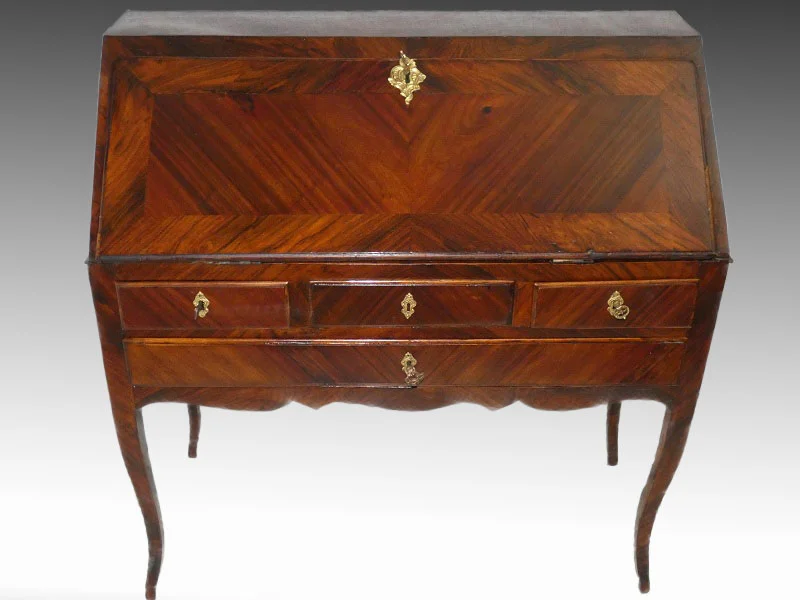
L'atelier De La Dorure — Calmont
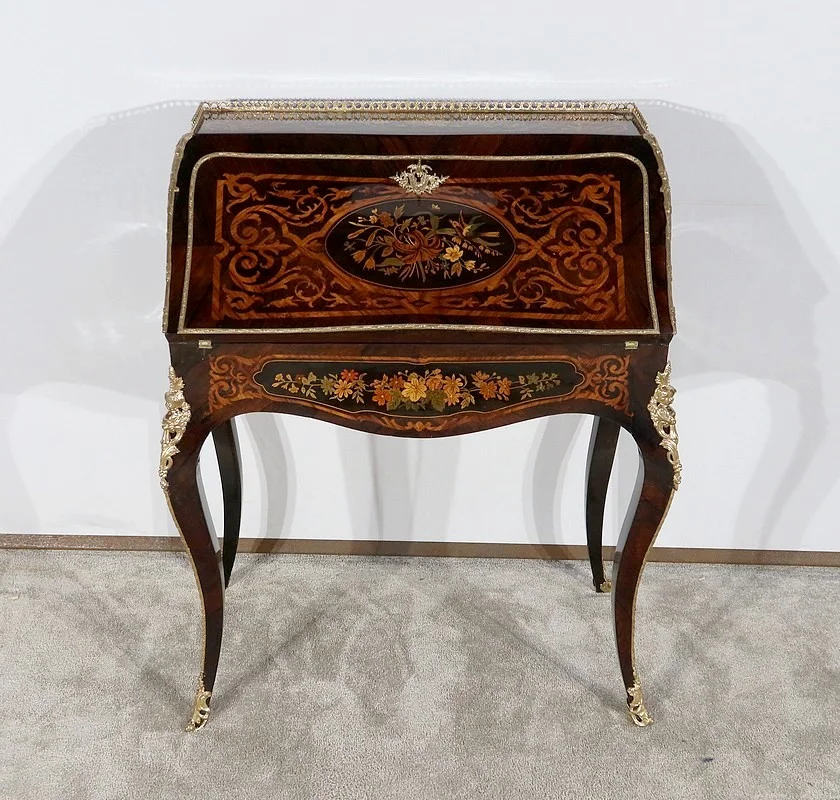
Antiquités Lecomte — Héric

Antiquités Lecomte — Héric
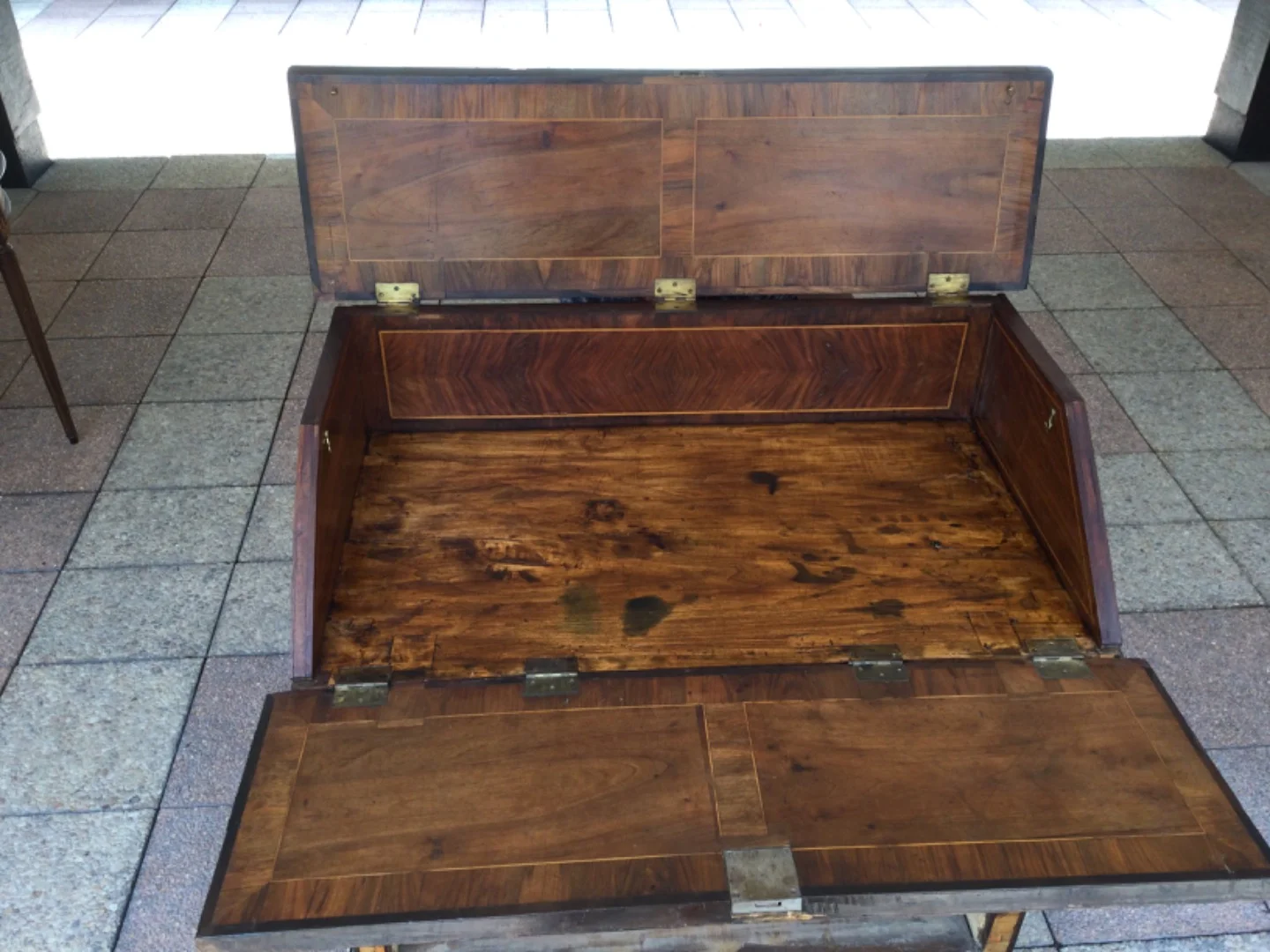
Eric Saget — Paris

Antiquités Lecomte — Héric

ANTIQUITES VANGEON — Chartres
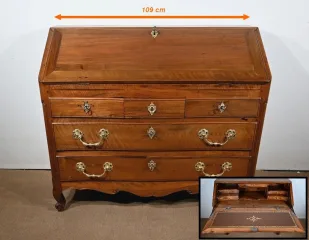
Antiquités Lecomte — Héric

Antiquités Lecomte — Héric
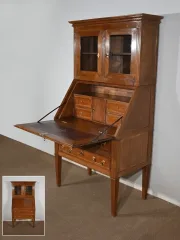
Antiquités Lecomte — Héric
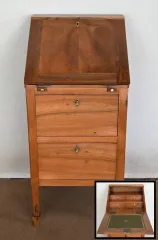
Antiquités Lecomte — Héric
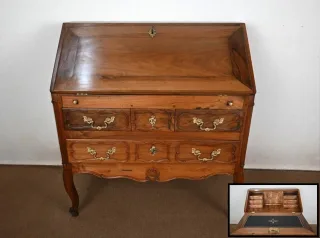
Antiquités Lecomte — Héric
Authenticating an antique slant-top desk begins with the construction: hand-cut dovetail joints, secondary-wood drawer bottoms in poplar or oak, and tool marks on the interior carcass are all hallmarks of genuine period craftsmanship. An ébéniste's stamp struck beneath the top or on a stile — sometimes accompanied by the jurande guild mark — significantly enhances both value and traceability. Key names to know include Migeon, Topino, Boudin and RVLC for high-quality Parisian examples.
In terms of timber, solid walnut dominates provincial output, while mahogany and rosewood characterise Parisian workshops of the second half of the 18th century. Always inspect the veneer on the fall-front — the surface most exposed to wear — as well as the integrity of the original hinges and locks. Slant-top desks with marquetry in tulipwood or geometric stringing reflect a particularly high level of finish and command a premium accordingly.
Budget-wise, expect to pay between £400 and £1,500 for an attractive provincial example in walnut or oak, and from £2,000 to £8,000 or more for a stamped piece in mahogany or rosewood with original gilt-bronze mounts. Overall condition, the completeness of the fitted interior (drawers, pigeonholes, leather writing surface) and the quality of any restorations all directly influence price. Prioritise Louis XV walnut slant-top desks whose cabriole legs and bronze mounts are original — a guarantee of impeccable stylistic coherence.
On Antiquités en France, every slant-top desk is offered by a verified professional antique dealer able to provide detailed photographs, precise dimensions and the piece's history. Browse our wider selection of antique desks and writing furniture to broaden your search, then contact the dealer directly with any questions about provenance or condition.