

NINETEENTH CENTURY ARMOIR
Au Réveil Du Temps — Saint-Nabord
3 800,00 €
18 objects found
The centrepiece of the traditional French bridal trousseau, the antique wedding armoire embodies the craft of regional cabinetmakers and joiners from the 17th to the 19th century. Norman examples in solid oak feature boldly curved panels; Alsatian pieces are painted with vivid floral motifs; Breton armoires carry sculpted pediments with Celtic ornament; Provençal versions intertwine wheat and vine. These carved regional French armoires are distinguished by the depth of their bas-relief decoration, the quality of their original ironwork and the robustness of their all-solid-wood construction.
Browse the selection below — every piece is offered by a verified professional dealer through our antique armoires category, ready to advise on provenance and condition.
18 objects found
Au Réveil Du Temps — Saint-Nabord

French-antiques.fr — Rouen
French-antiques.fr — Rouen
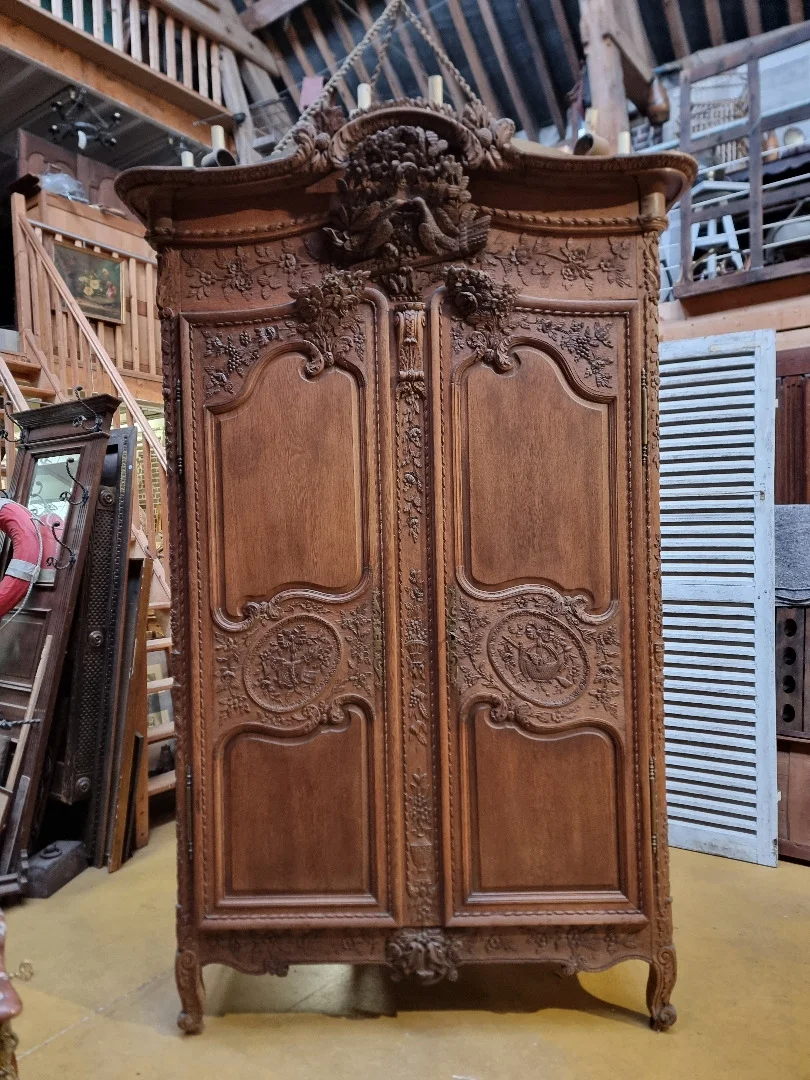
French-antiques.fr — Rouen

French-antiques.fr — Rouen
French-antiques.fr — Rouen

Antiques Provence — Cheval-Blanc
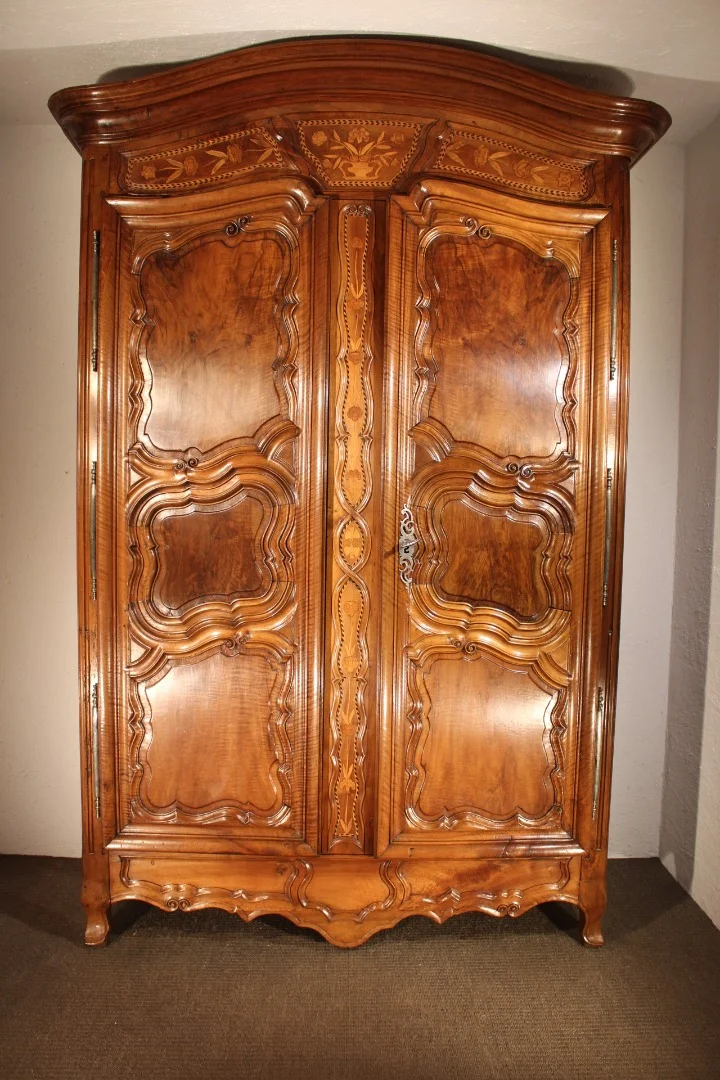
Au Réveil Du Temps — Saint-Nabord
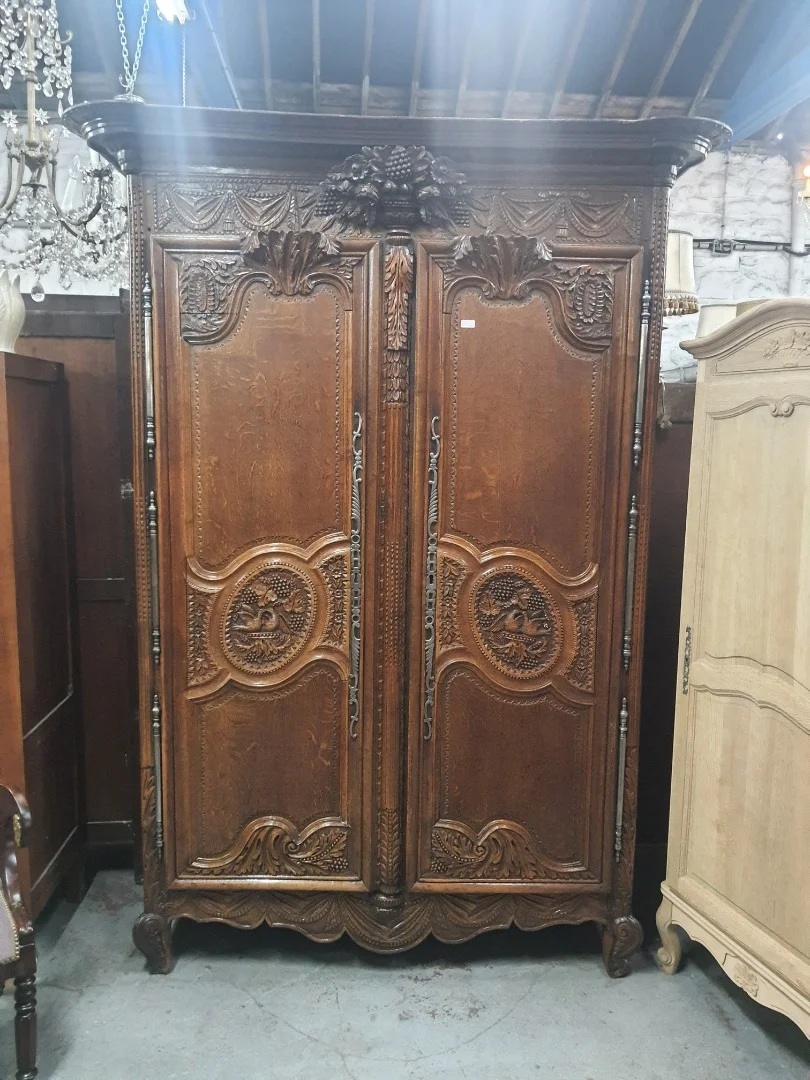
la caleche caennaise — Mondeville
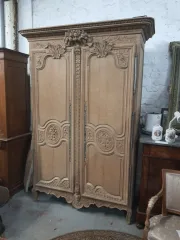
la caleche caennaise — Mondeville
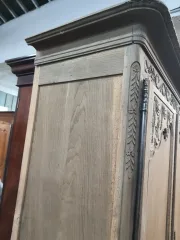
la caleche caennaise — Mondeville
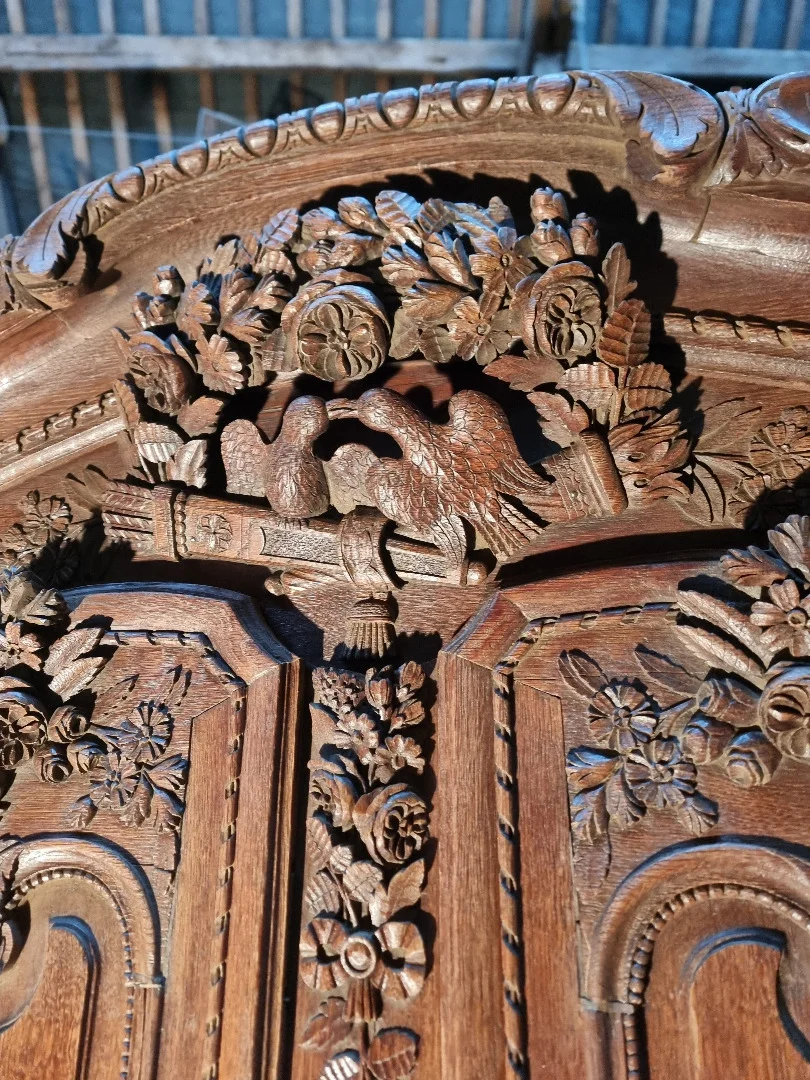
French-antiques.fr — Rouen
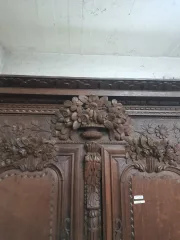
la caleche caennaise — Mondeville
la caleche caennaise — Mondeville

Antiquités Christophe Rochet — Villeurbanne
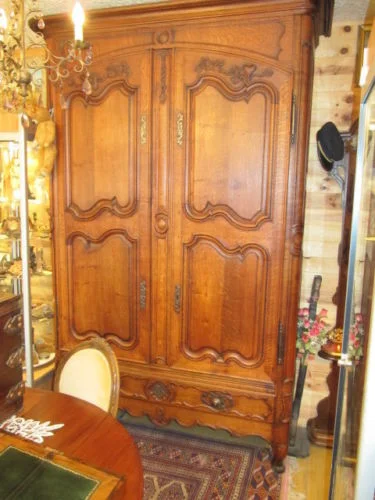
Antiquités "Le Vieux Matos" L.V.M — La Chapelle-Saint-Martin-en-Plaine

la caleche caennaise — Mondeville
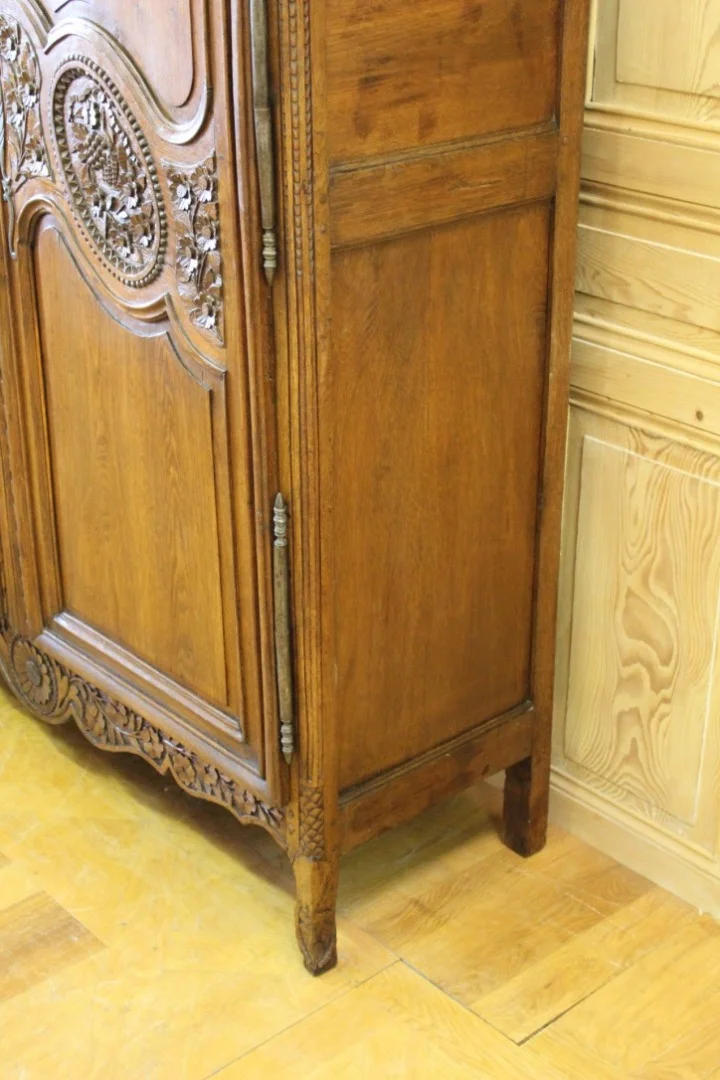
Antiquités Christophe Rochet — Villeurbanne
Authenticating an antique wedding armoire starts with the wood itself. Solid oak, walnut or wild cherry will show an irreplaceable natural patina, with visible tool marks on the interior surfaces and mortise-and-tenon joints secured with wooden pegs. Carved panels on genuine period pieces display a slight irregularity of depth — the unmistakable signature of hand-tool work. Suspiciously crisp, perfectly uniform relief is a common indicator of a later industrial reproduction.
To date a piece, study the ironwork closely: hand-forged hinges, pintles and bolt locks are characteristic of production before 1850. The shape of the feet (bun, sabot or bracket), the profile of the cornice (straight, arched or broken-pediment) and the moulding sections all help to assign the armoire to a specific region and period. A documented provenance — a notarial deed, a probate inventory or an original dealer's label — adds considerably to both authenticity and value.
In terms of budget, a marriage wardrobe of good quality typically sells for between £700 and £3,500, depending on region of origin, fineness of carving and overall condition. Signed or dated Norman or Alsatian examples with intact original ironwork can exceed this range. Always check the condition of the joints, confirm that any woodworm treatment has been declared, and verify that the doors hang flat and close squarely.
On Antiquités en France, every professional dealer can supply detailed photographs of the carvings, ironwork and interior before you commit to a purchase. You may also wish to explore antique French regional commodes to build a coherent country-furniture ensemble, or browse the full antique armoires section to widen your search. Contact the dealer of your choice directly — they are best placed to guide you on shipping, dismantling and reassembly.